no-topia
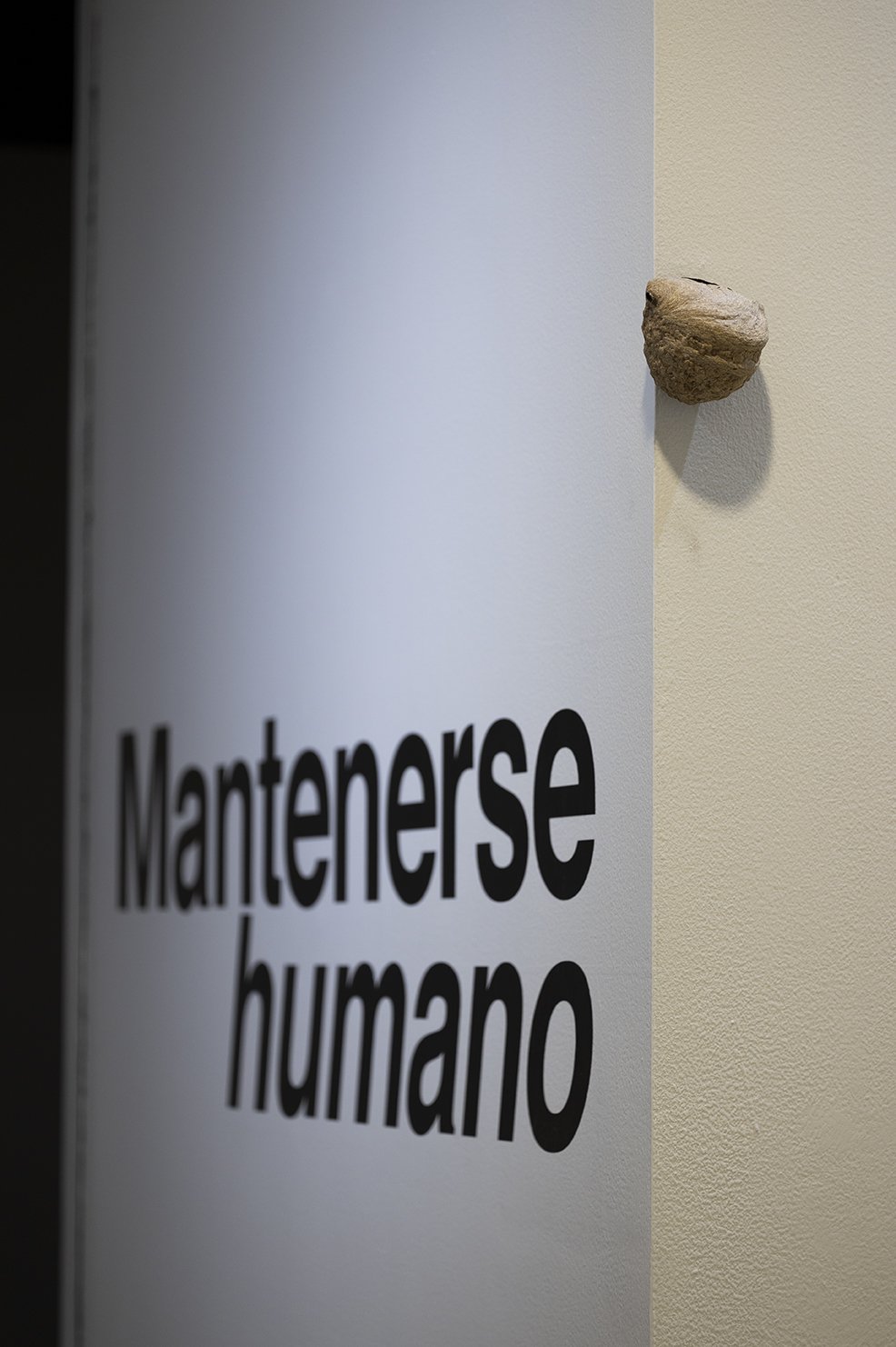
Mantenerse Humano
Staying Human
2020 to present
Artist-led curatorial project; diorama, sculpture, installation, drawing, photography, and research
Conceived and curated by Mauricio Esquivel
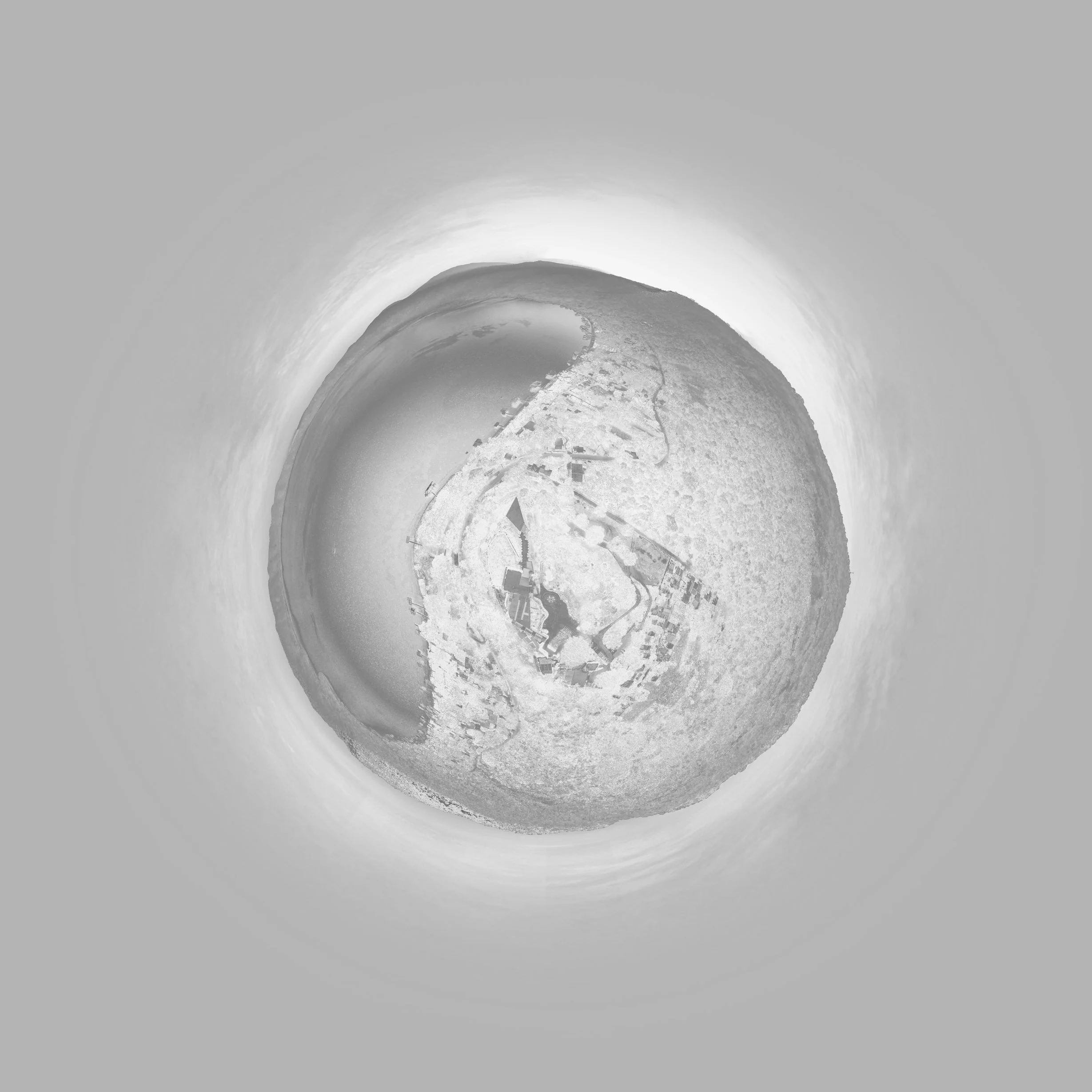
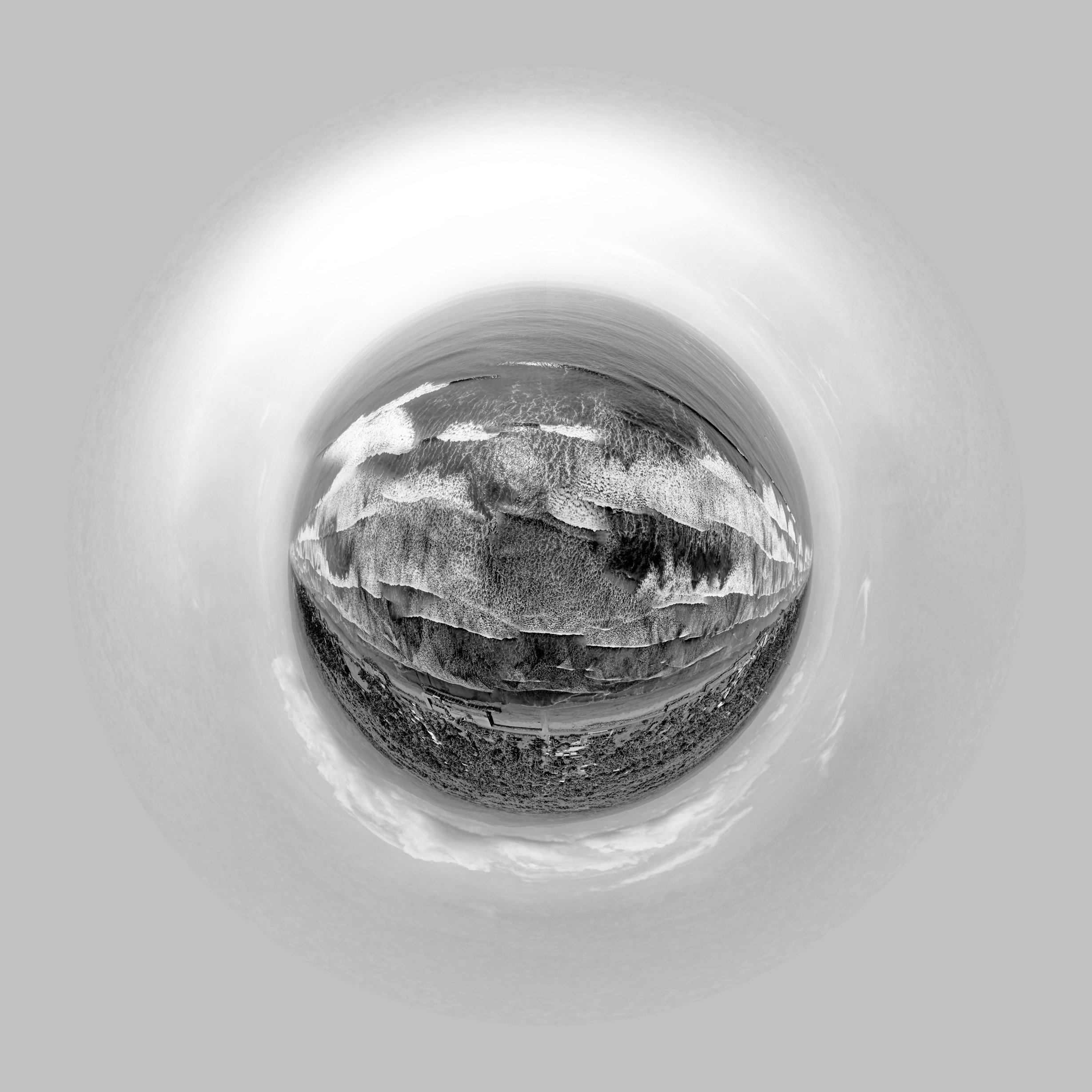
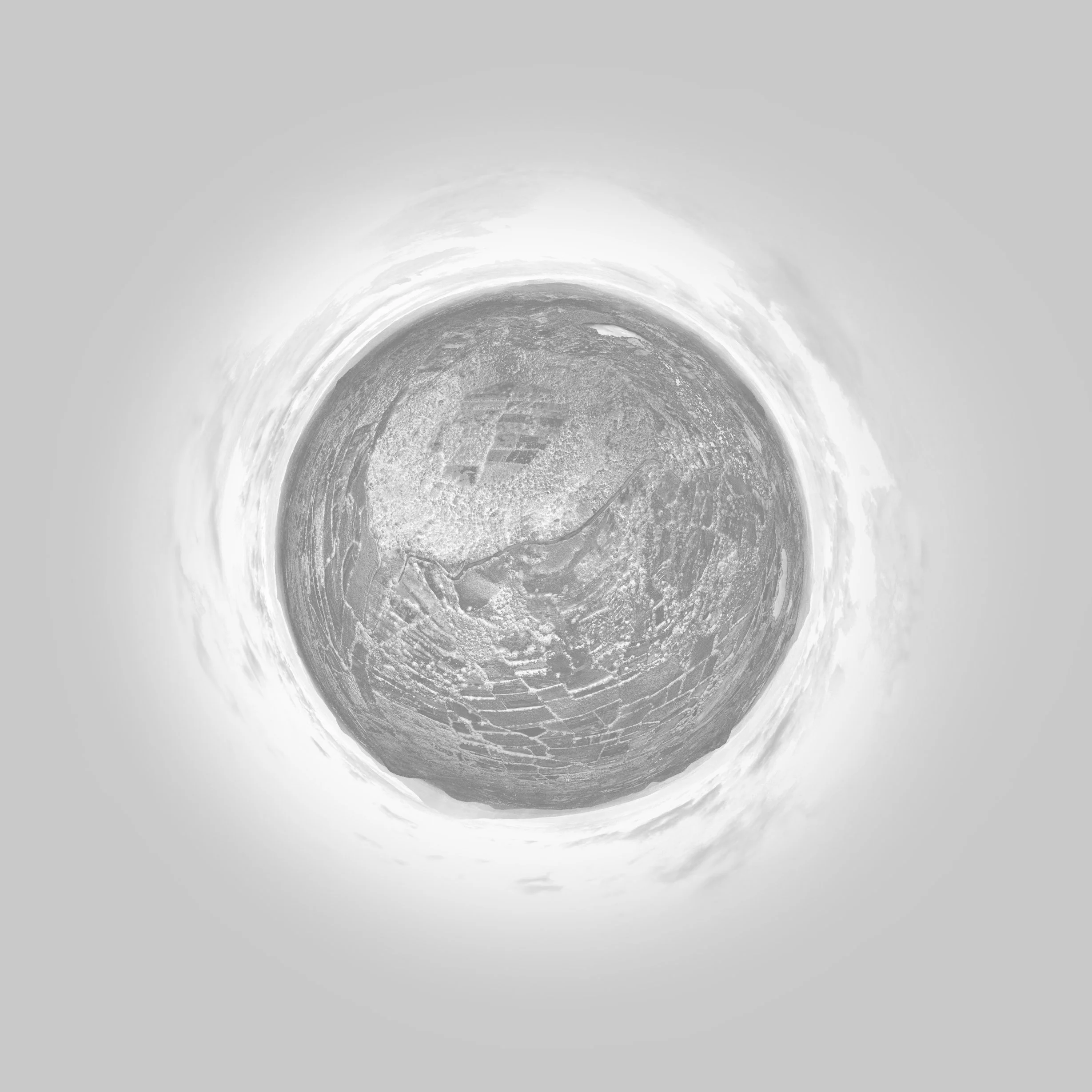
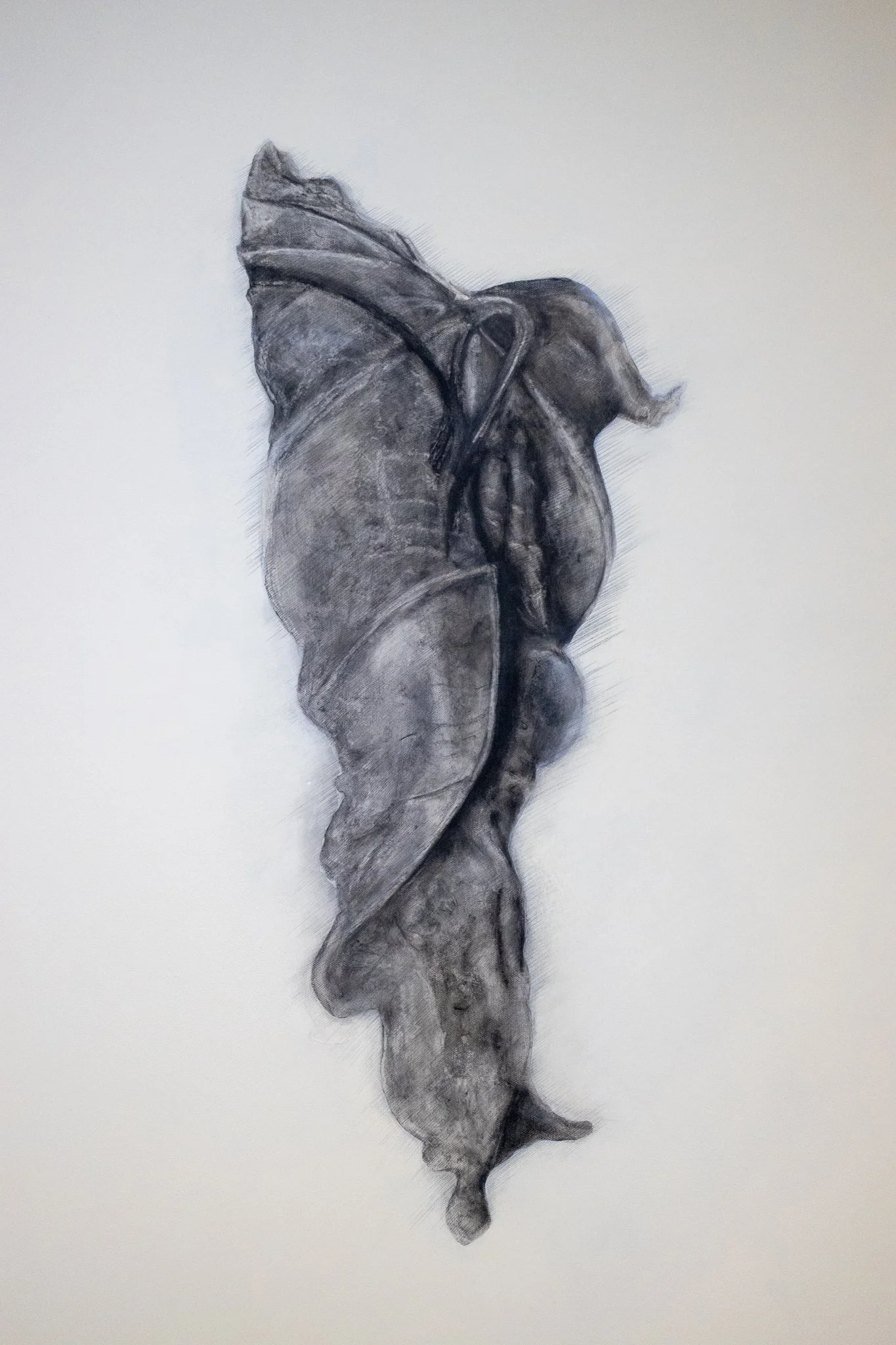
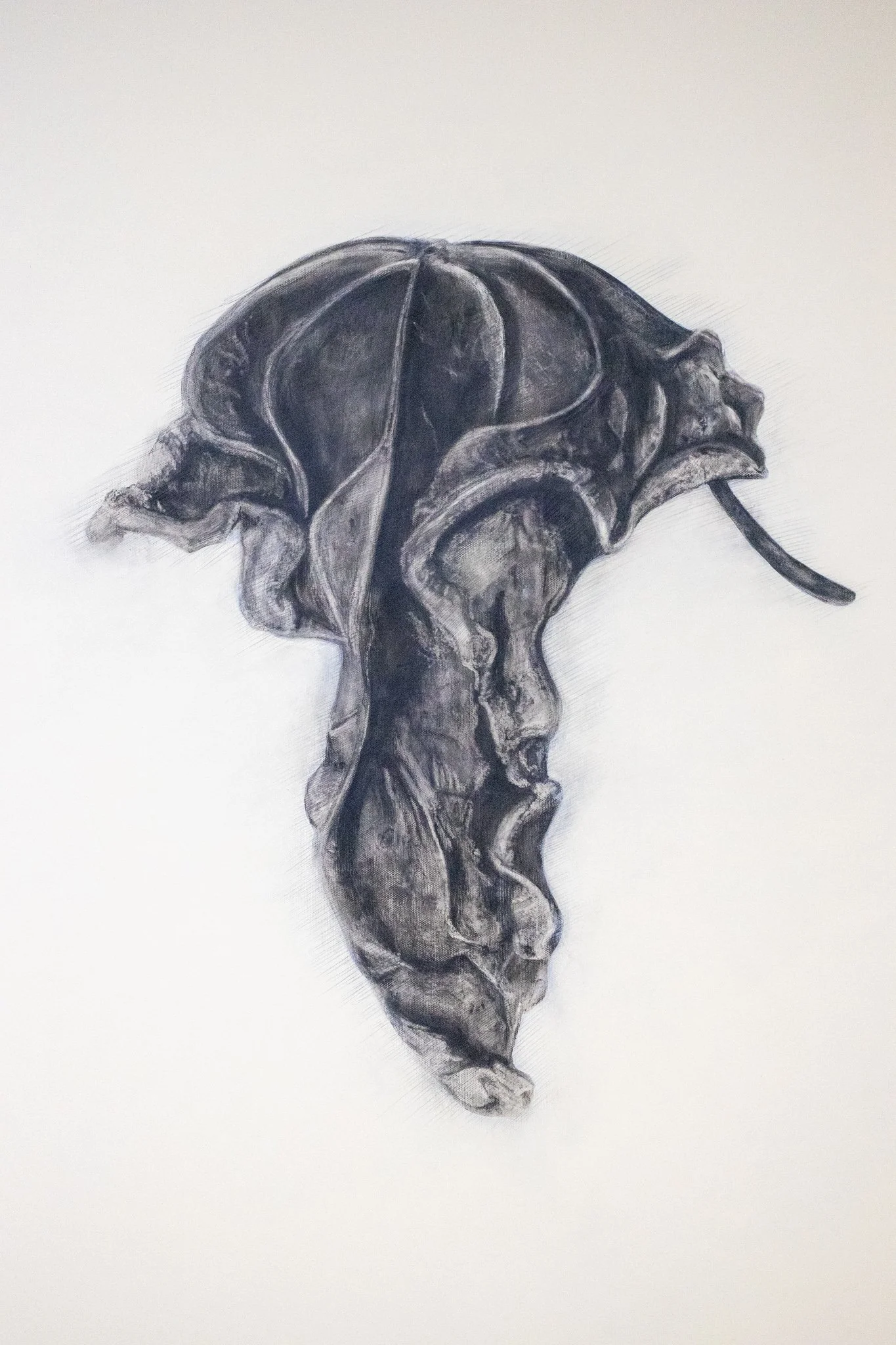
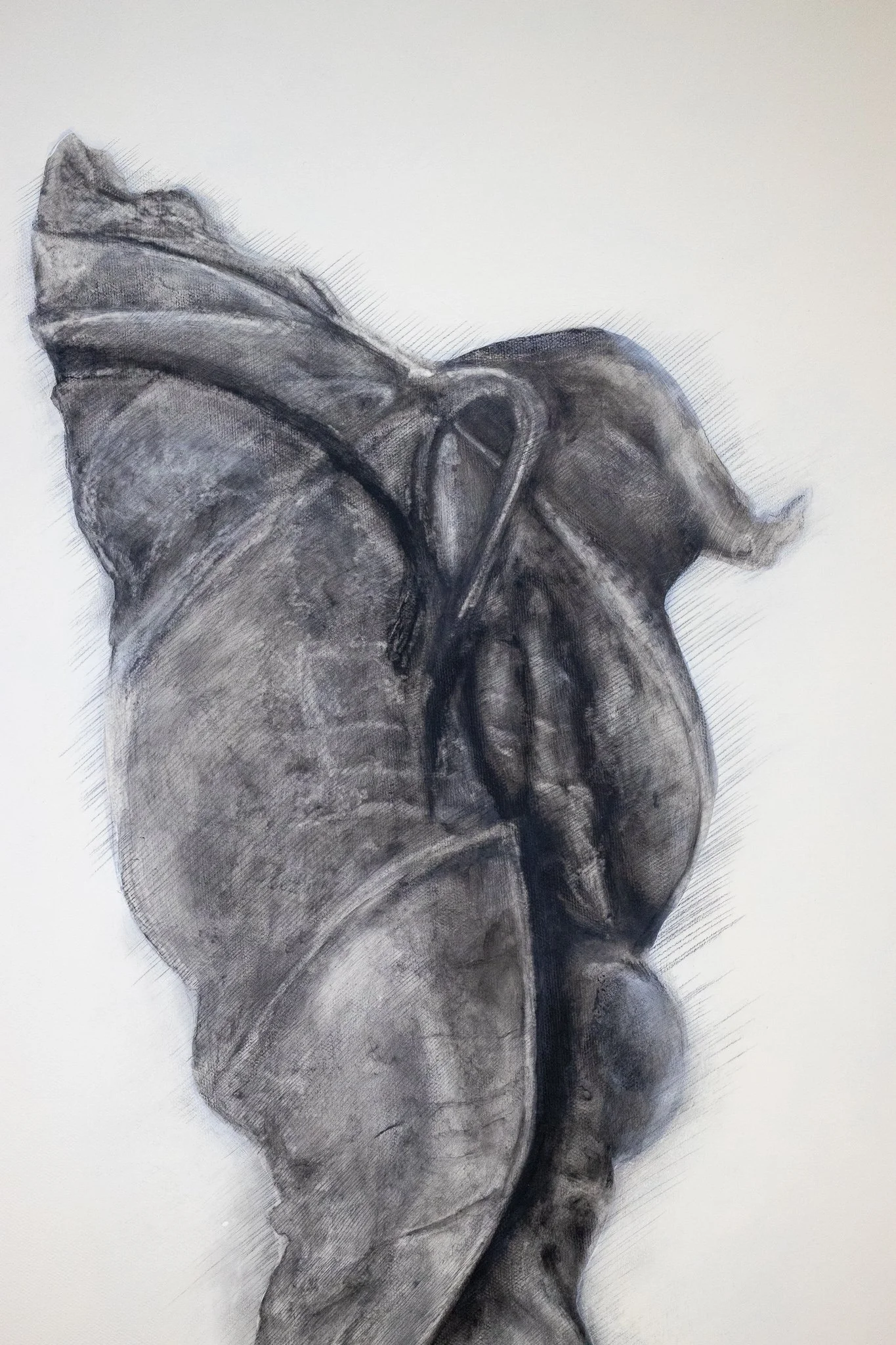
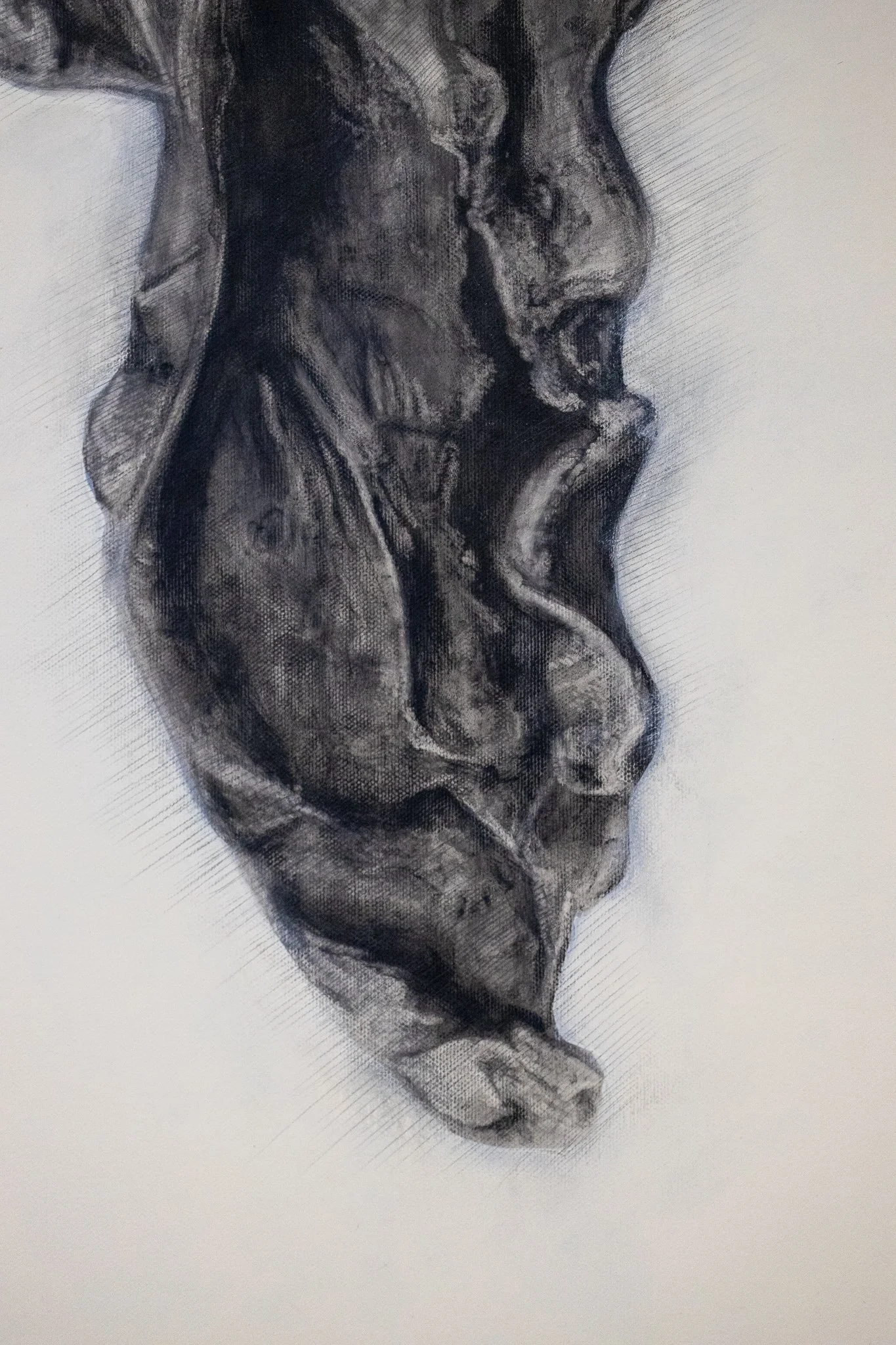
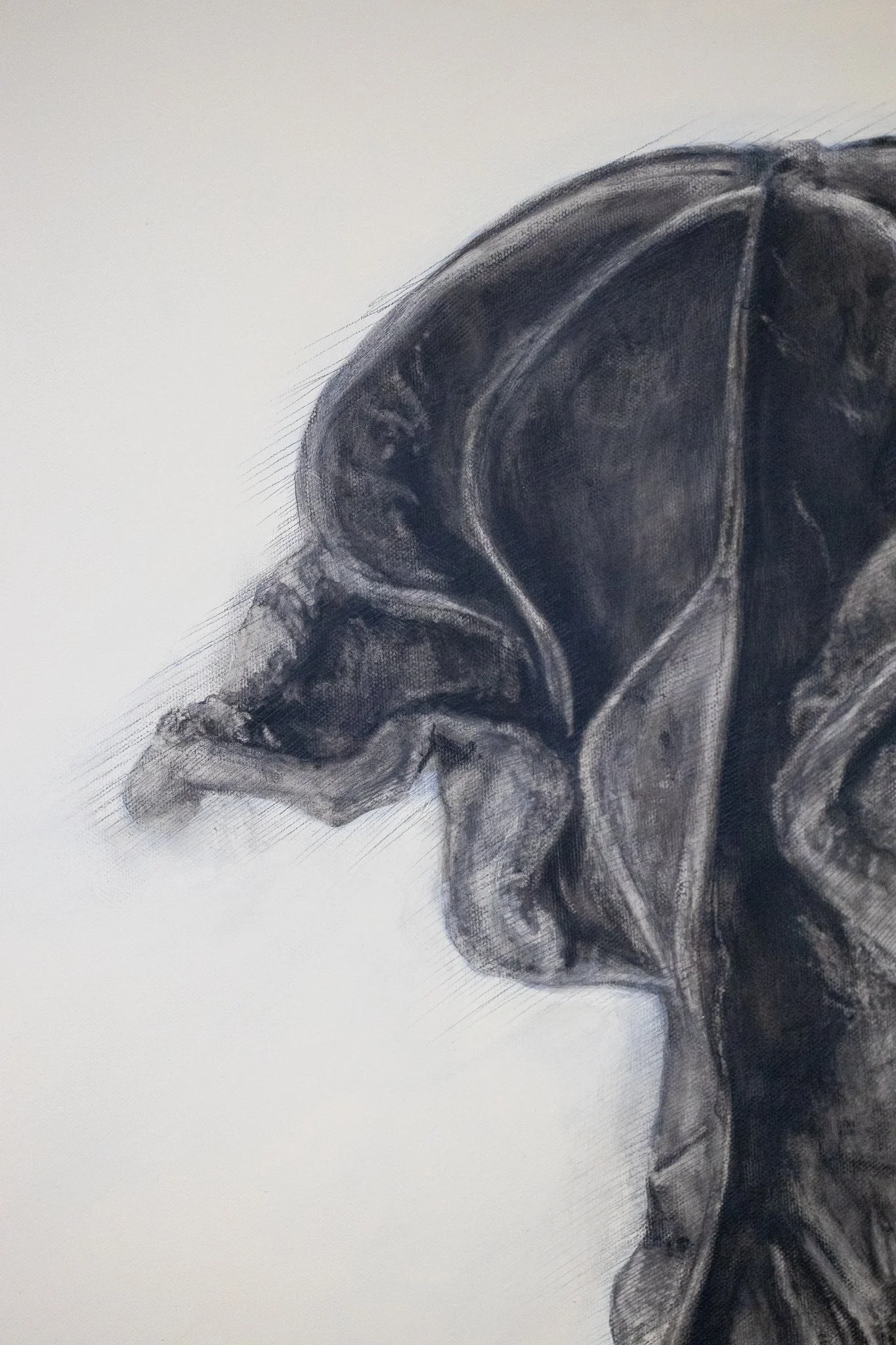
The idea for Mantenerse Humano (Staying Human) emerged during the COVID-19 pandemic as an artist-led curatorial project. I established a three-stage conceptual framework: a sci-fi-like future and the feeling of extinction; ancestral identity and post-human relationships with nature; and then invited artists Óscar Pérez, Edwin Soriano, and Enrique Alarcón to merge ideas exclusively from the first stage, with the intention of diluting authorship and creating an experience through the space installations. They were welcomed to offer their views in response. Based on the premise that "what matters is not staying alive, but staying human," reflecting on George Orwell’s novel 1984, the project developed out of reflections and the subsequent discussions I had with the participating artists regarding isolation, technological acceleration, the environmental crisis, displacement, and the ways in which these circumstances were altering our relationships with each other and with the natural world.
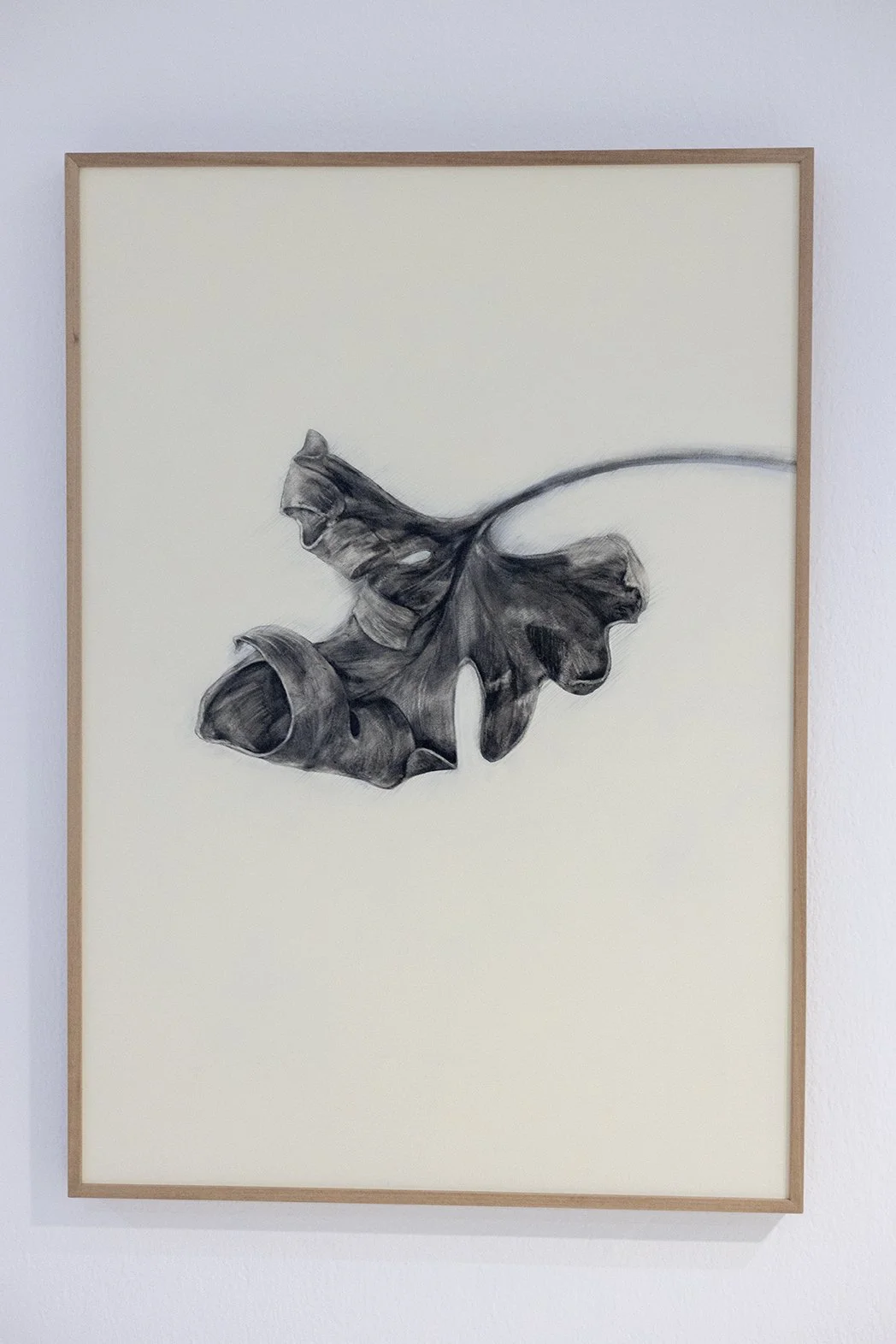
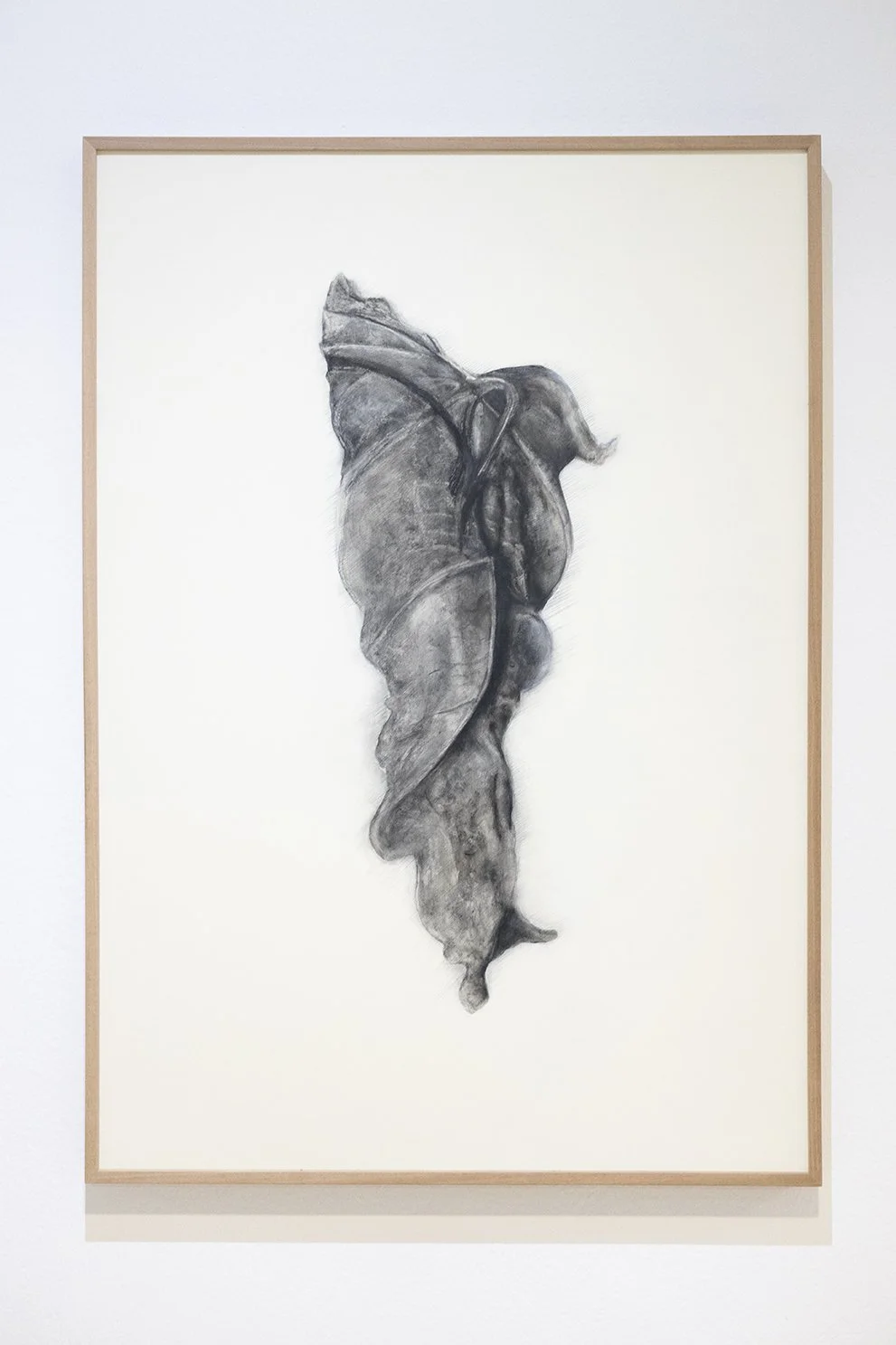
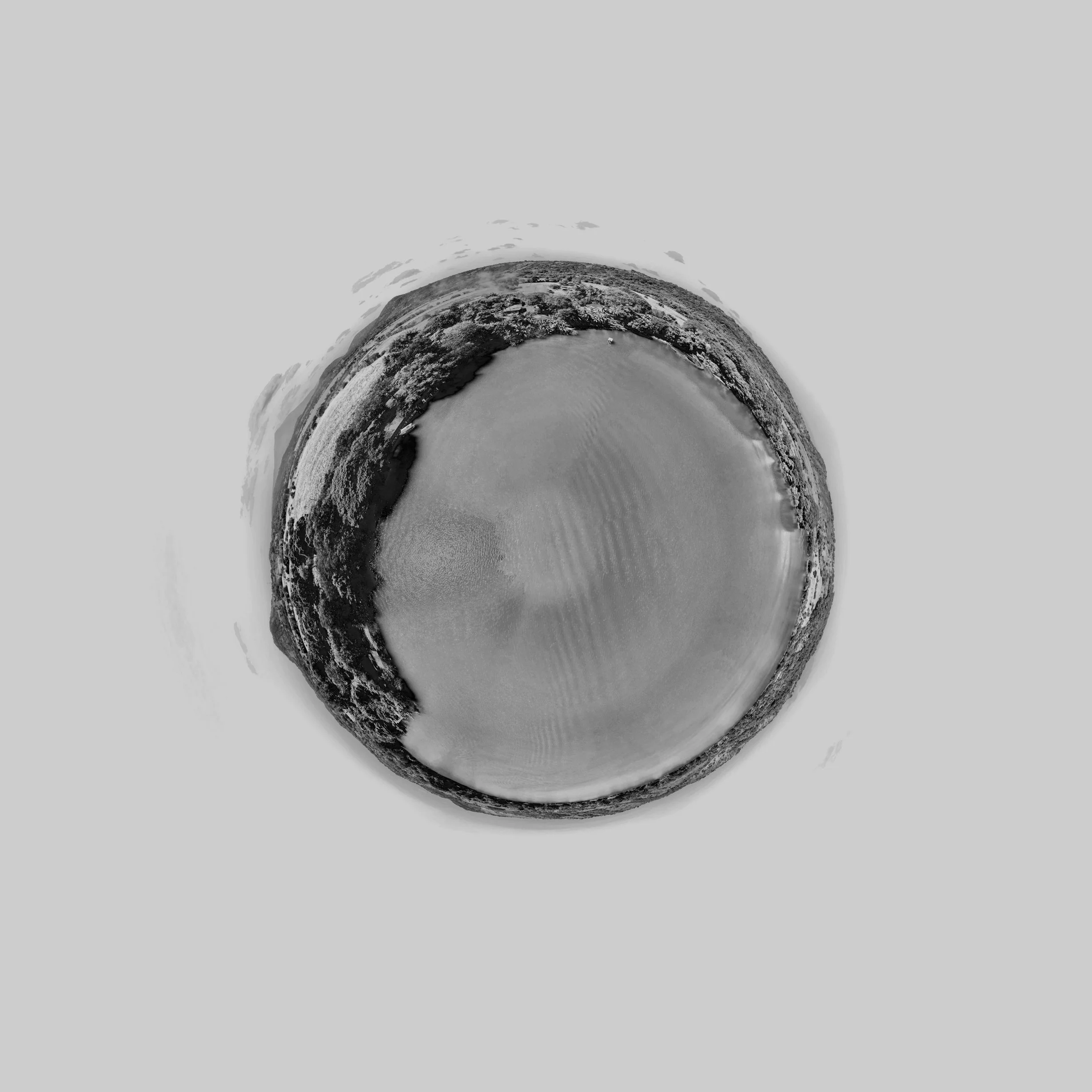
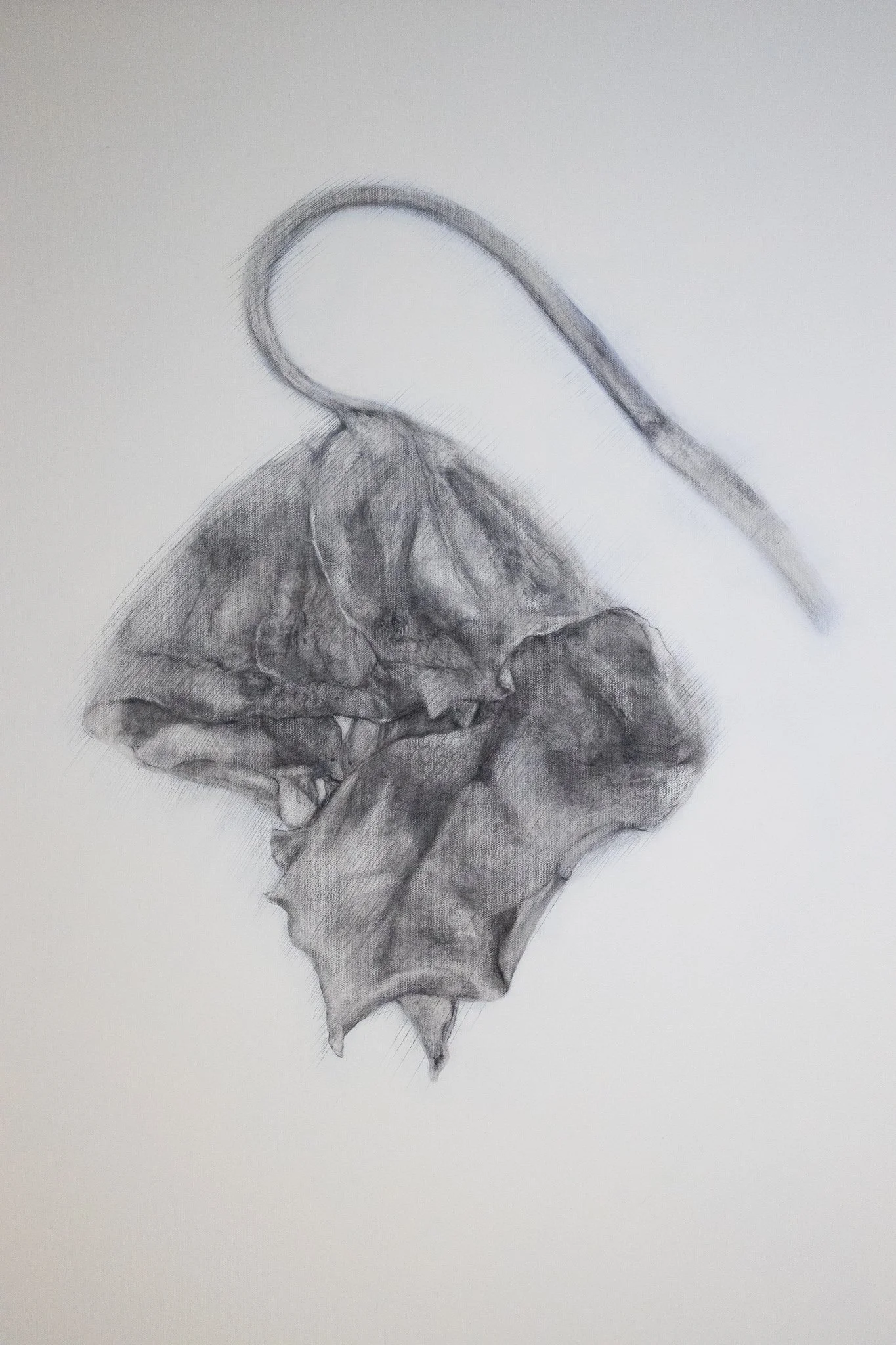
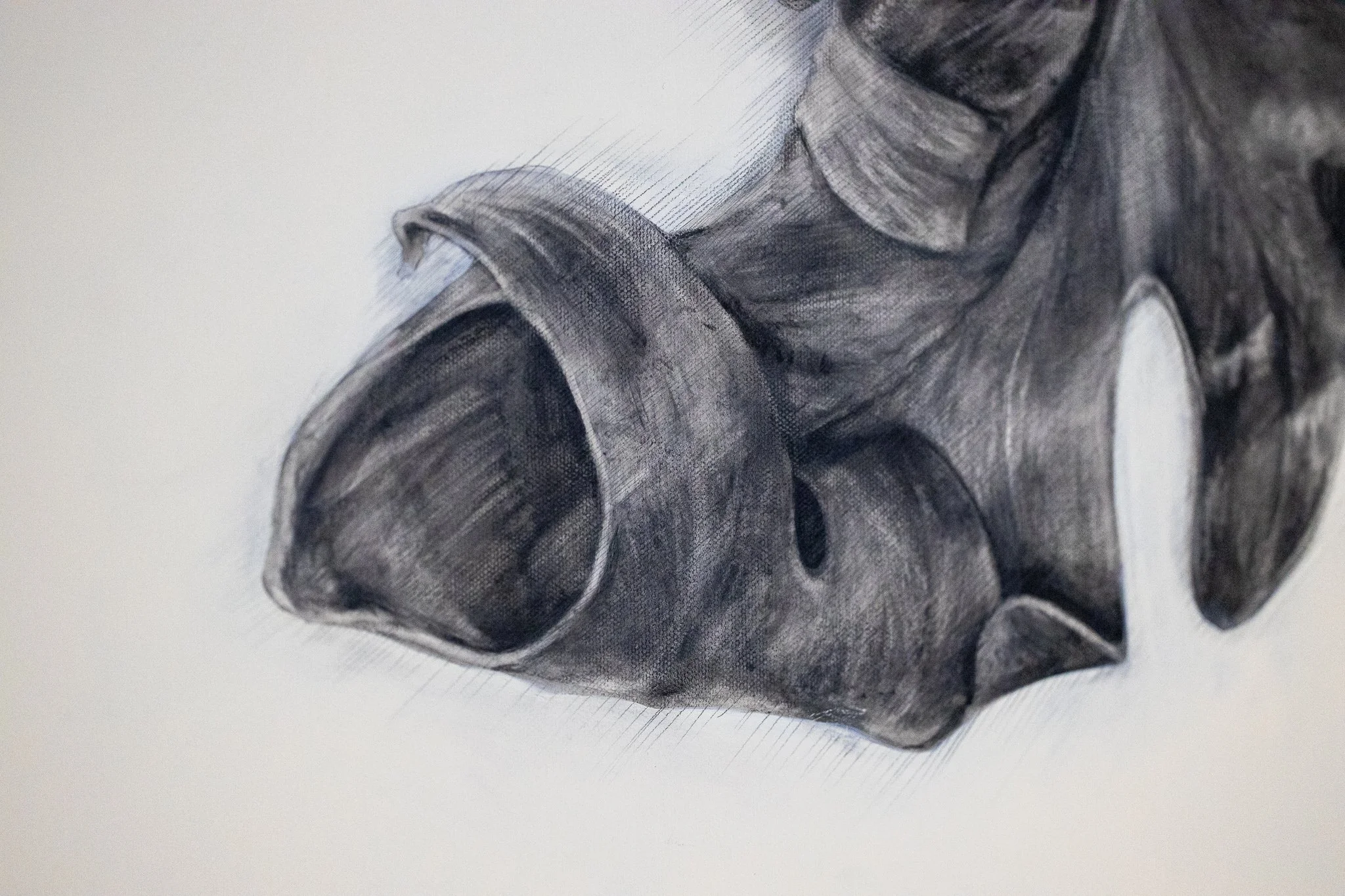
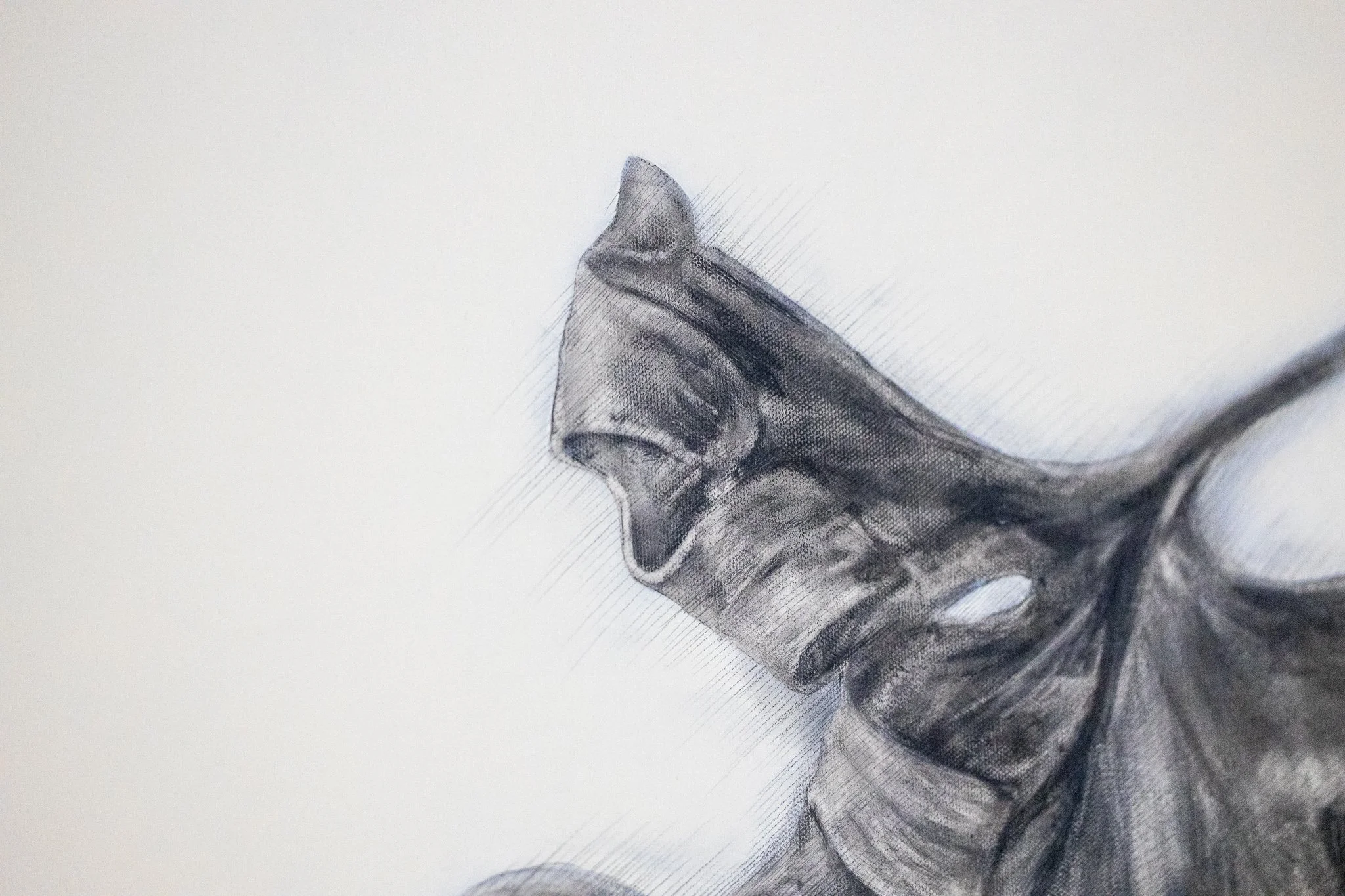
Working from different locations in El Salvador and the United States, the participating artists contributed dioramas, sculptures, artifacts, drawings, and photographs that brought different perspectives to the project’s central questions. The project connects personal and collective experiences of the pandemic to a broader contradiction: while contemporary societies increasingly imagine technological solutions for human survival—from artificial intelligence and virtual environments to the possibility of leaving the planet—the extraction of resources needed to sustain these technologies continues to harm ecosystems and displace Indigenous communities.
Against this trajectory, Mantenerse Humano considers forms of ancestral knowledge that understand human survival through a more reciprocal relationship with the environment. Rather than presenting these traditions as something that can be recovered, the project approaches them as fragmented knowledge that persists through objects, materials, landscapes, and inherited memory. Through dialogue between the invited artists and the project’s conceptual framework, Mantenerse Humano asks whether technological progress alone can sustain human life, or whether remaining human also requires recovering ways to listen to and live with the world around us.
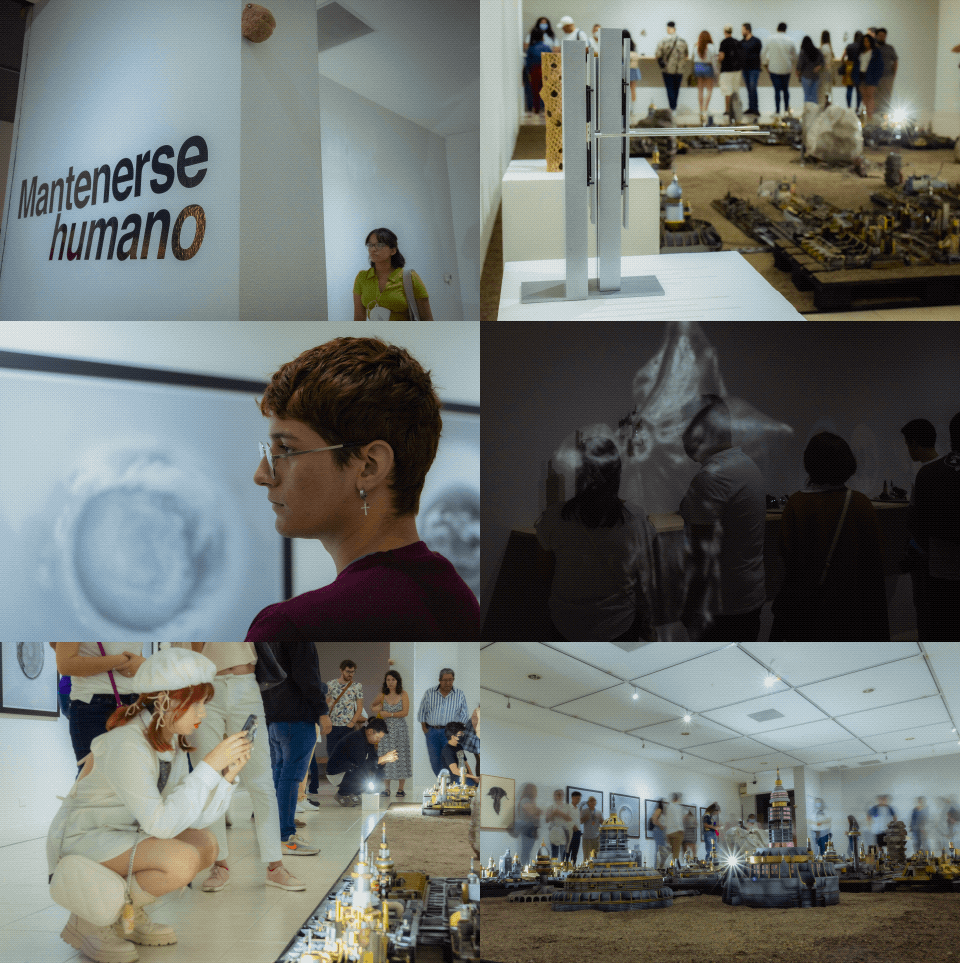
The project was collectively presented at the Museo de Arte de El Salvador (MARTE) in 2023 and Museo FORMA in 2024. I presented an individual iteration of my work from the project at Celestial Spaces as part of the Soil Factory artist residency in Ithaca, New York, in 2023. Mantenerse Humano is also scheduled for inclusion in Cartographies of Otherness, curated by Vaida Tamoševičiūtė at Meno Parkas Gallery in Kaunas, Lithuania, in November 2026.

























Short version
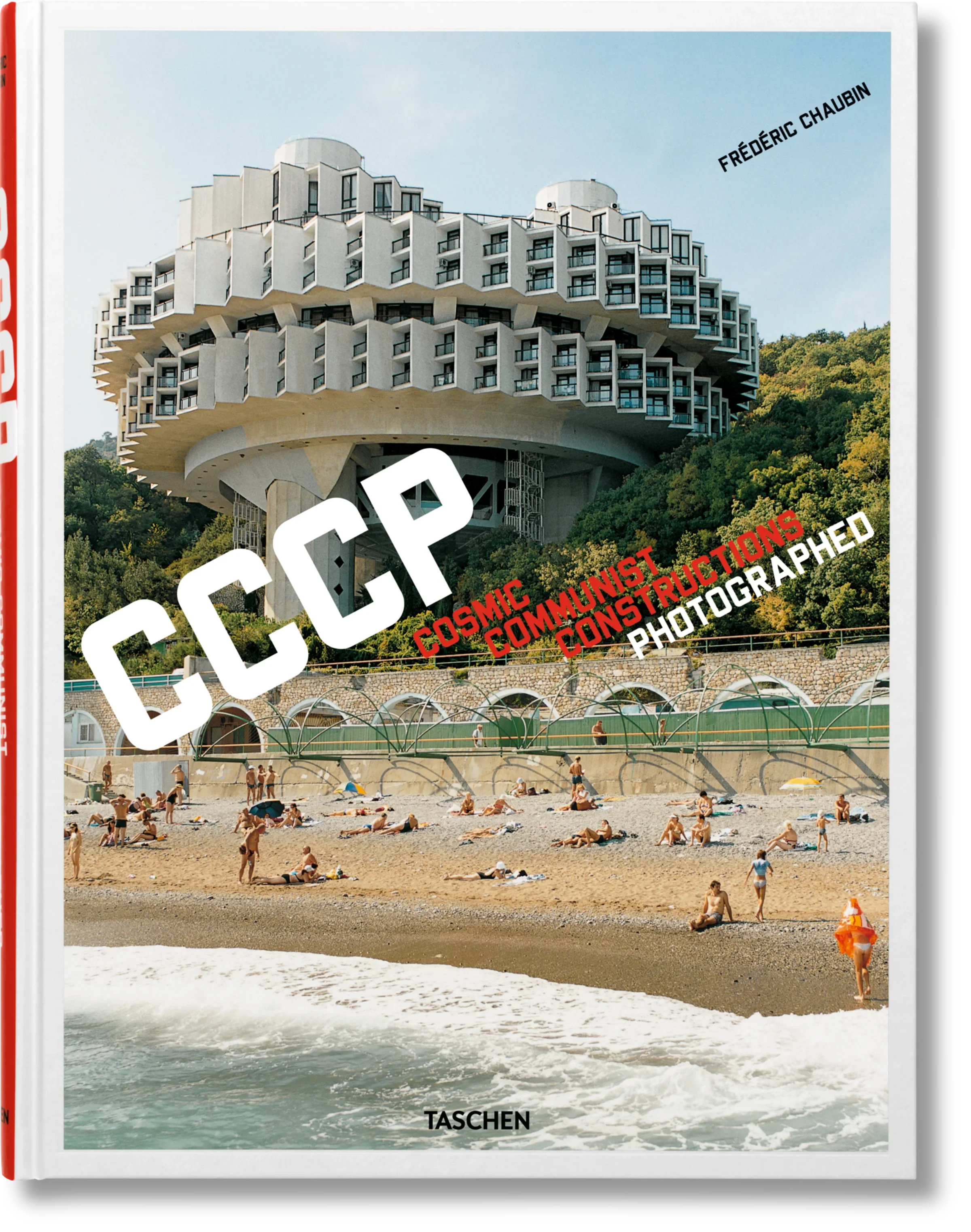
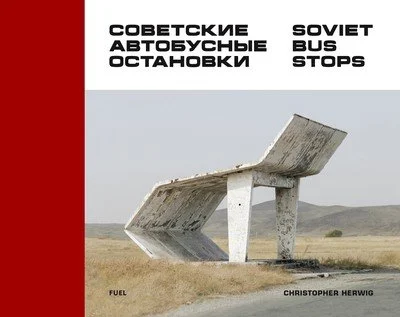

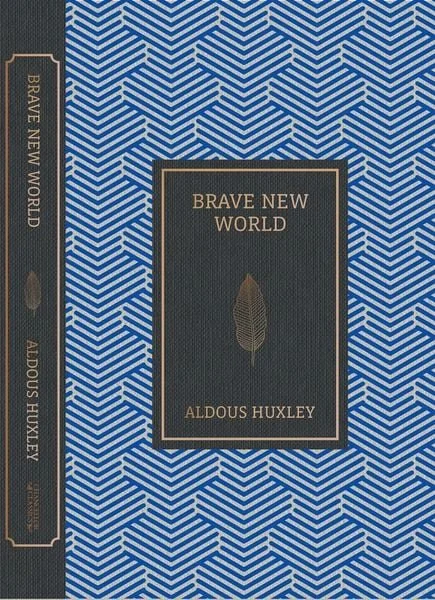
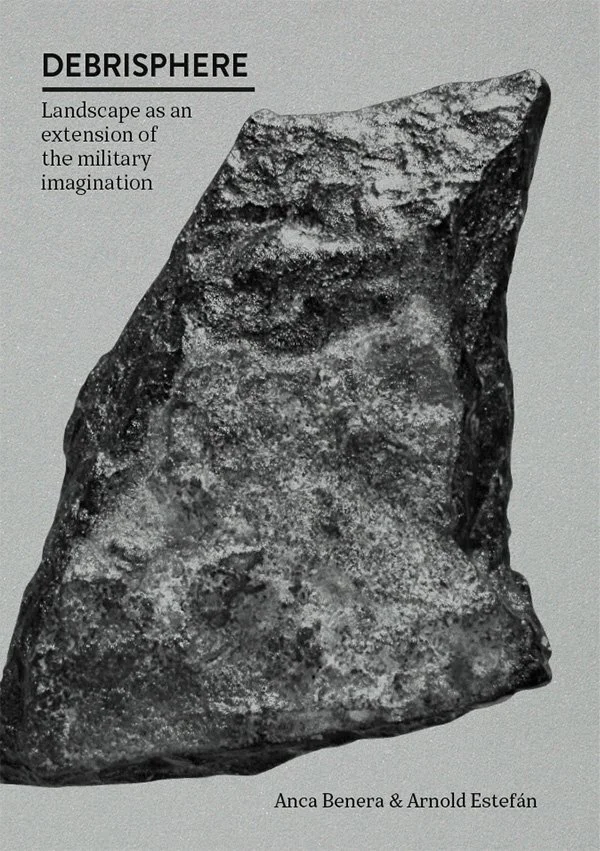
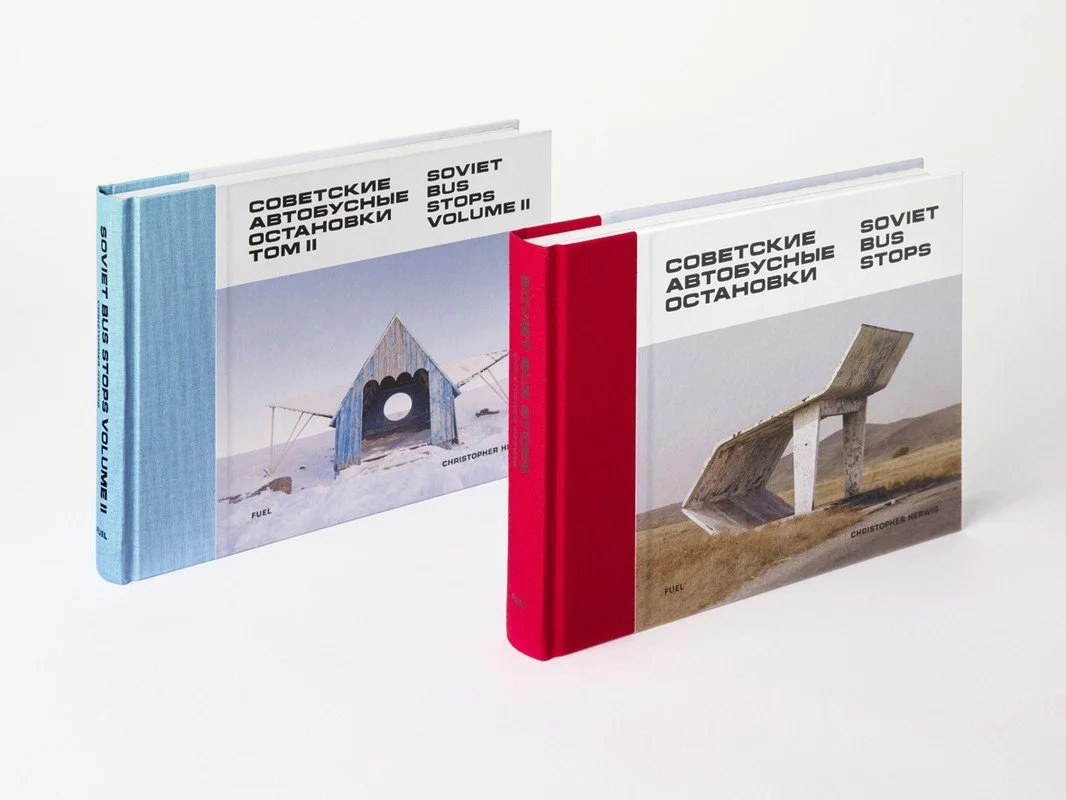
Books of reference: 1984 by George Orwell; Brave New World by Aldous Huxley; Debrisphere: Landscape as an Extension of the Military Imagination Anca Benera & Arnold Estefan; Frédéric Chaubin. CCCP. Cosmic Communist Constructions Photographed; Soviet Bus Stops by Christopher Herwig
Reflexions: Staying Human is a project conceived in 2020, a year marked by the COVID-19 pandemic and profound transformations in socioeconomic and geopolitical dynamics. In response to this context, over approximately two years, together with a team of invited artists, we developed formal studies and experiments that, through different artistic expressions, sought to establish relationships between diverse geographic and social realities: New York, United States, and different territories in El Salvador, including La Libertad, Tamanique, and Calle al Volcán.
During this period, technology use intensified significantly, particularly mobile devices and digital platforms, while the development of virtual reality technologies and, subsequently, artificial intelligence accelerated.
El Salvador, the smallest country in Central America, has widespread mobile device use, while a considerable part of its population lives outside its borders, particularly in the United States. Cities such as New York and Los Angeles are home to significant Salvadoran communities. Historically, a lack of immigration documentation has prevented many people from staying in regular contact with their families for extended periods. In this context, mobile devices have become essential tools for sustaining emotional bonds and staying connected to the lives and well-being of those far away.
At the same time, circumstances such as violence and insecurity have made different forms of confinement, restriction, and isolation part of the everyday experience of sectors of the Salvadoran population. The pandemic intensified these conditions and exposed the vulnerability of broad sectors of society.
The project also turns toward our precolonial past, establishing contrasts between contemporary forms of existence and other ways of understanding the relationship between human beings, nature, objects, and available resources. Rather than idealizing the past, I am interested in asking: What forms of knowledge have been displaced, transformed, or forgotten as our societies have become increasingly dependent on technological systems?
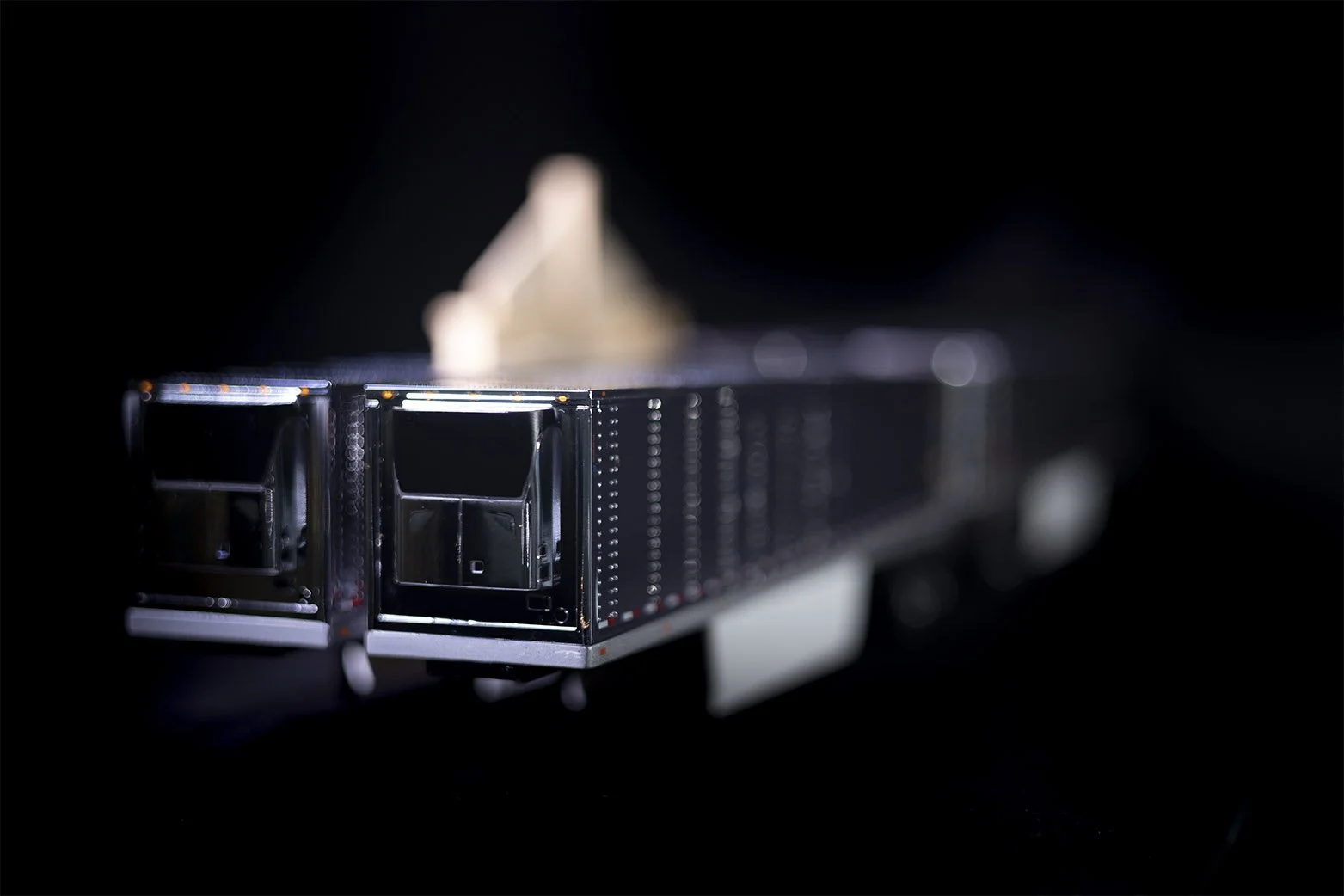
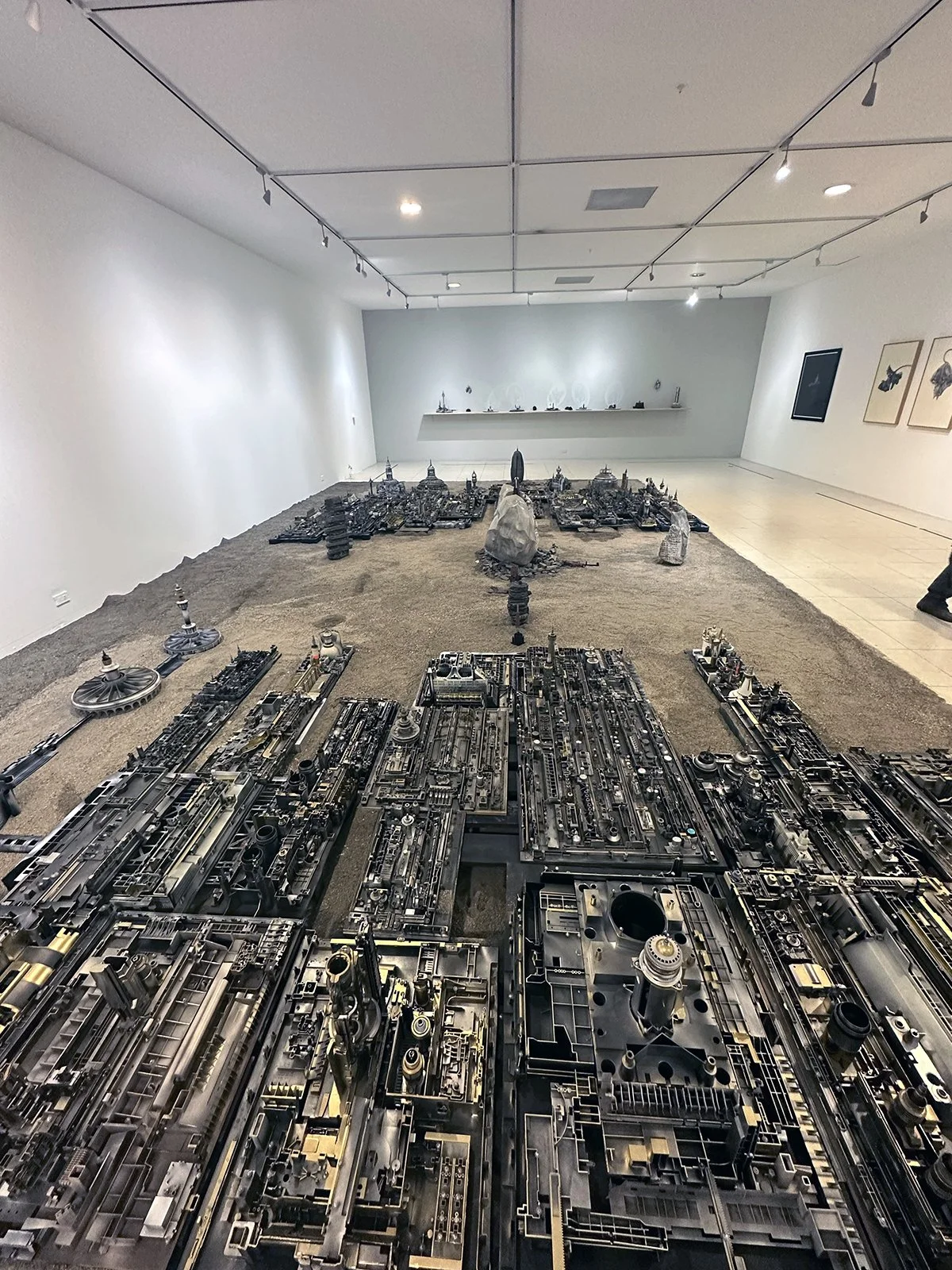
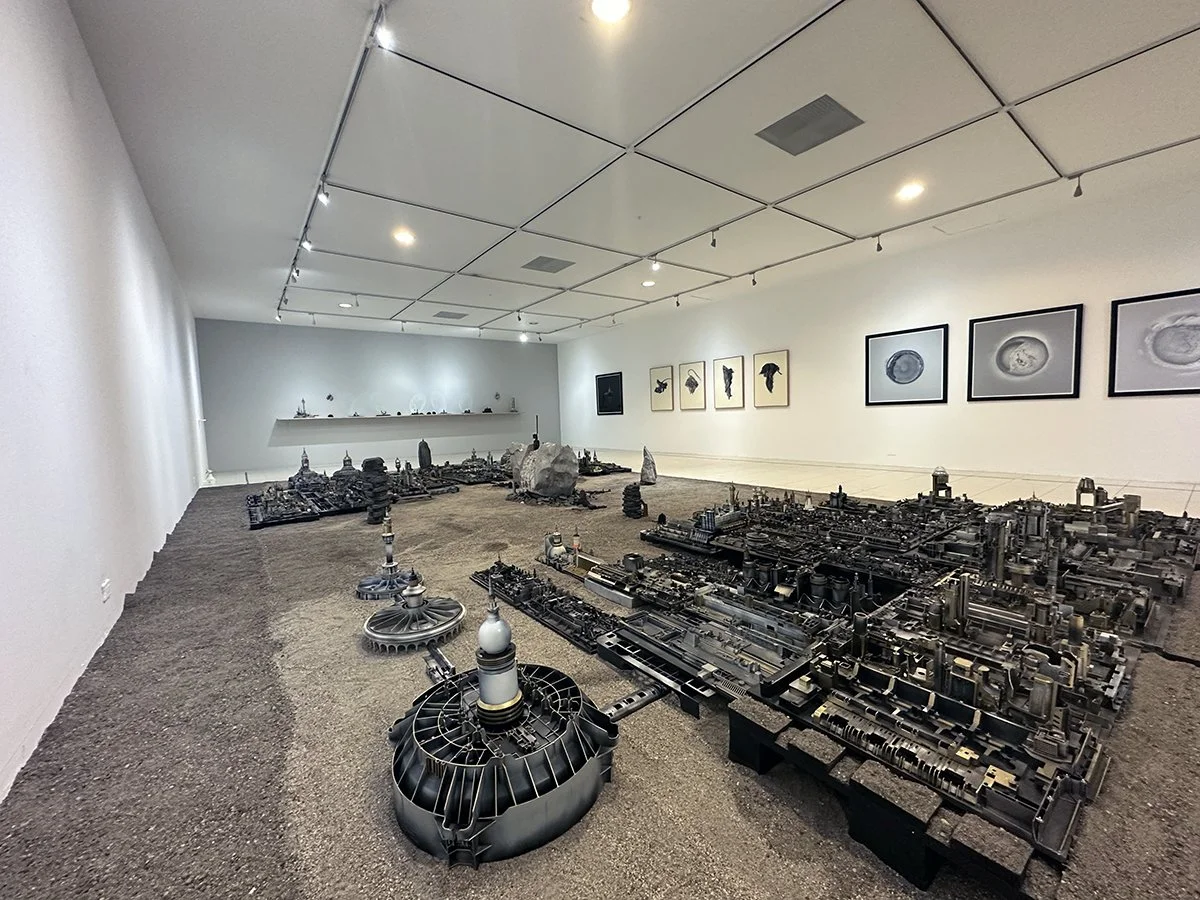
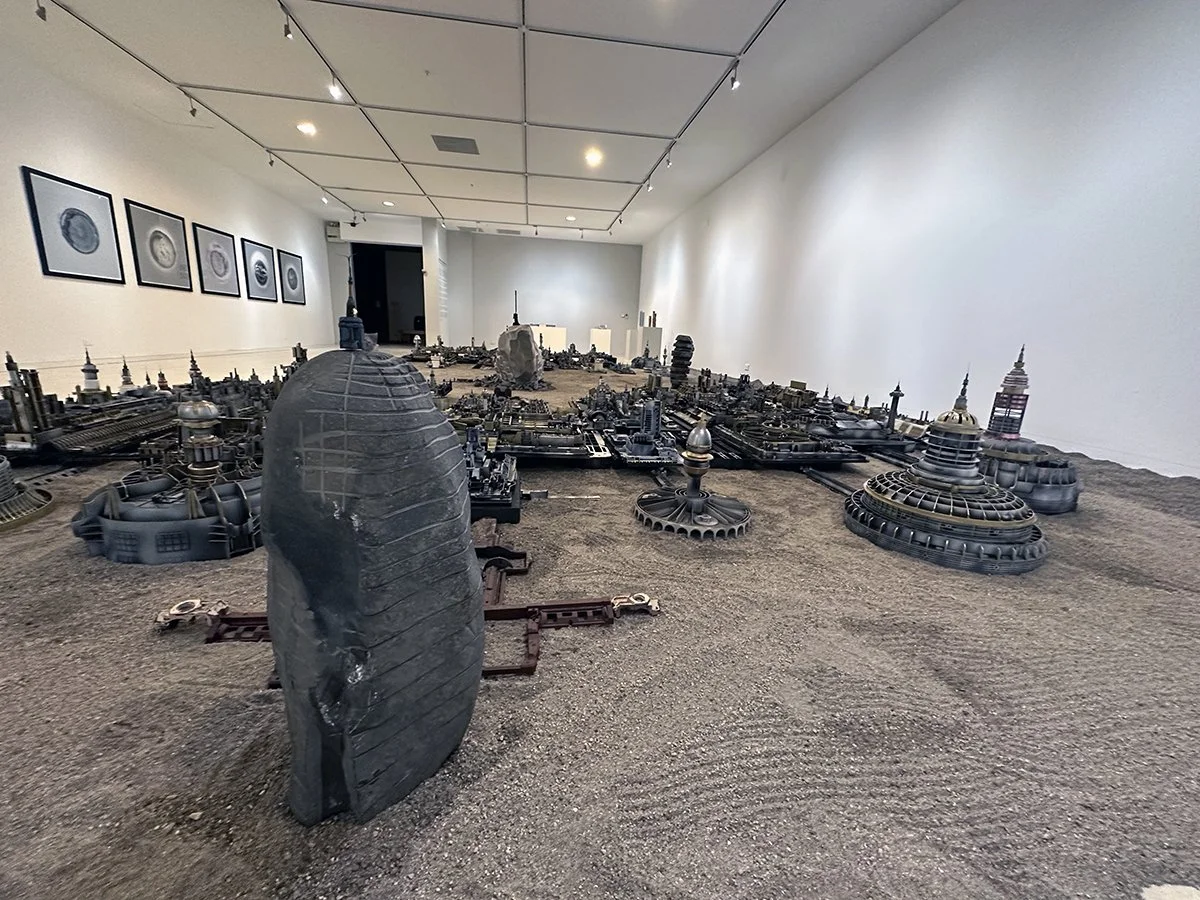
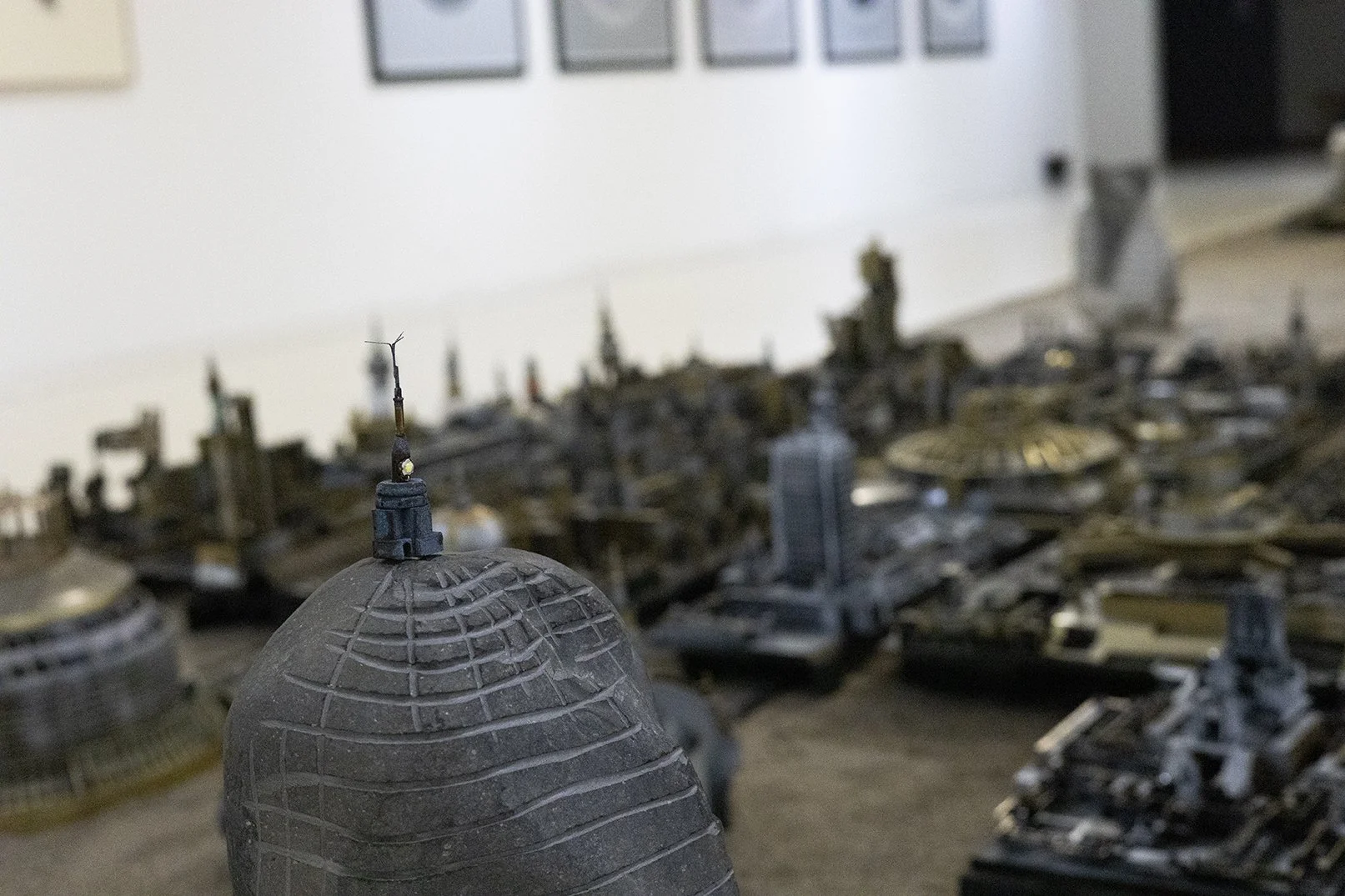
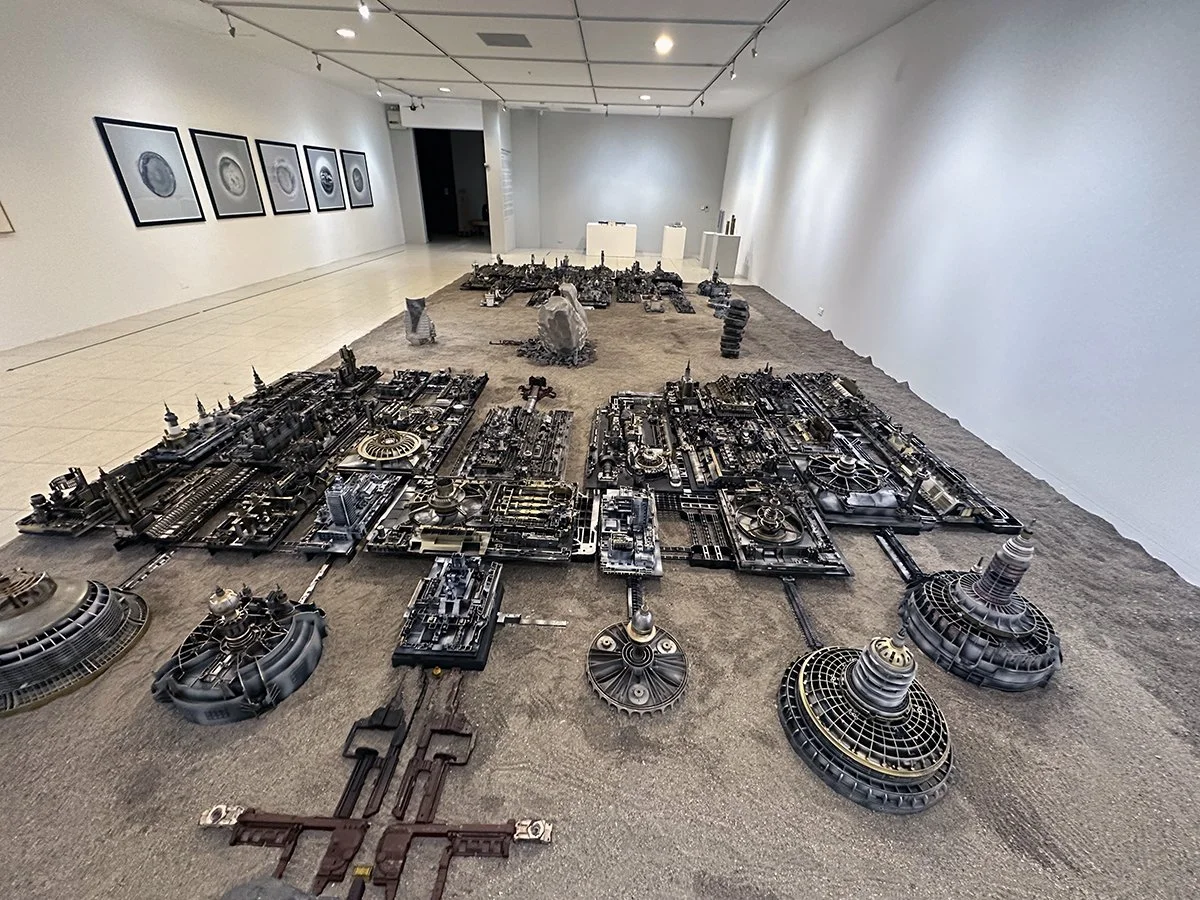
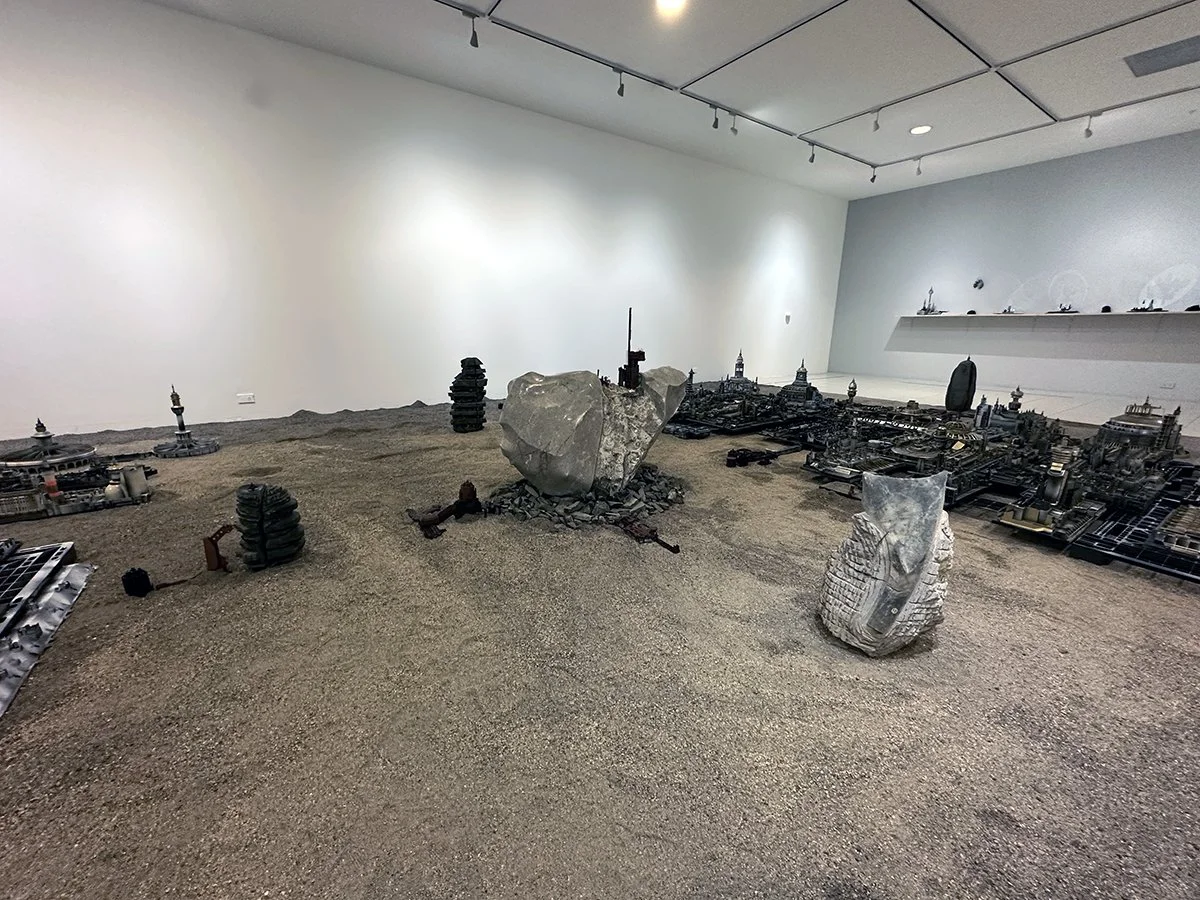
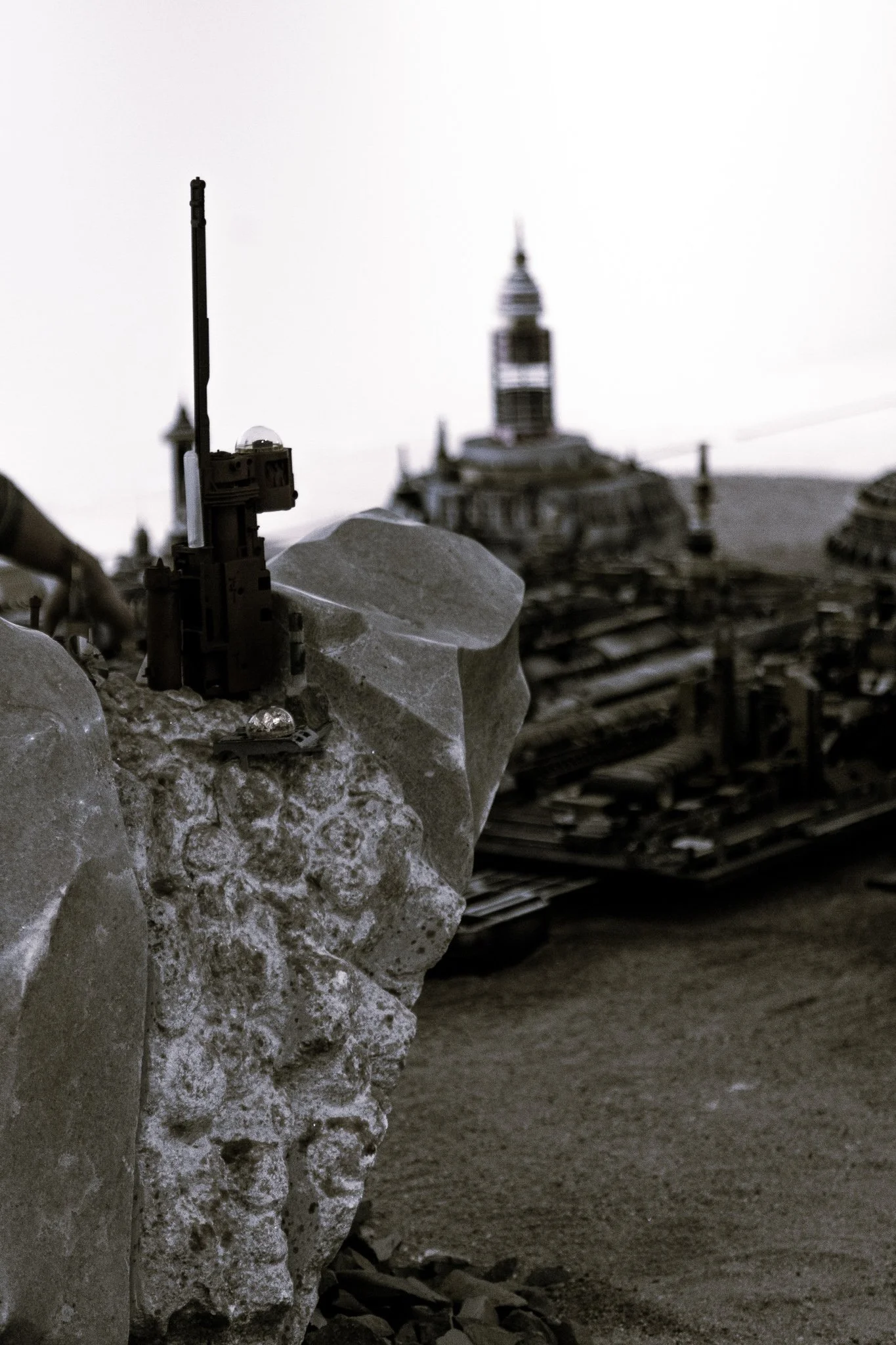
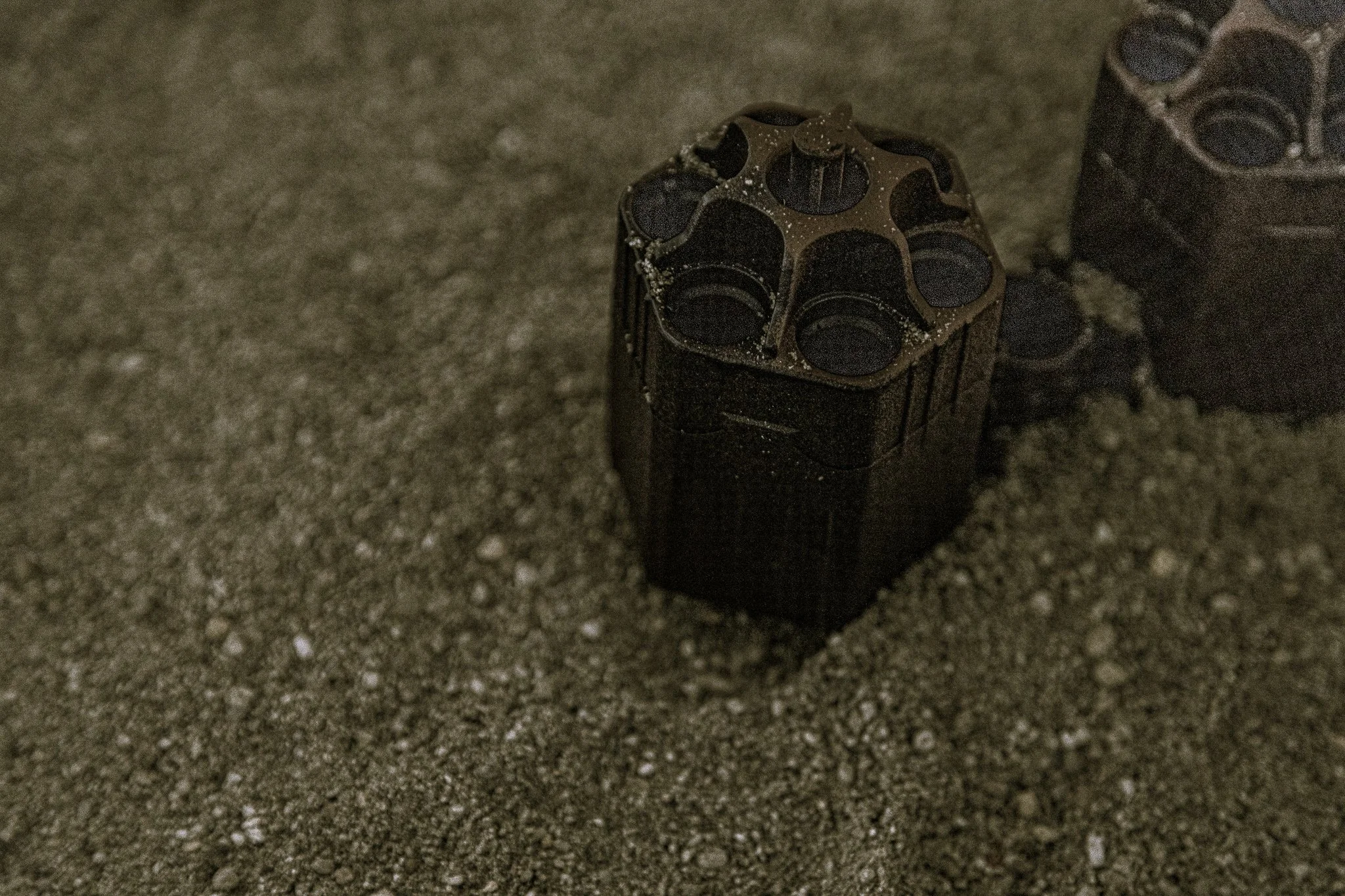
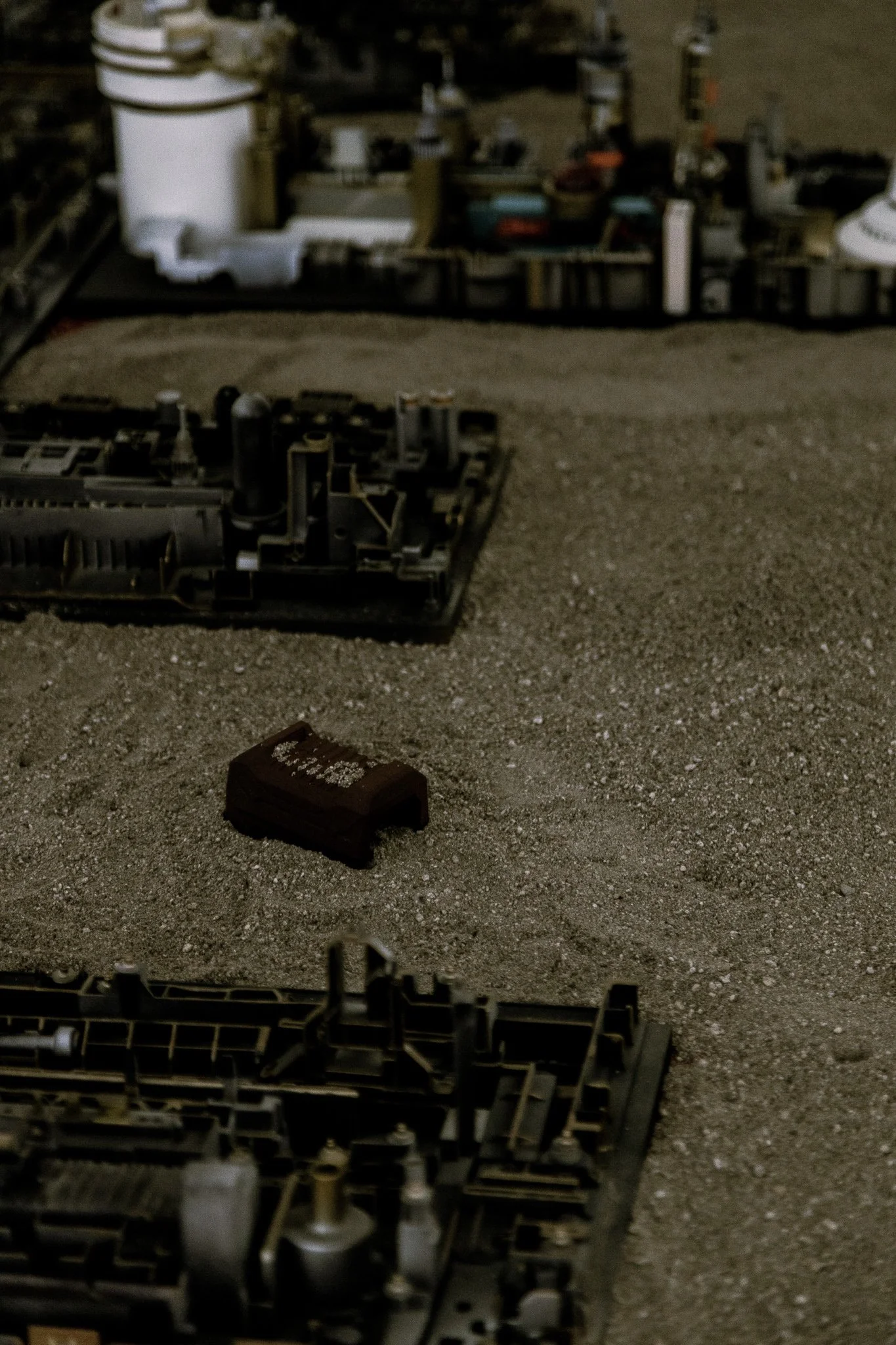
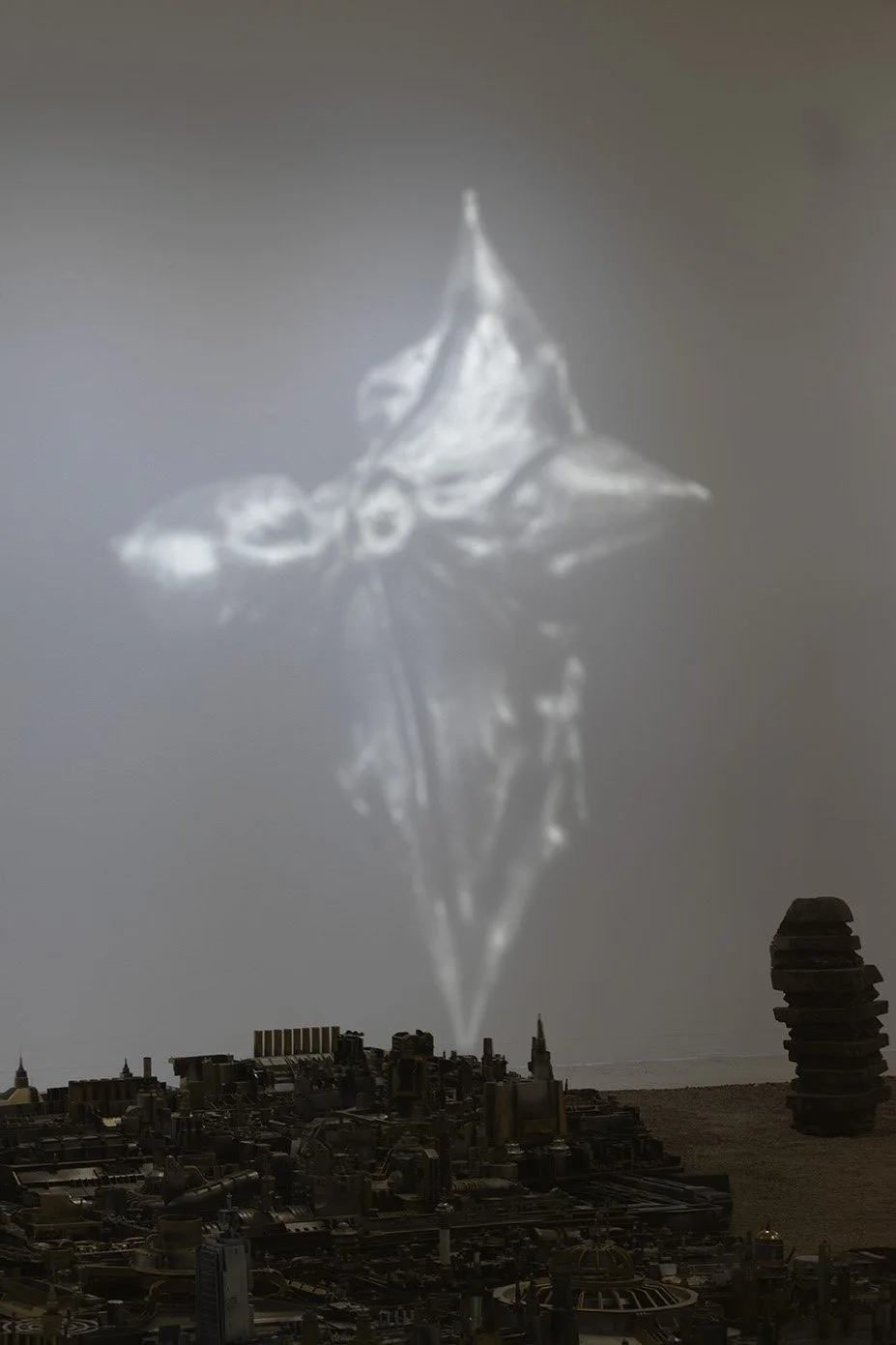
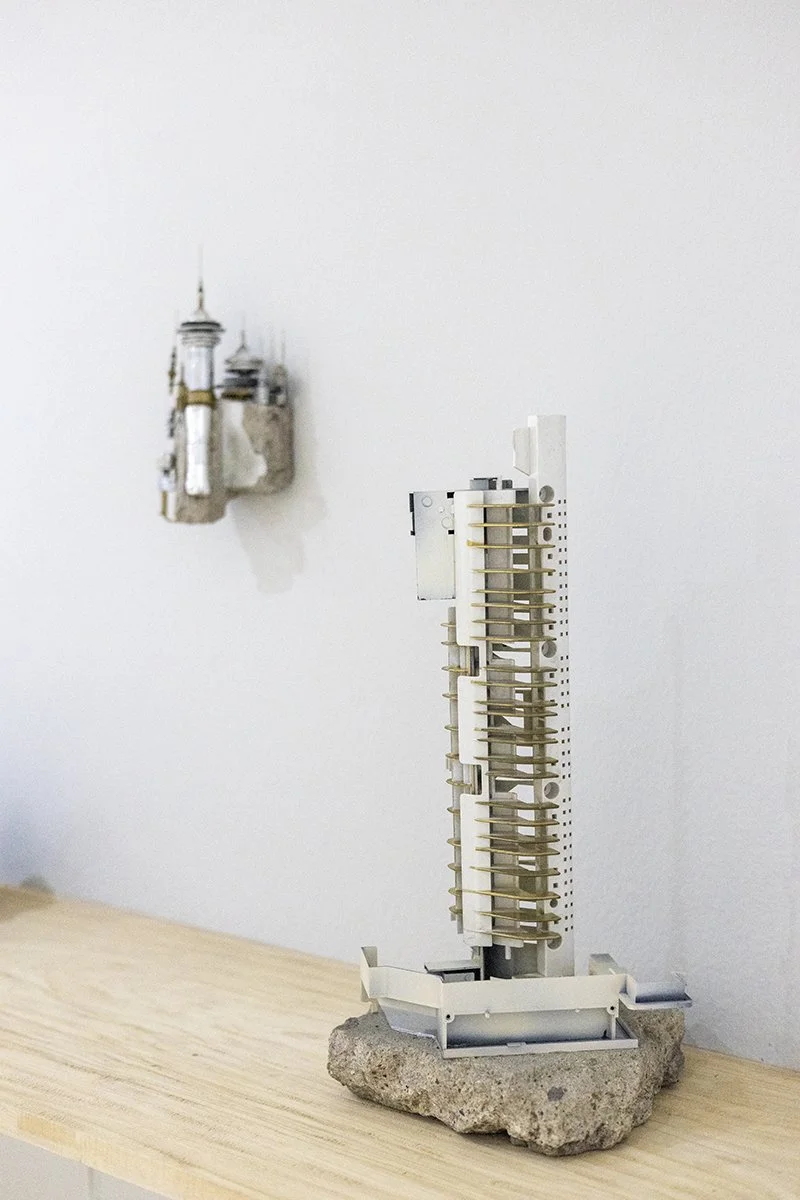
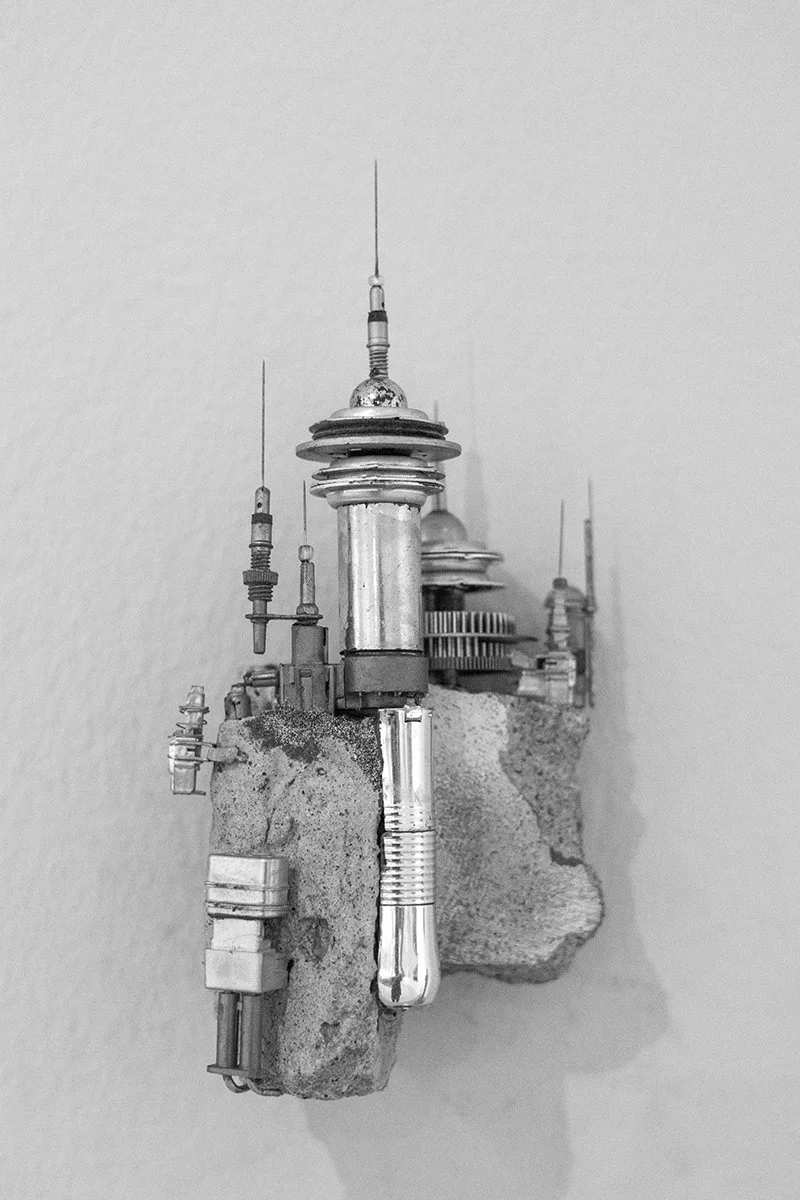
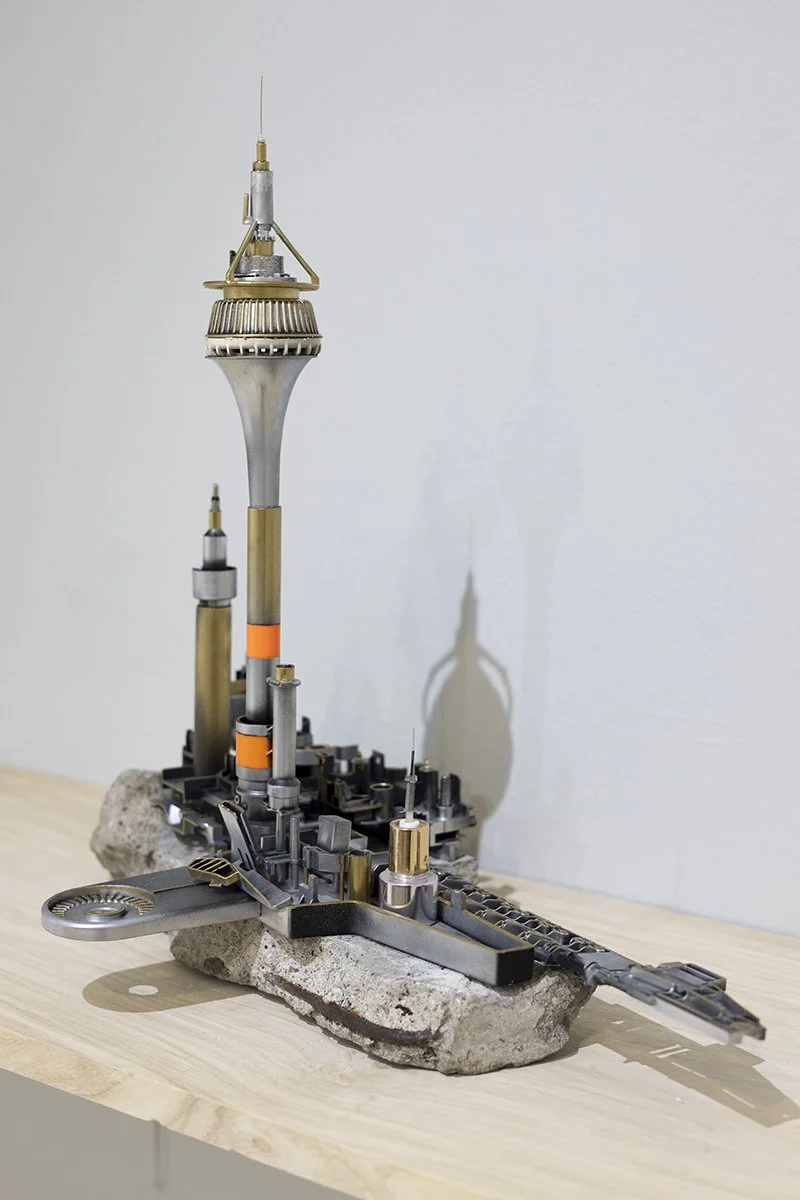
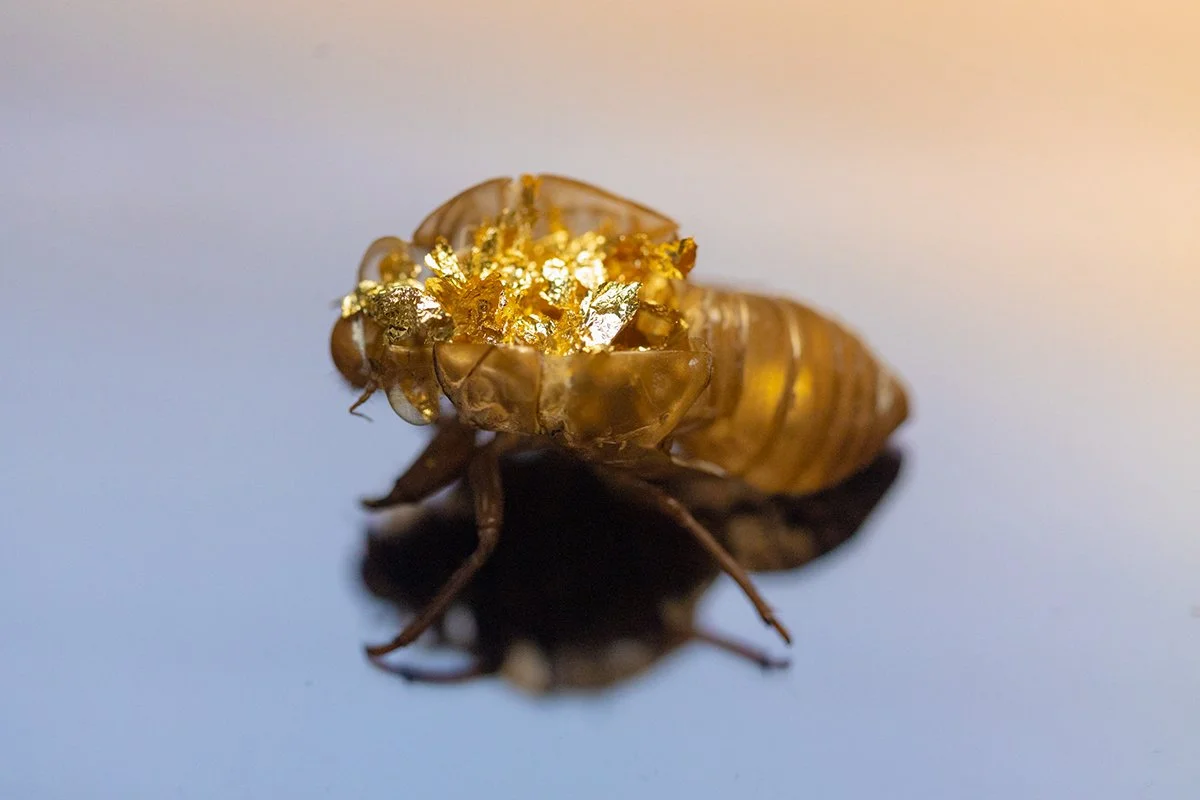
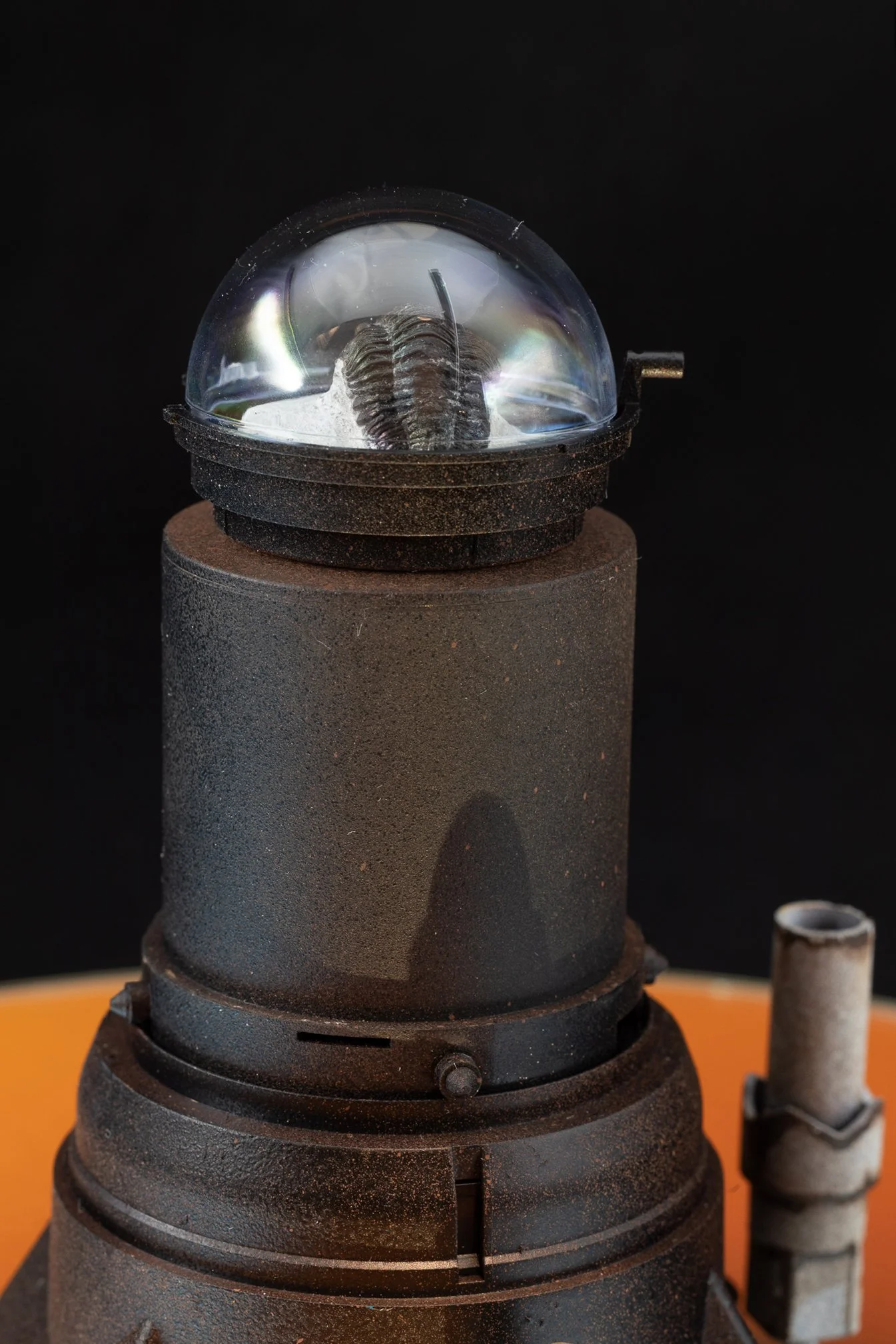
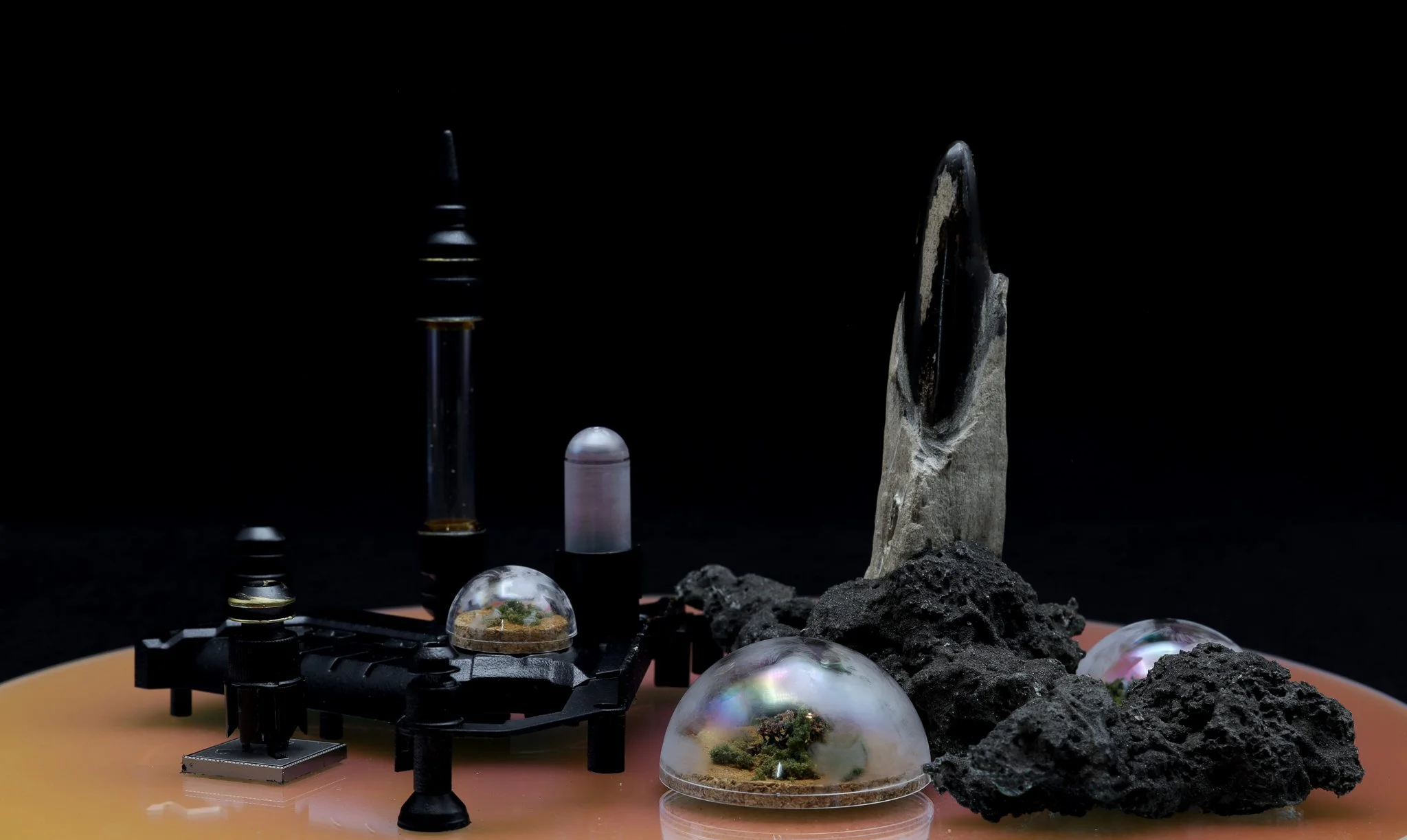
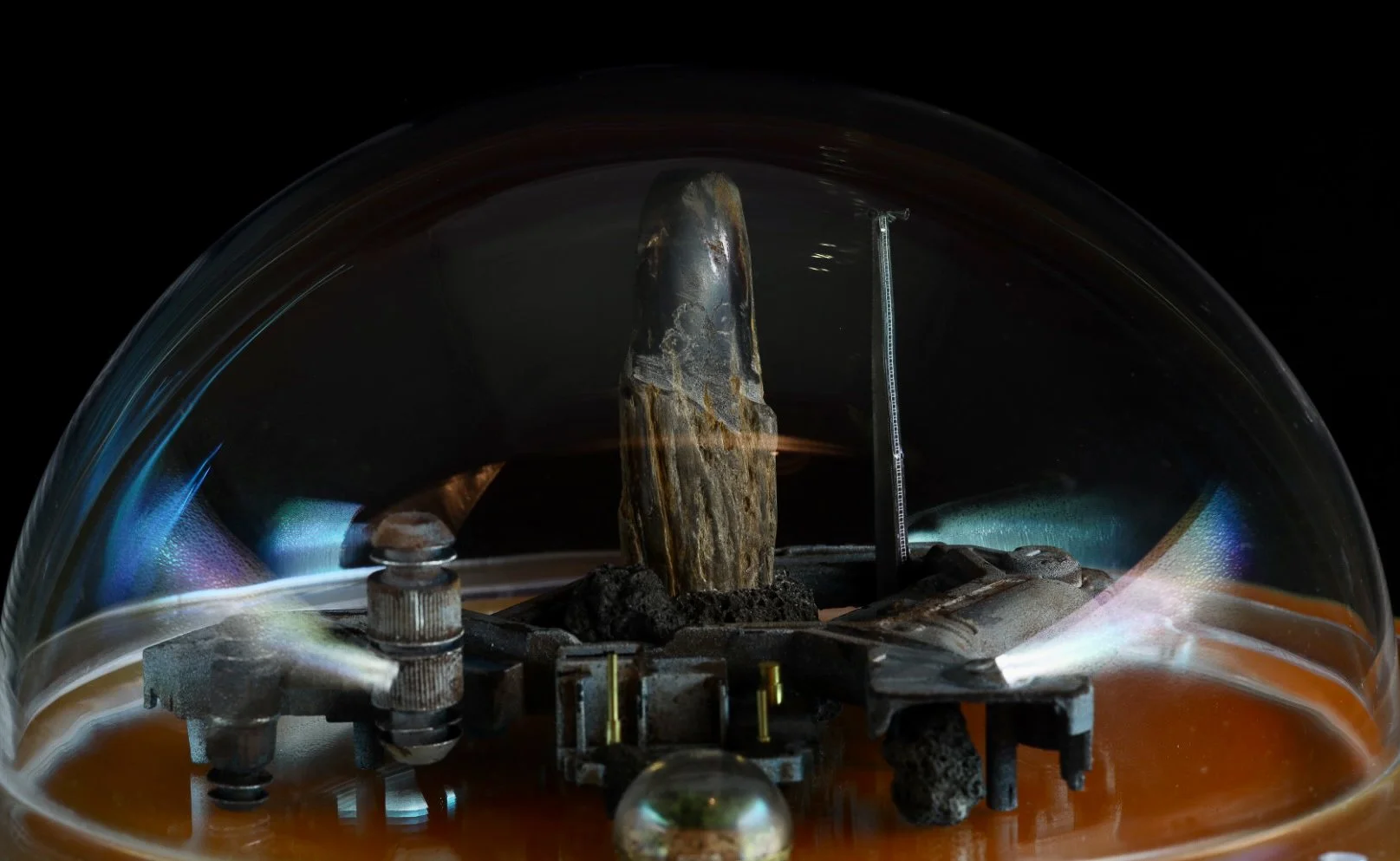
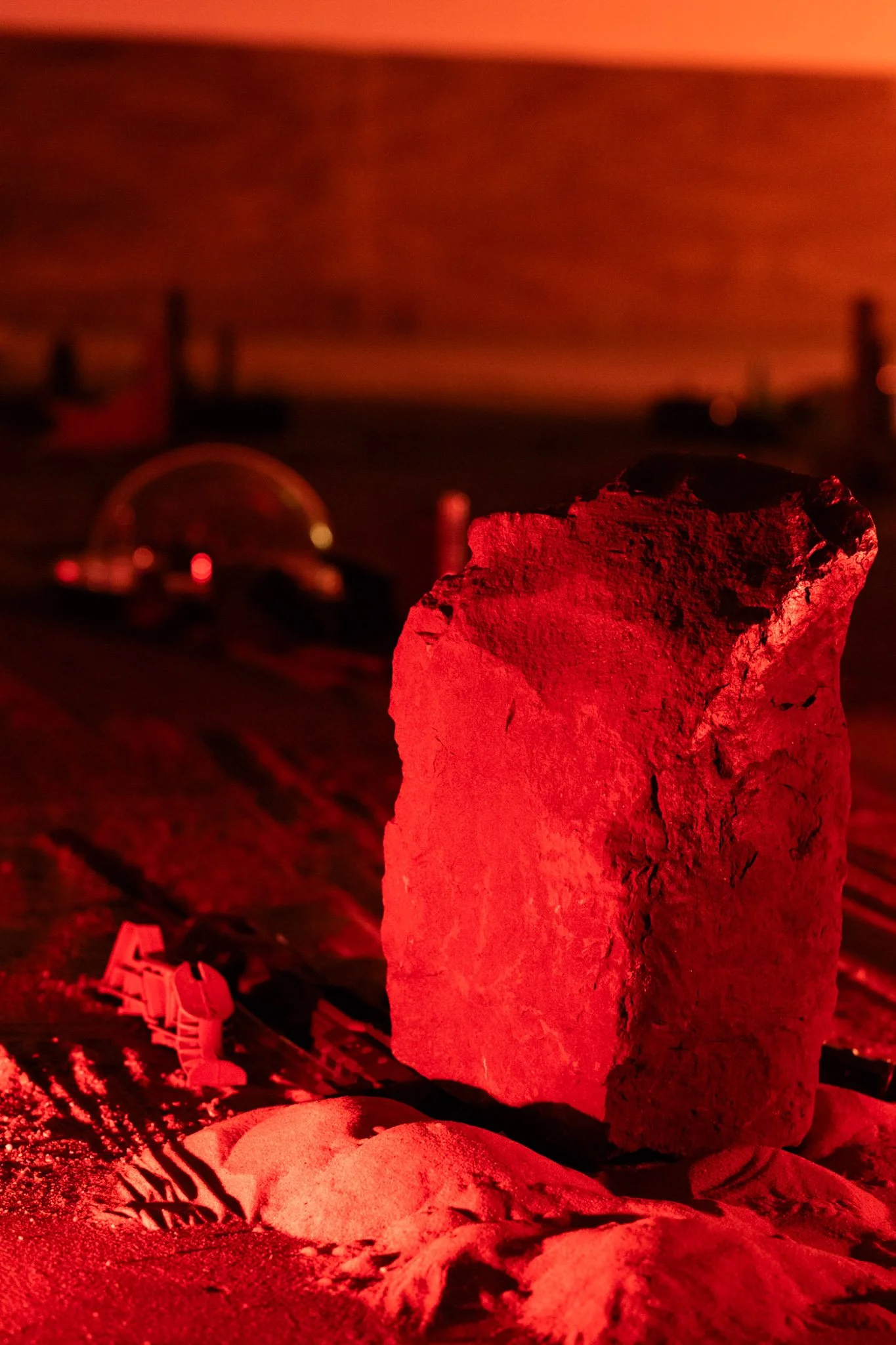
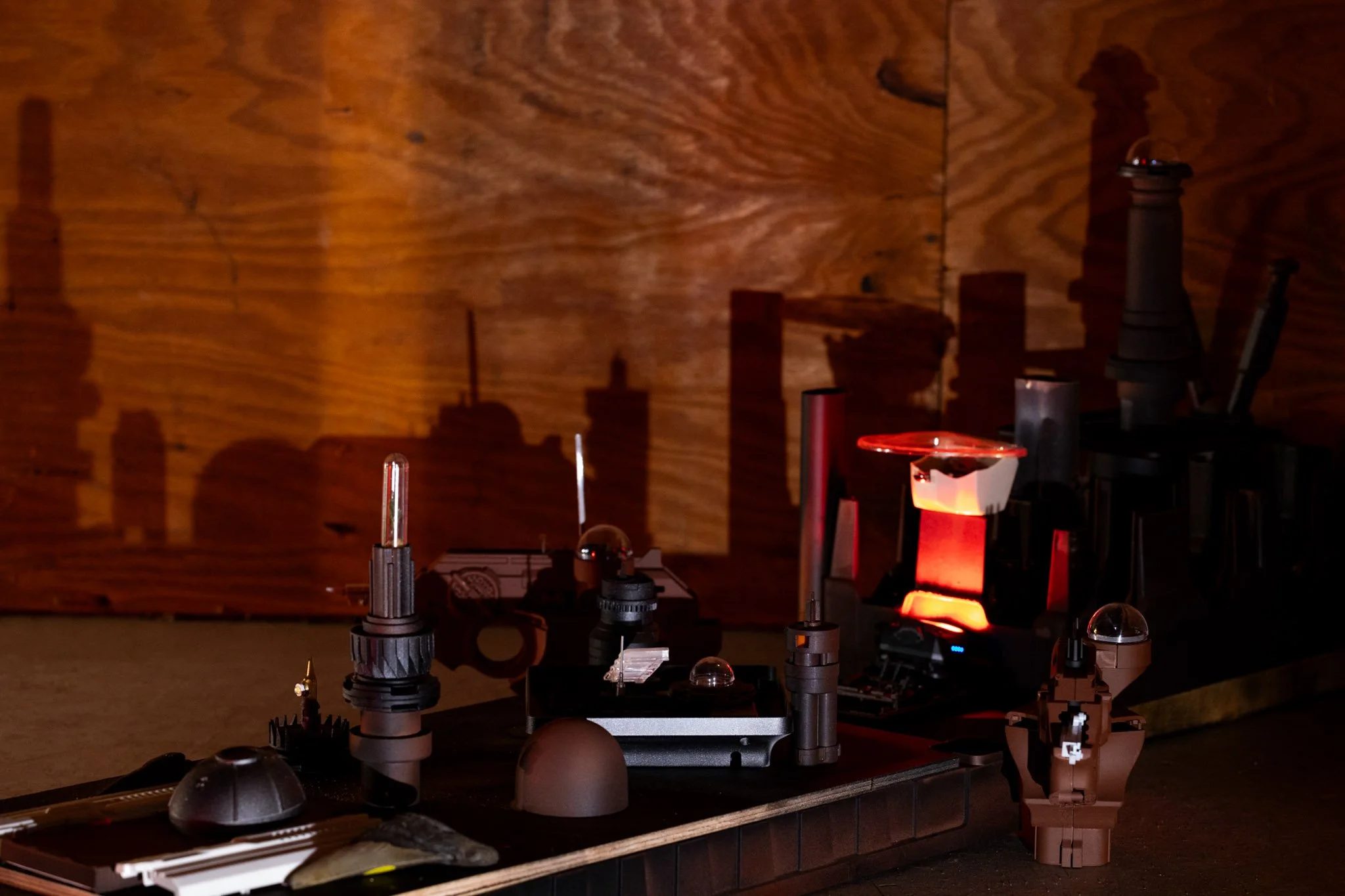
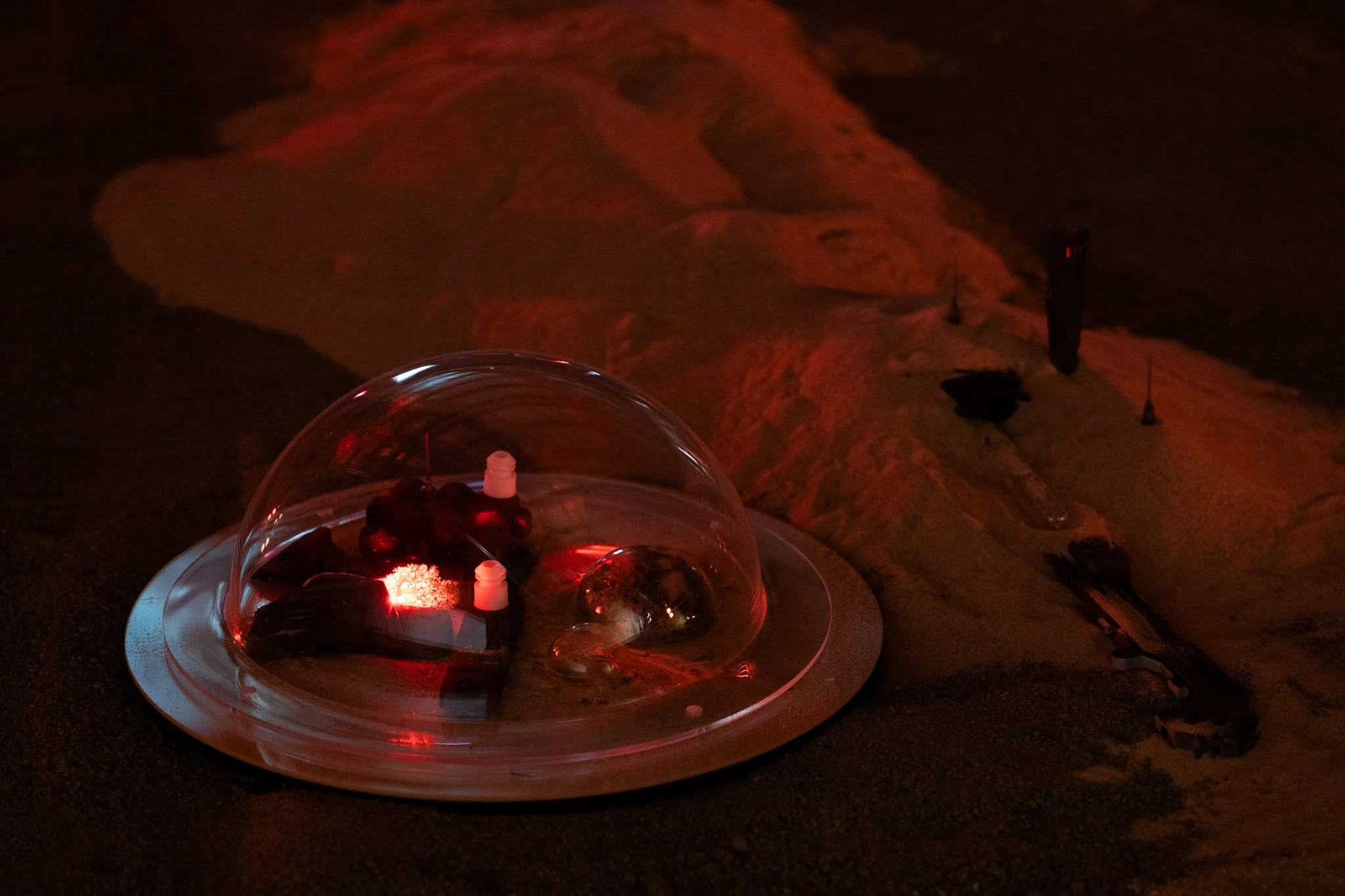
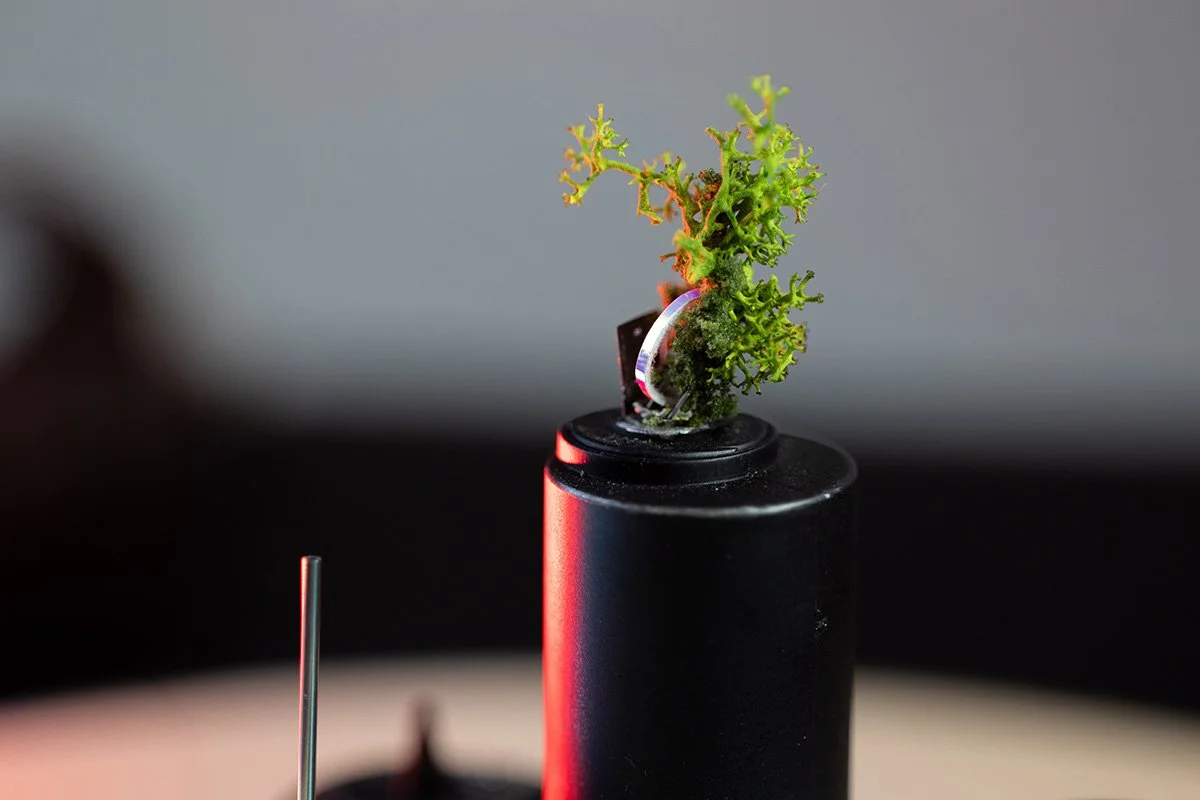
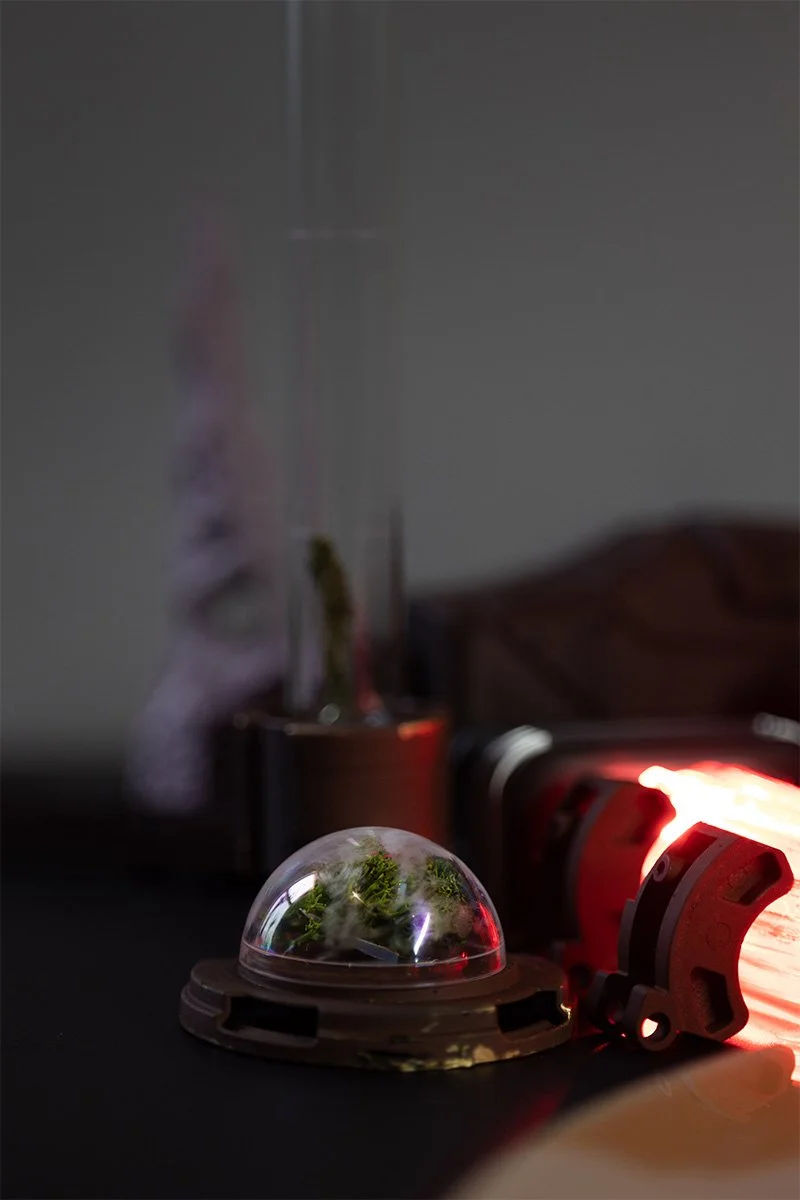
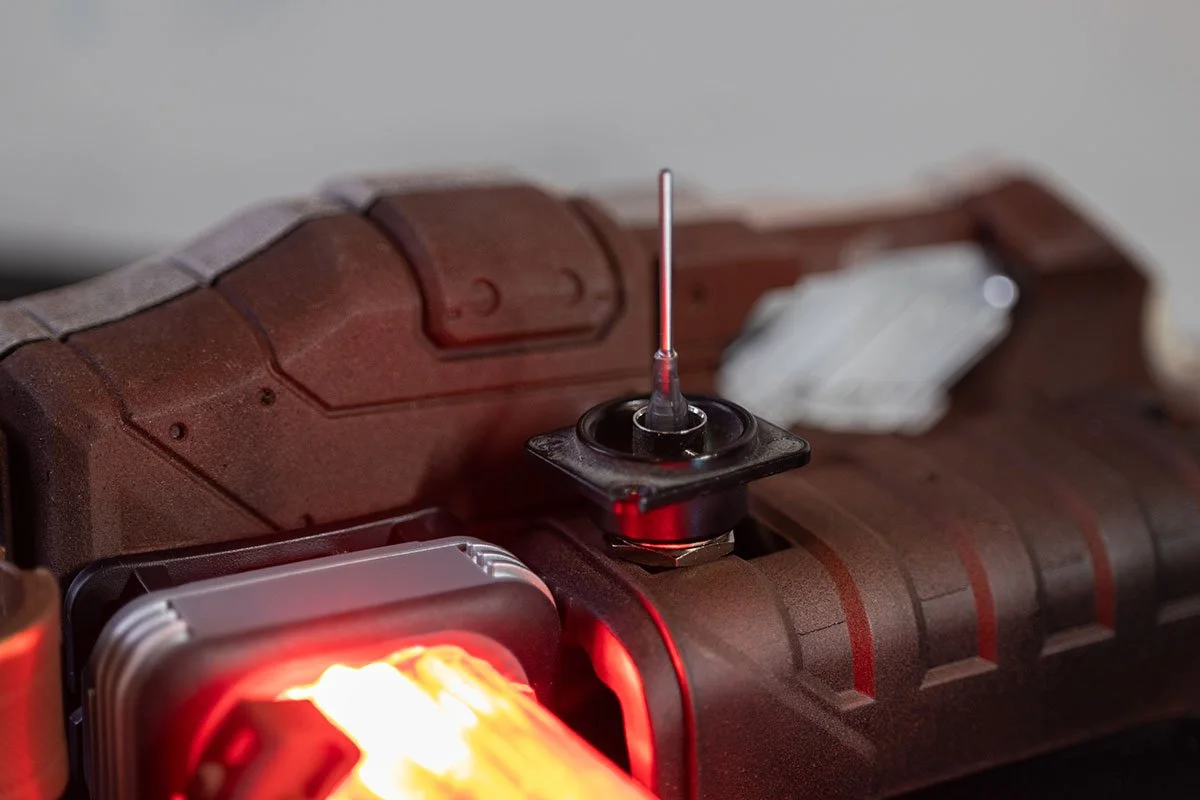
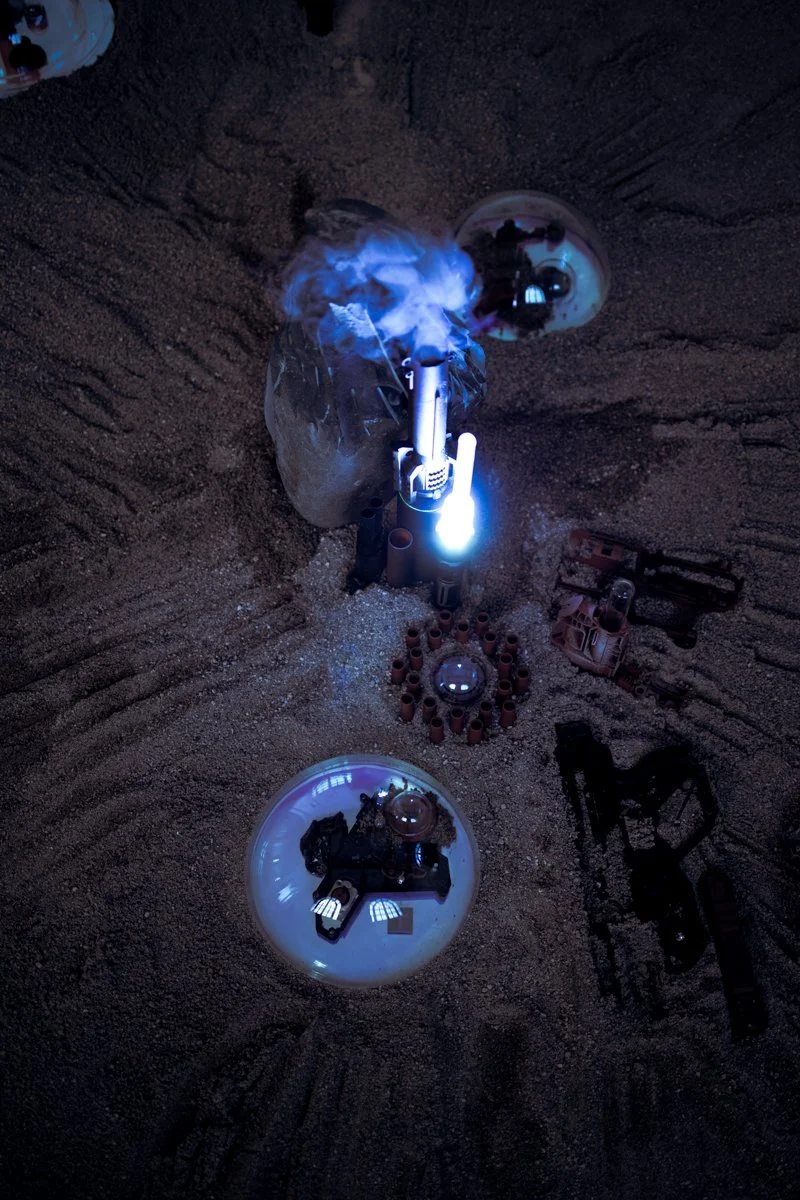
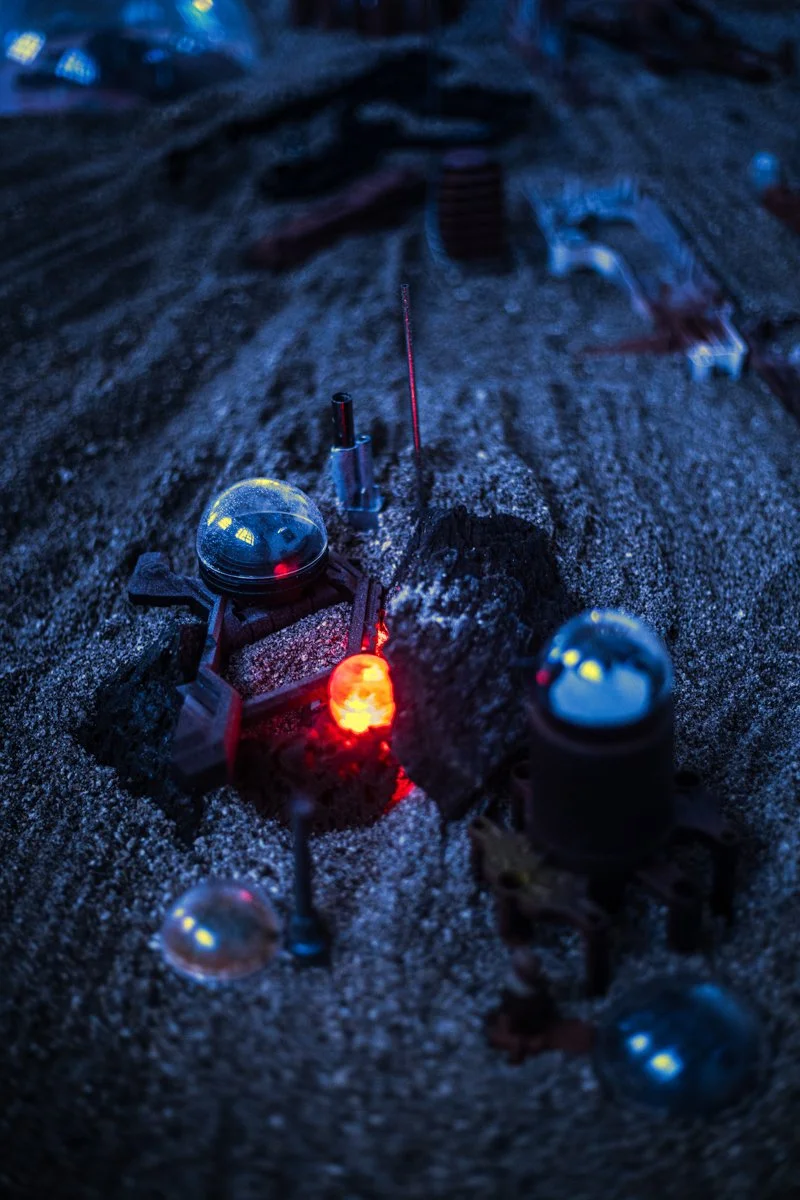
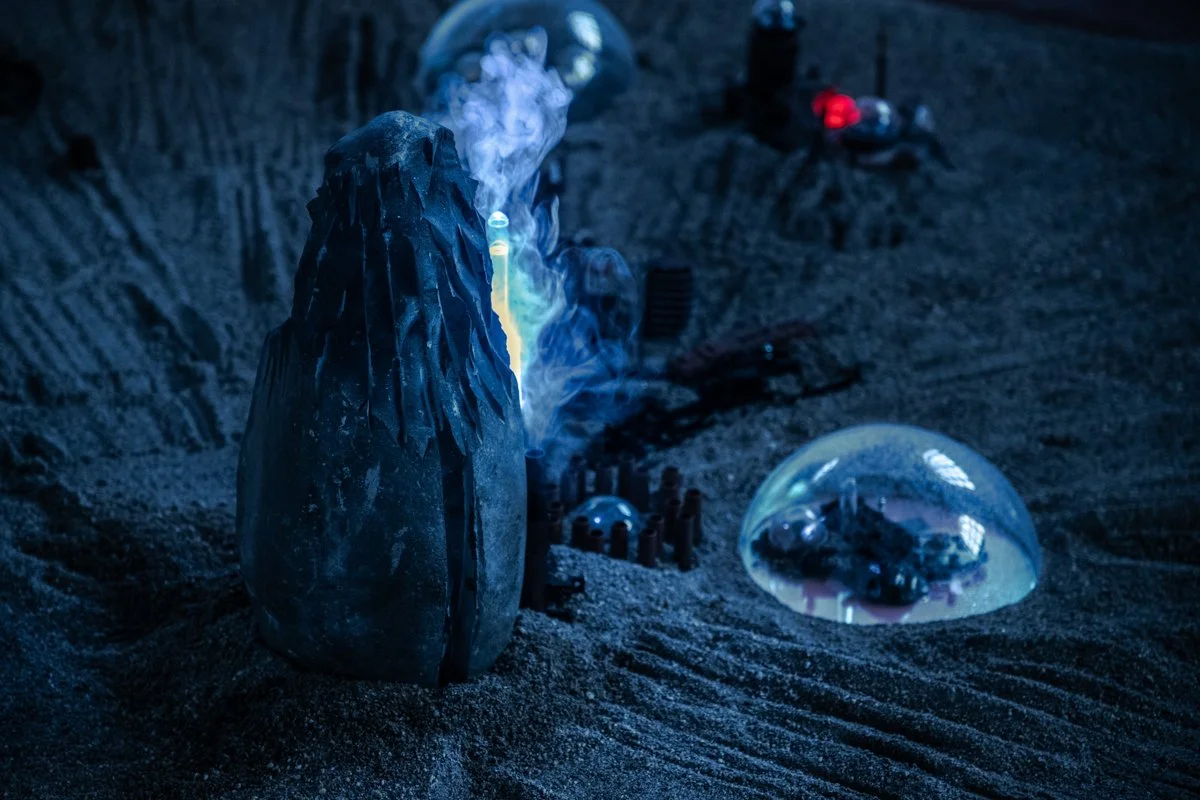
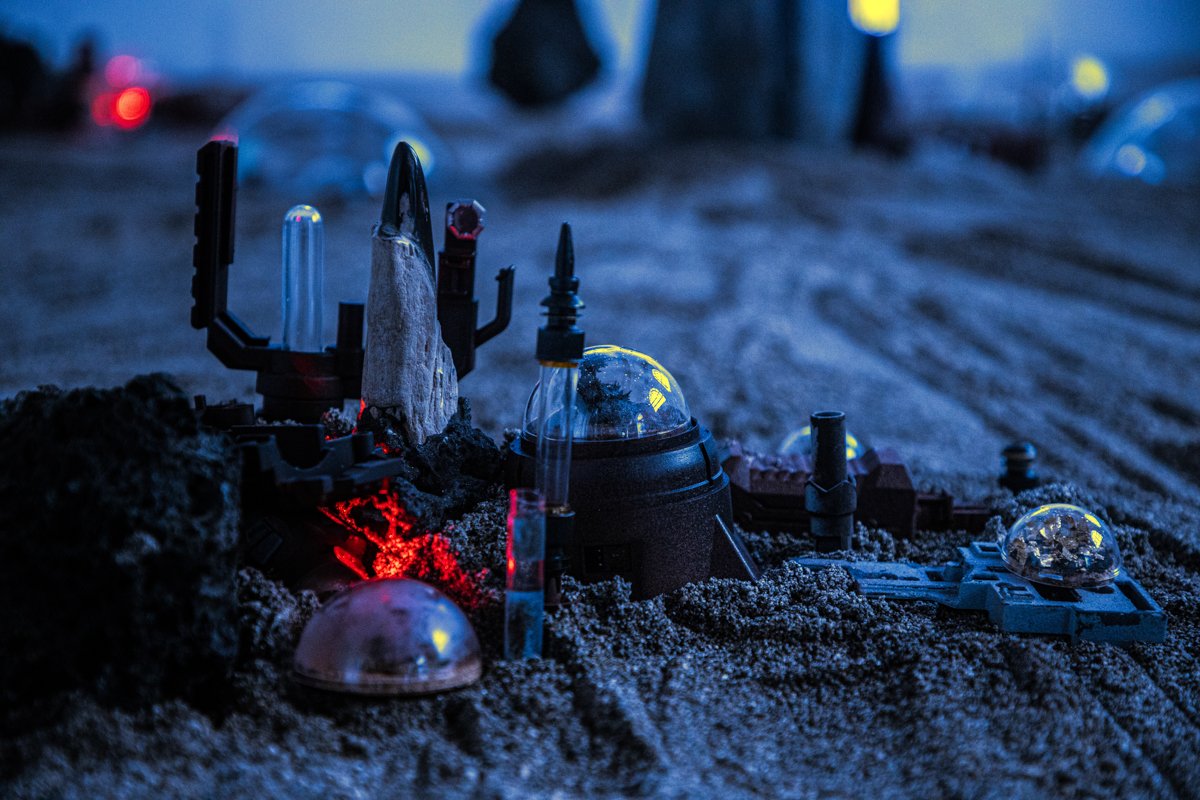
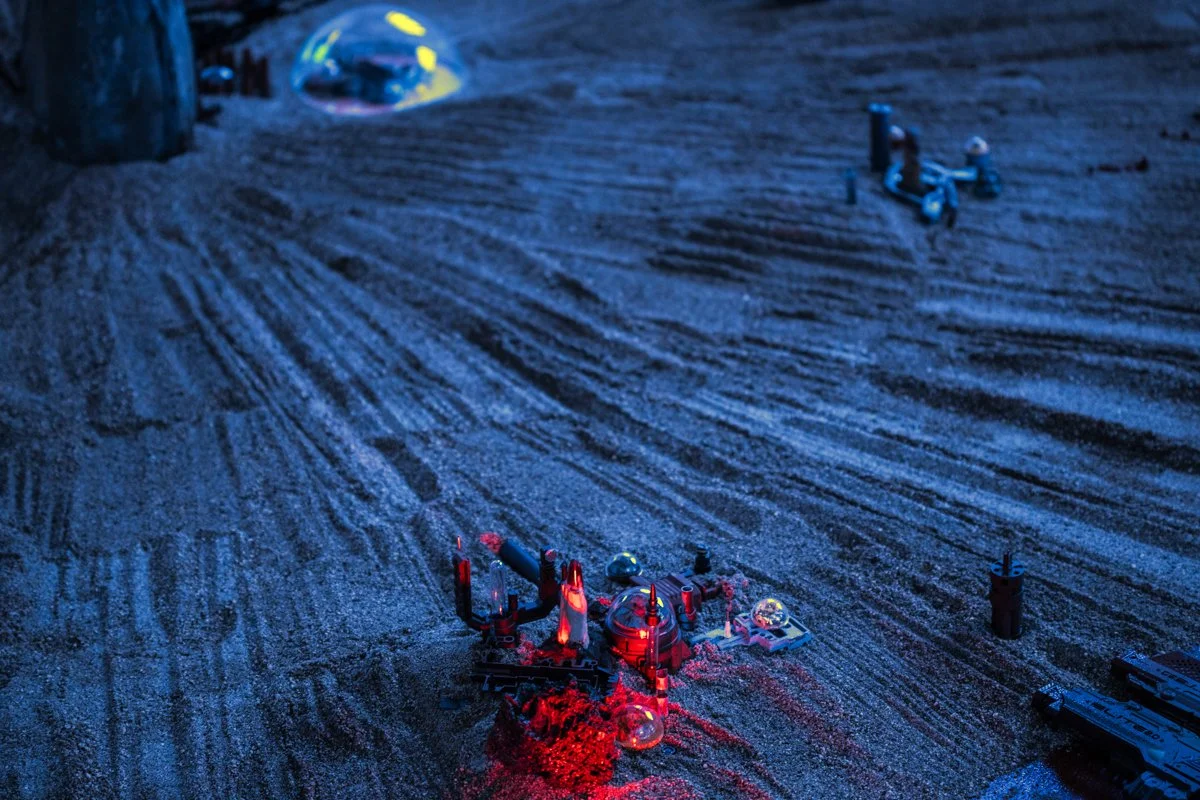
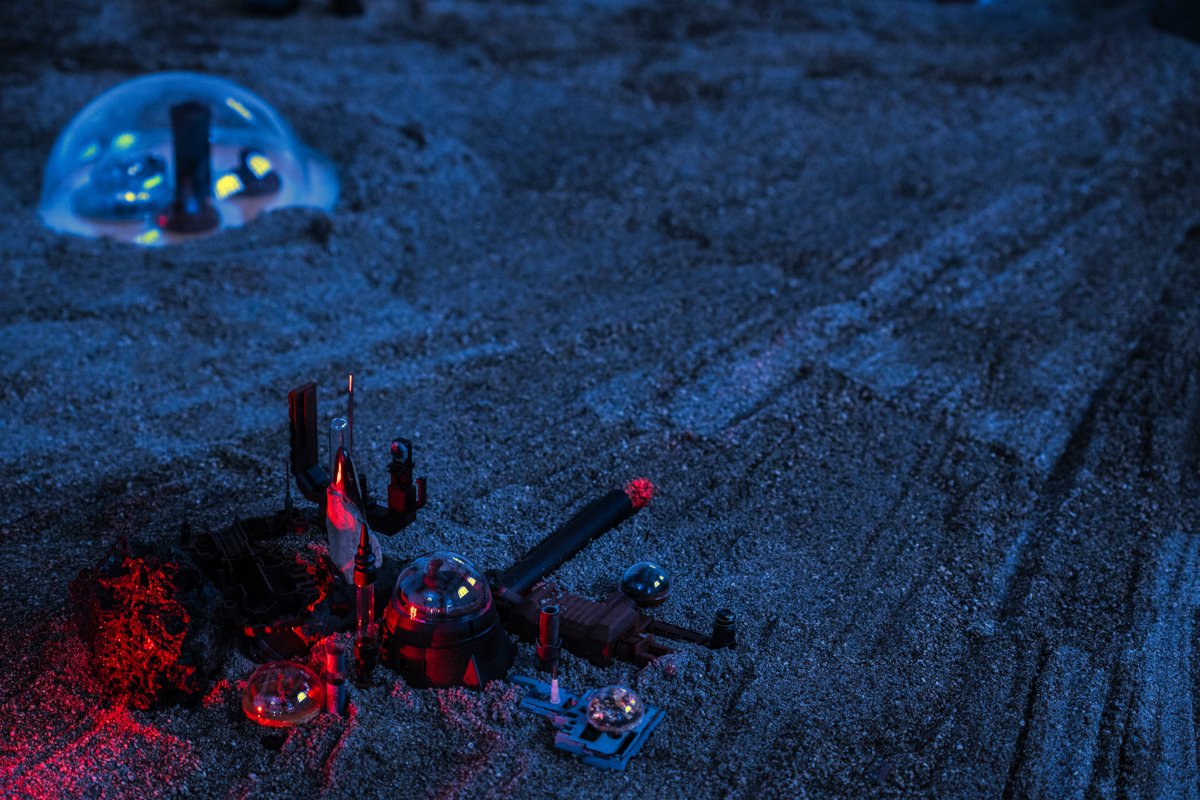
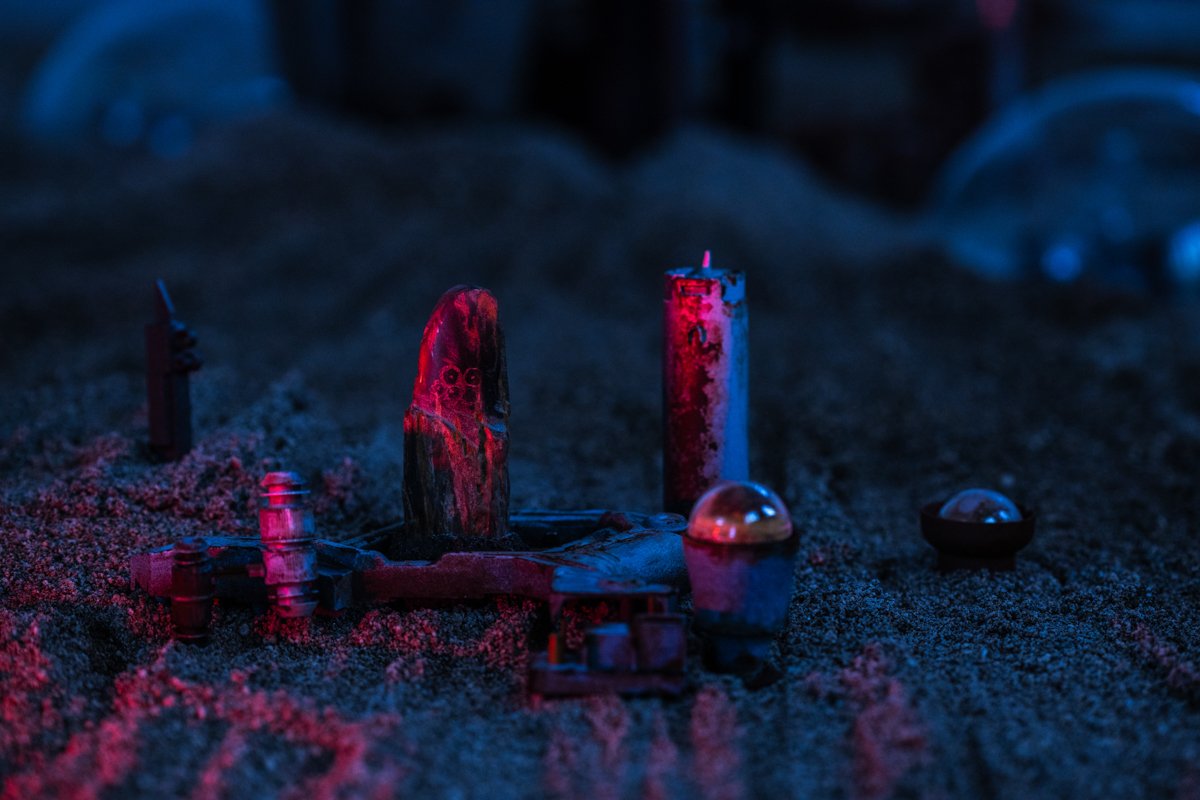
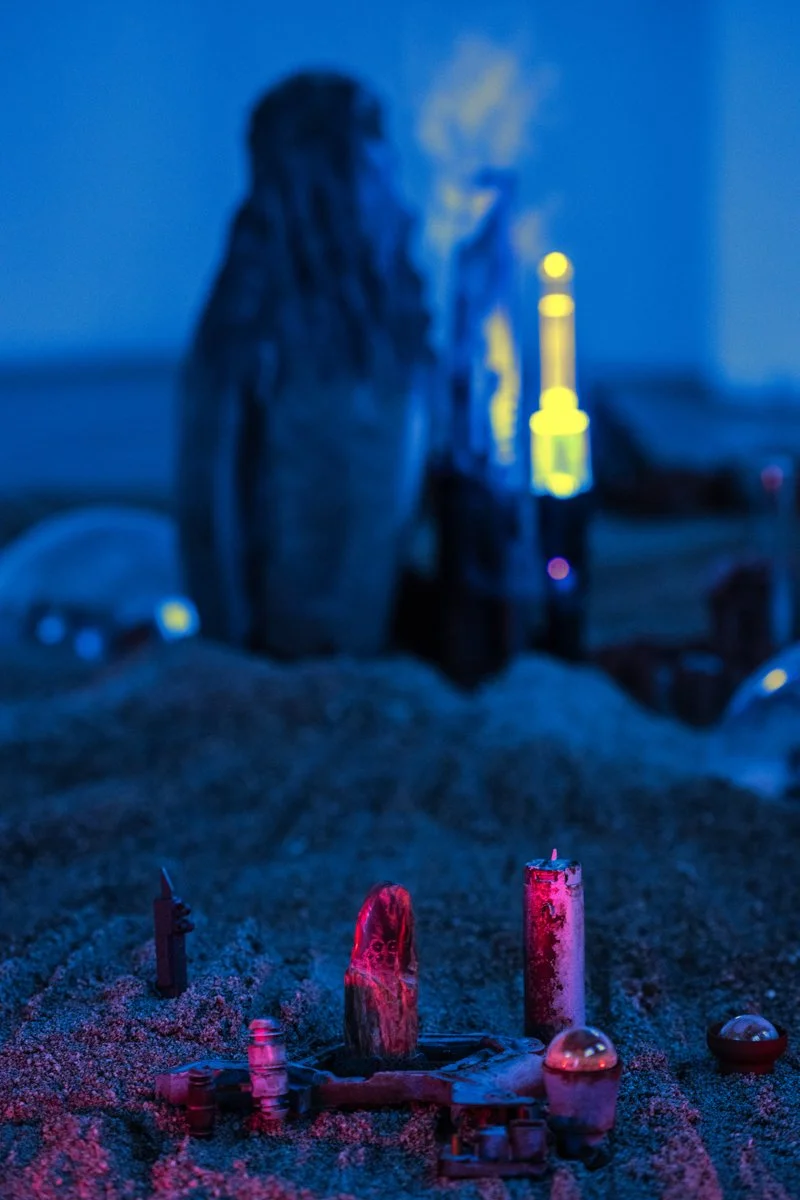
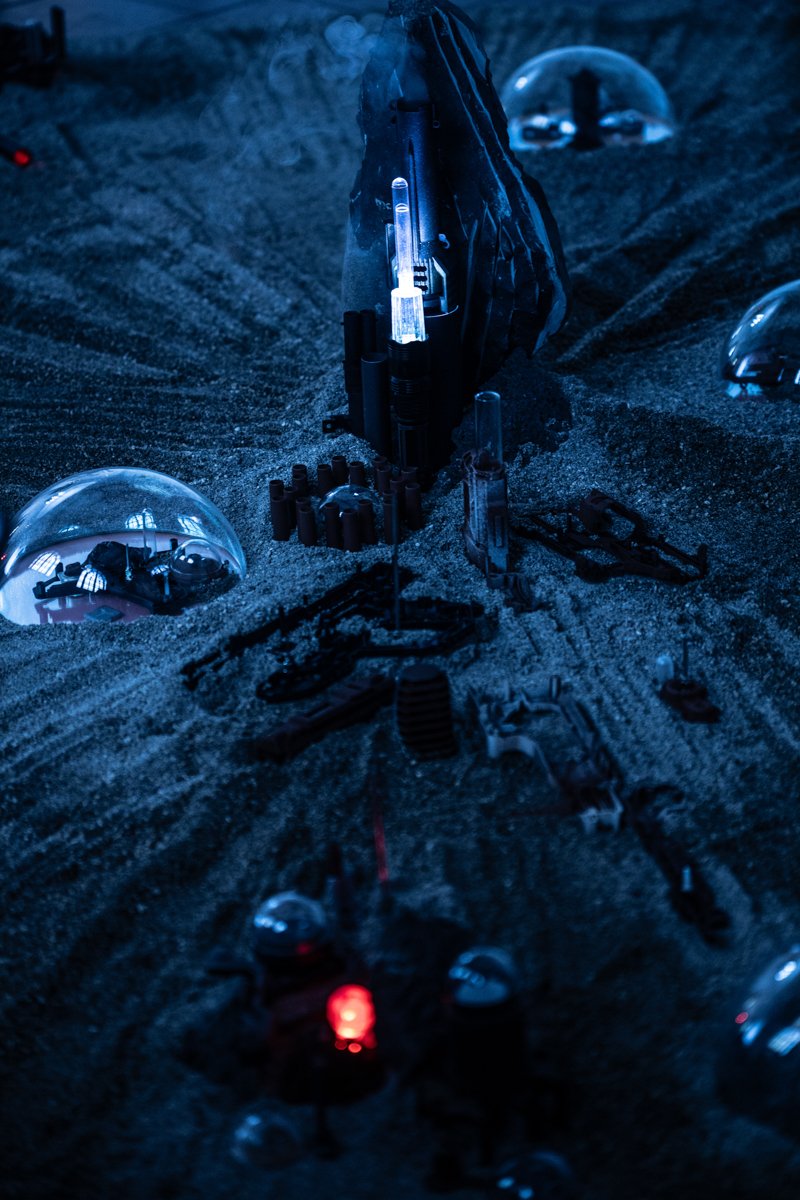
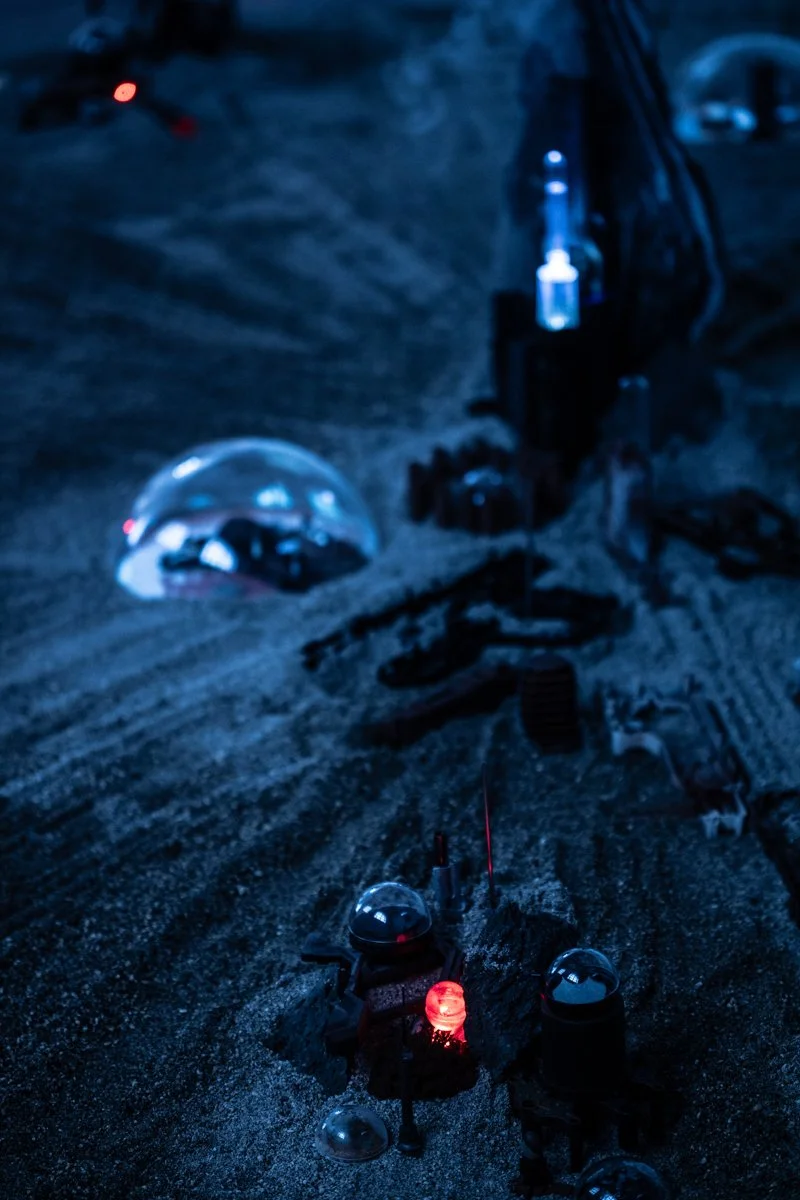
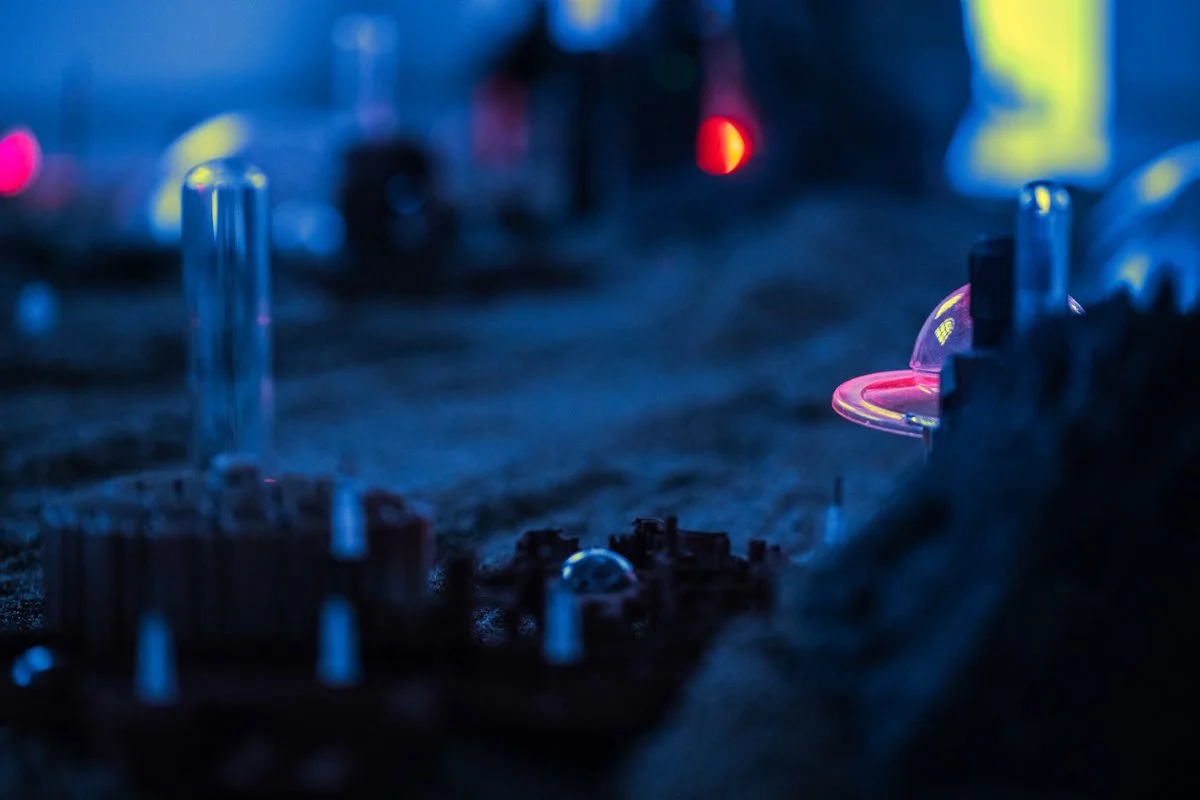
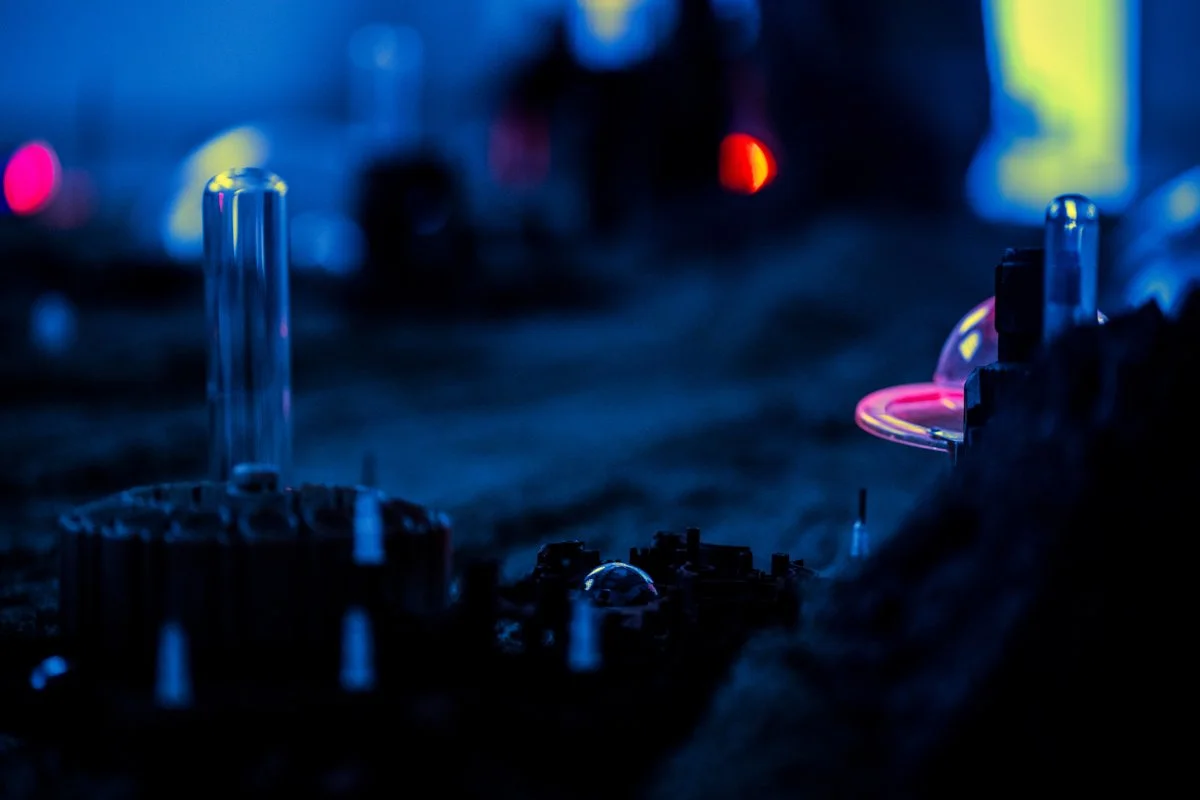
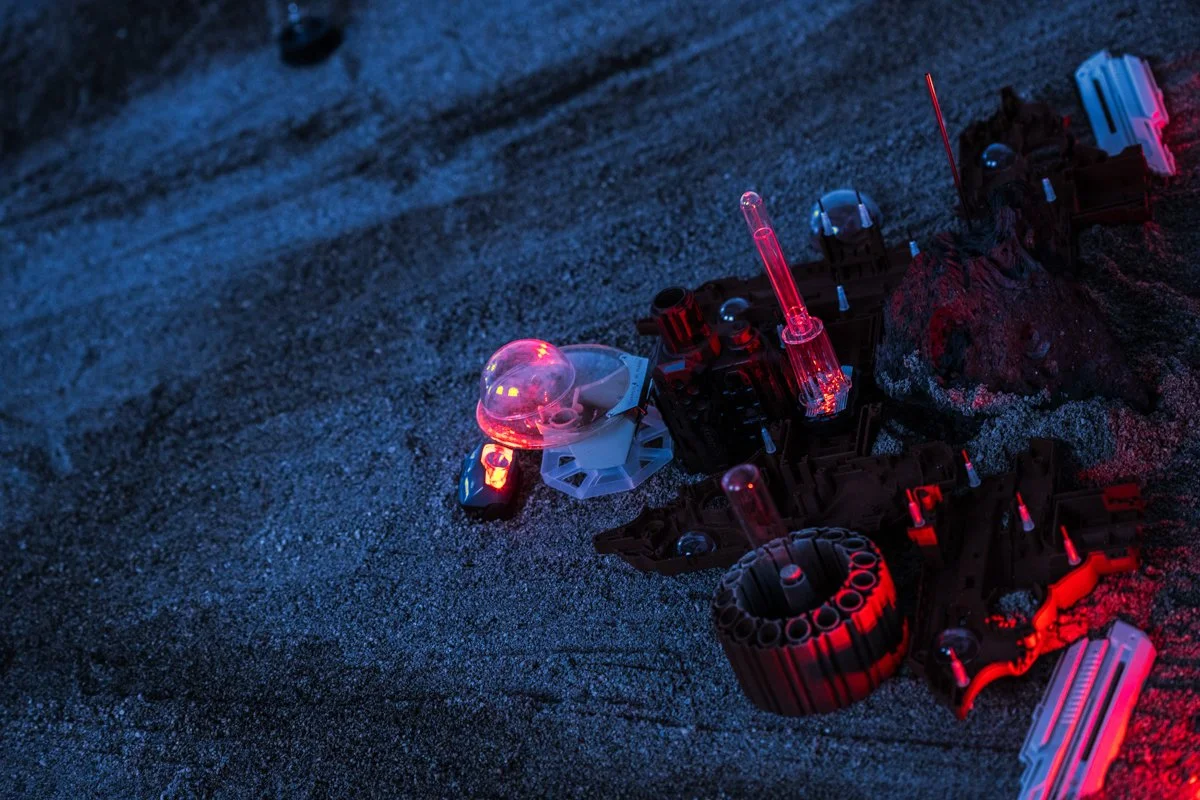
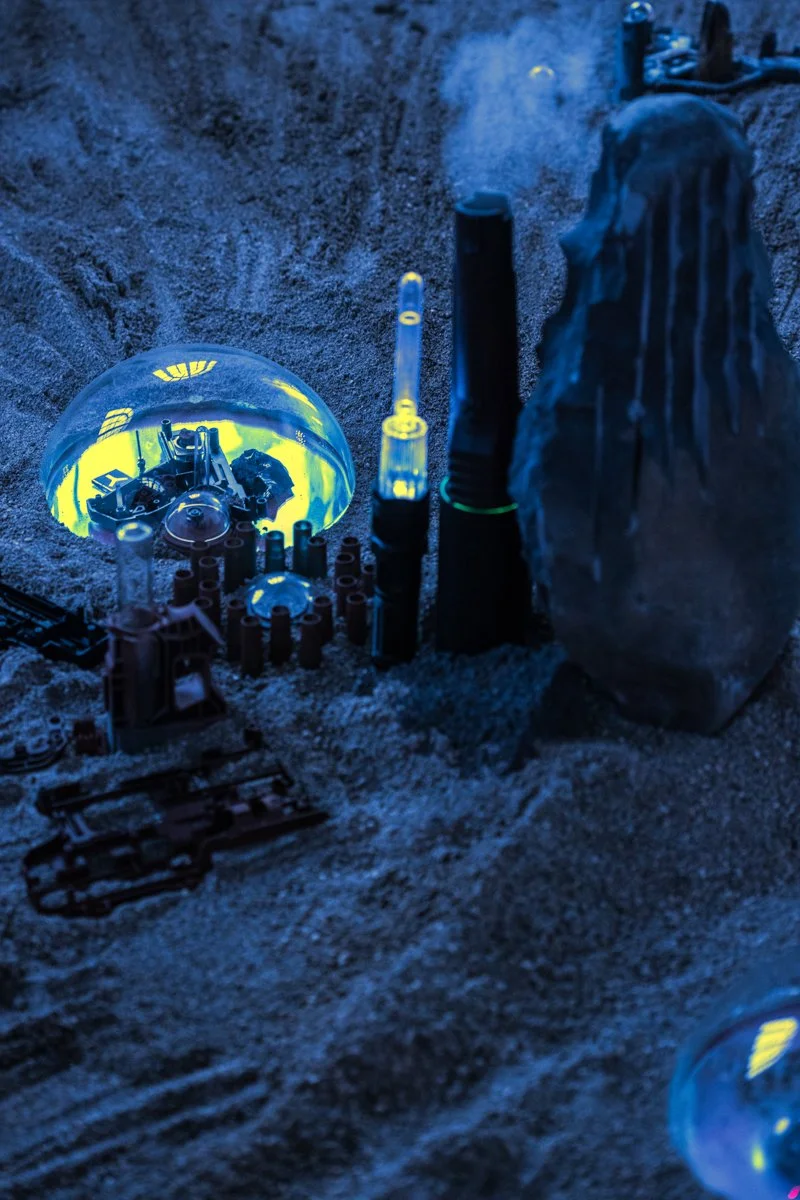
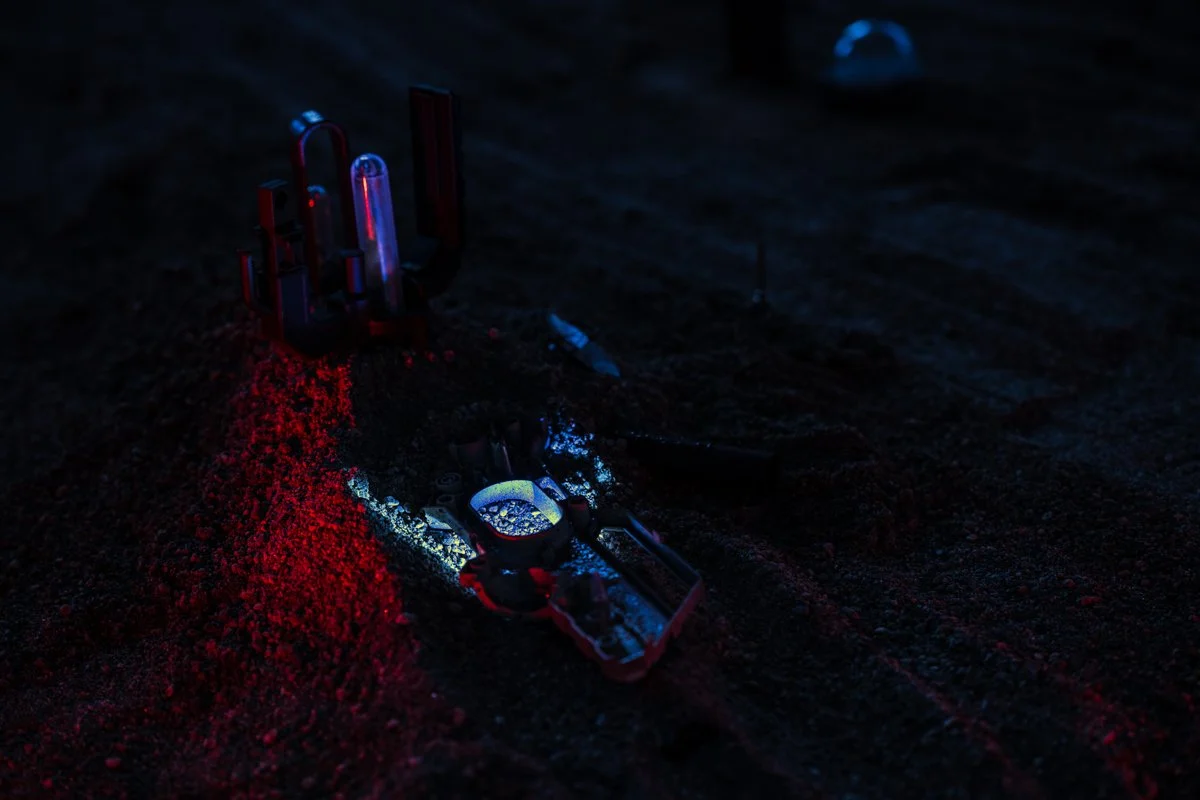
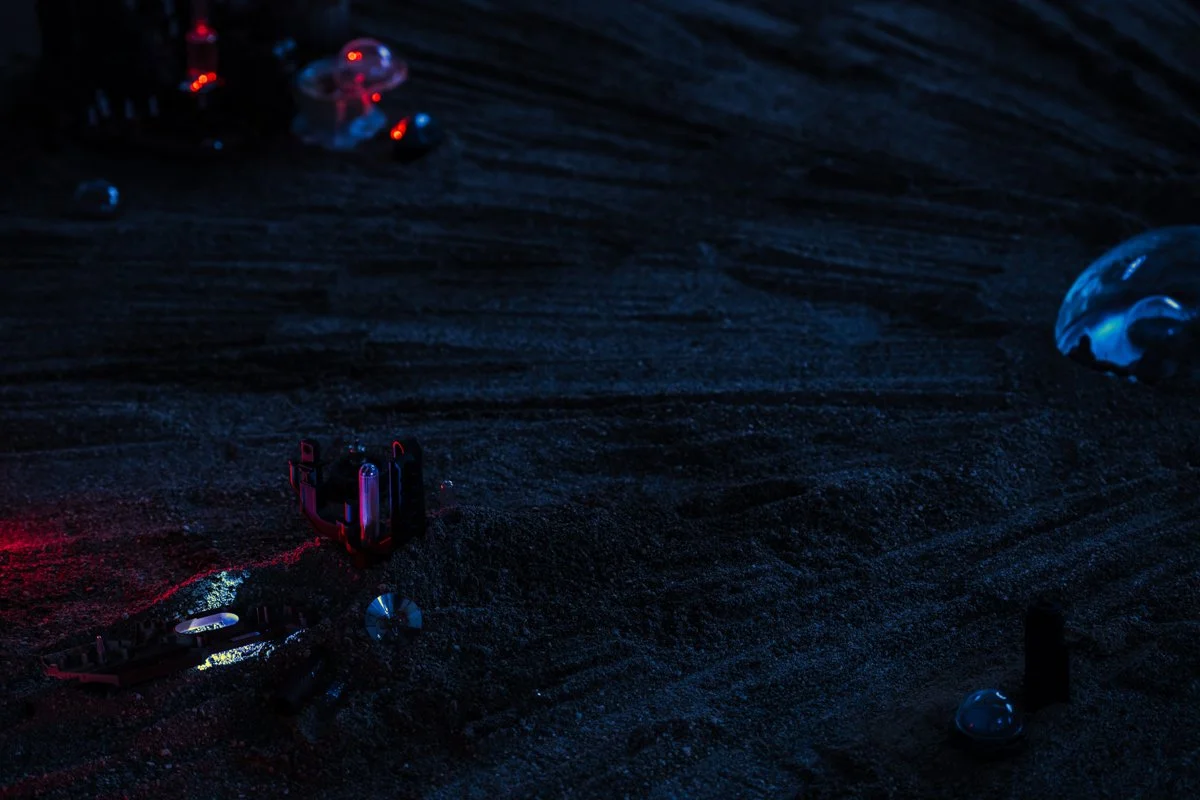
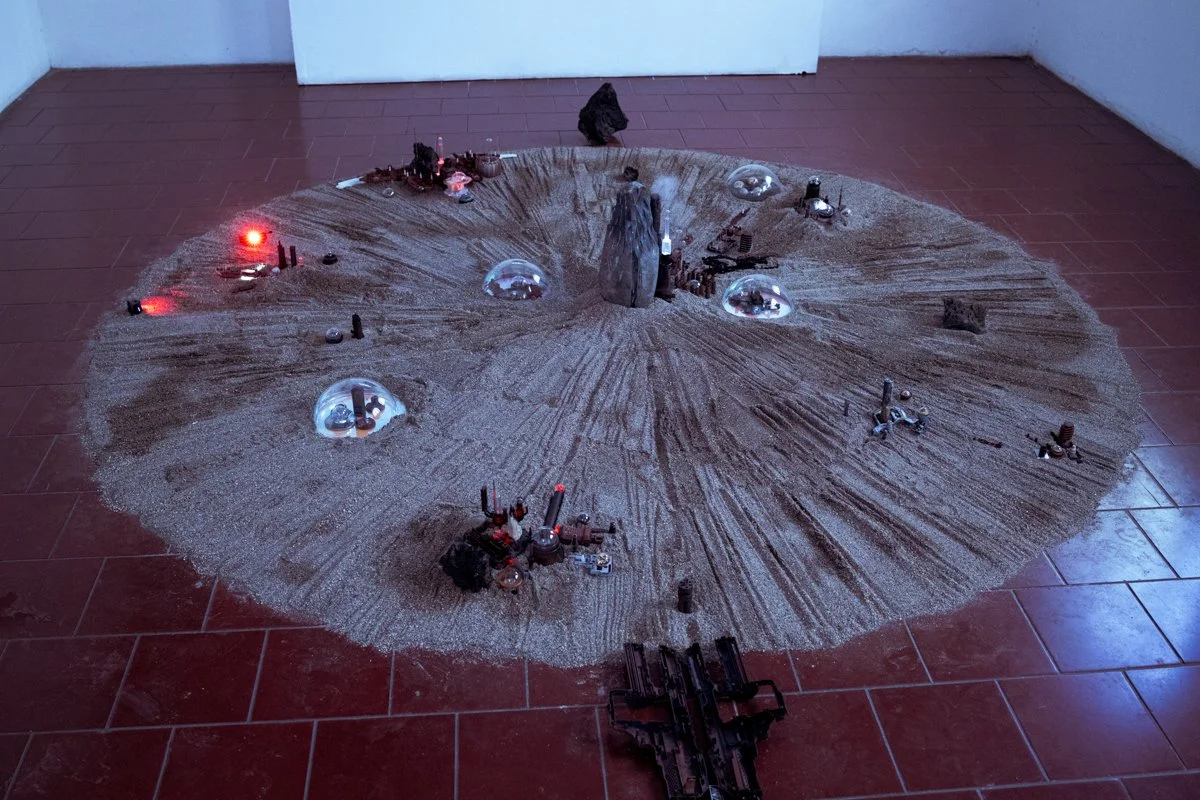
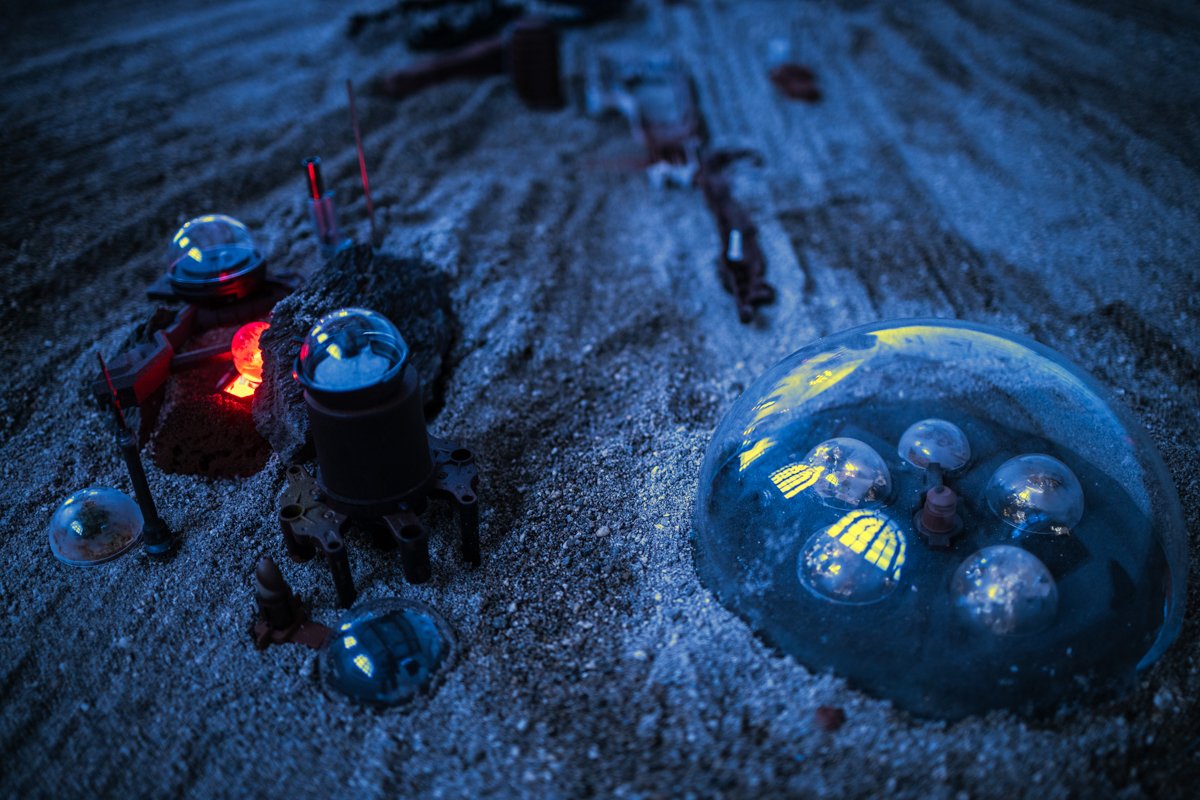
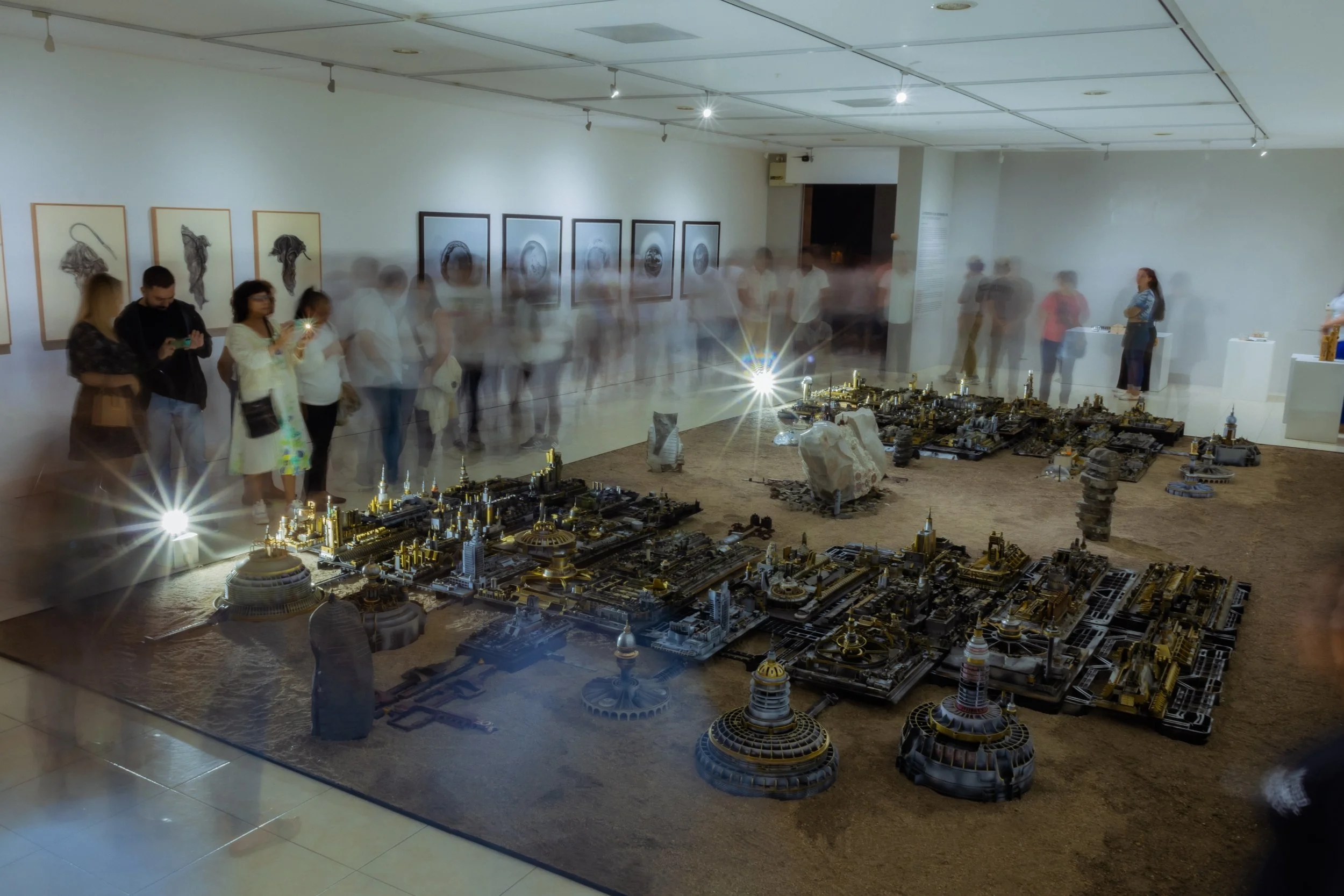
From these questions, Staying Human speculates on a future in which our species' accumulated knowledge might be transferred to other planets, whether through artificial intelligence systems or through human beings adapted to other ecosystems. This speculation takes form in a large-scale diorama constructed from obsolete technological artifacts, functioning simultaneously as landscape, ruin, and a scenario for a possible future: a planet whose conditions make human life impossible outside artificially protected spaces enclosed by domes.
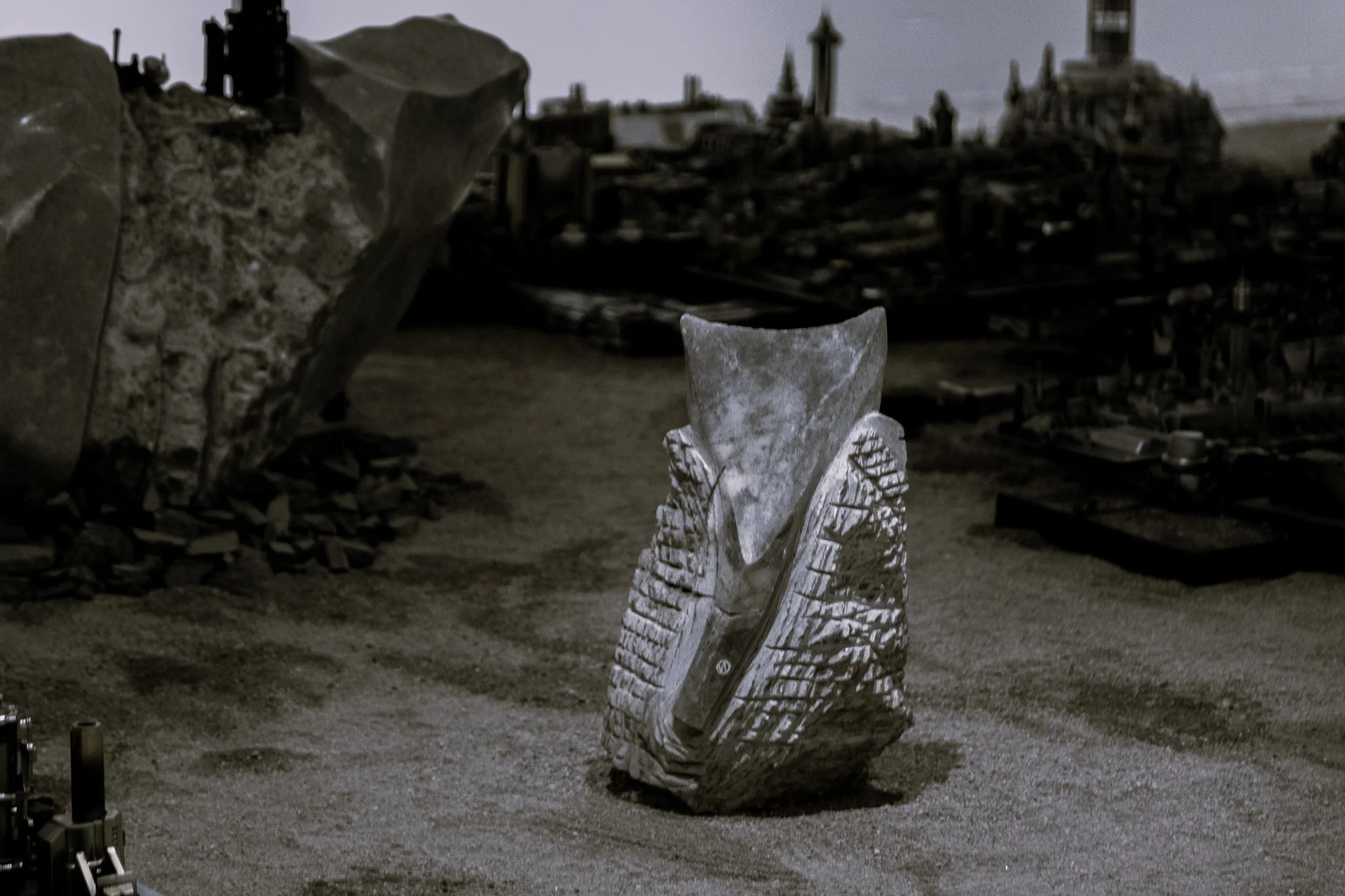
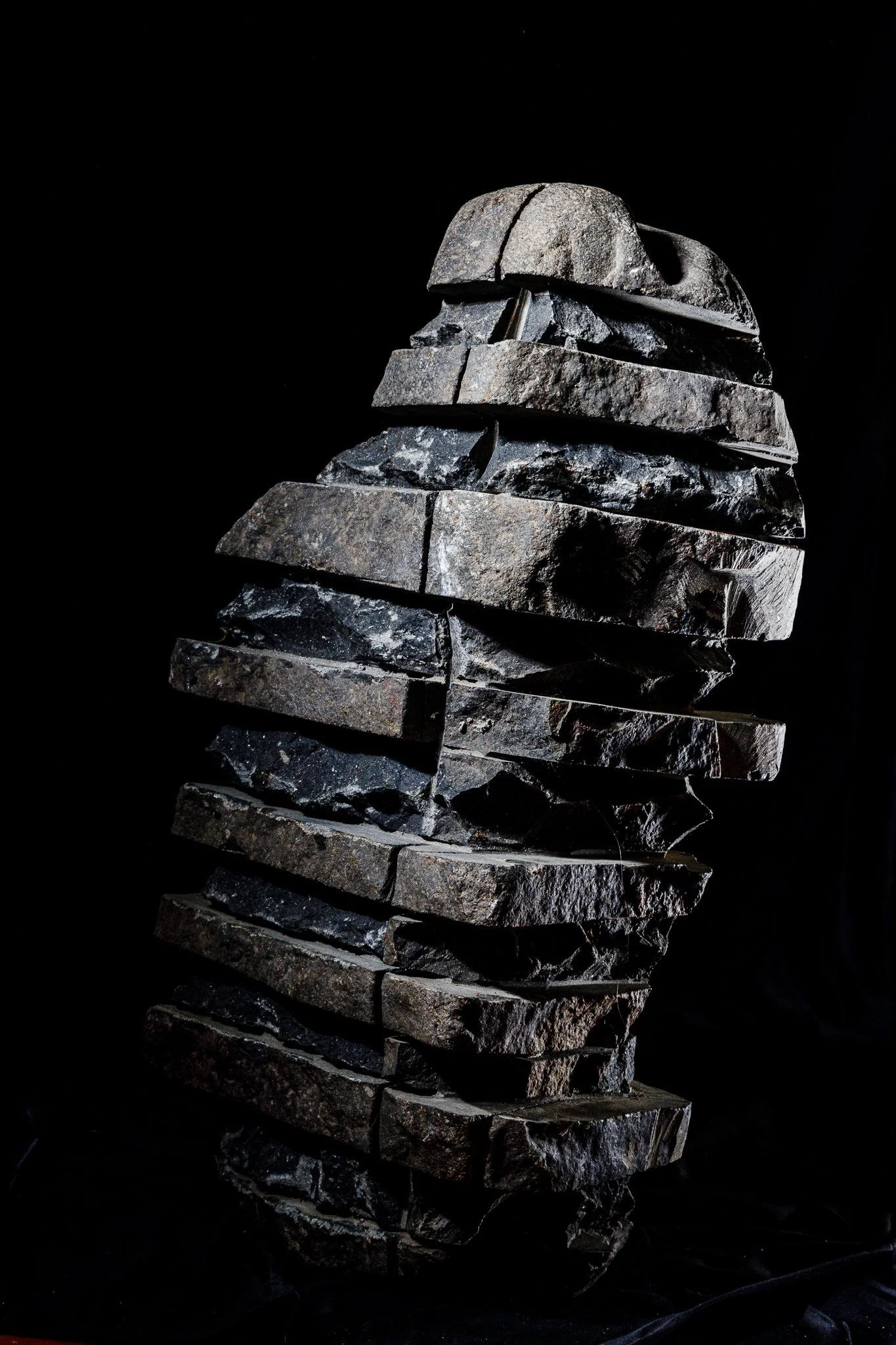
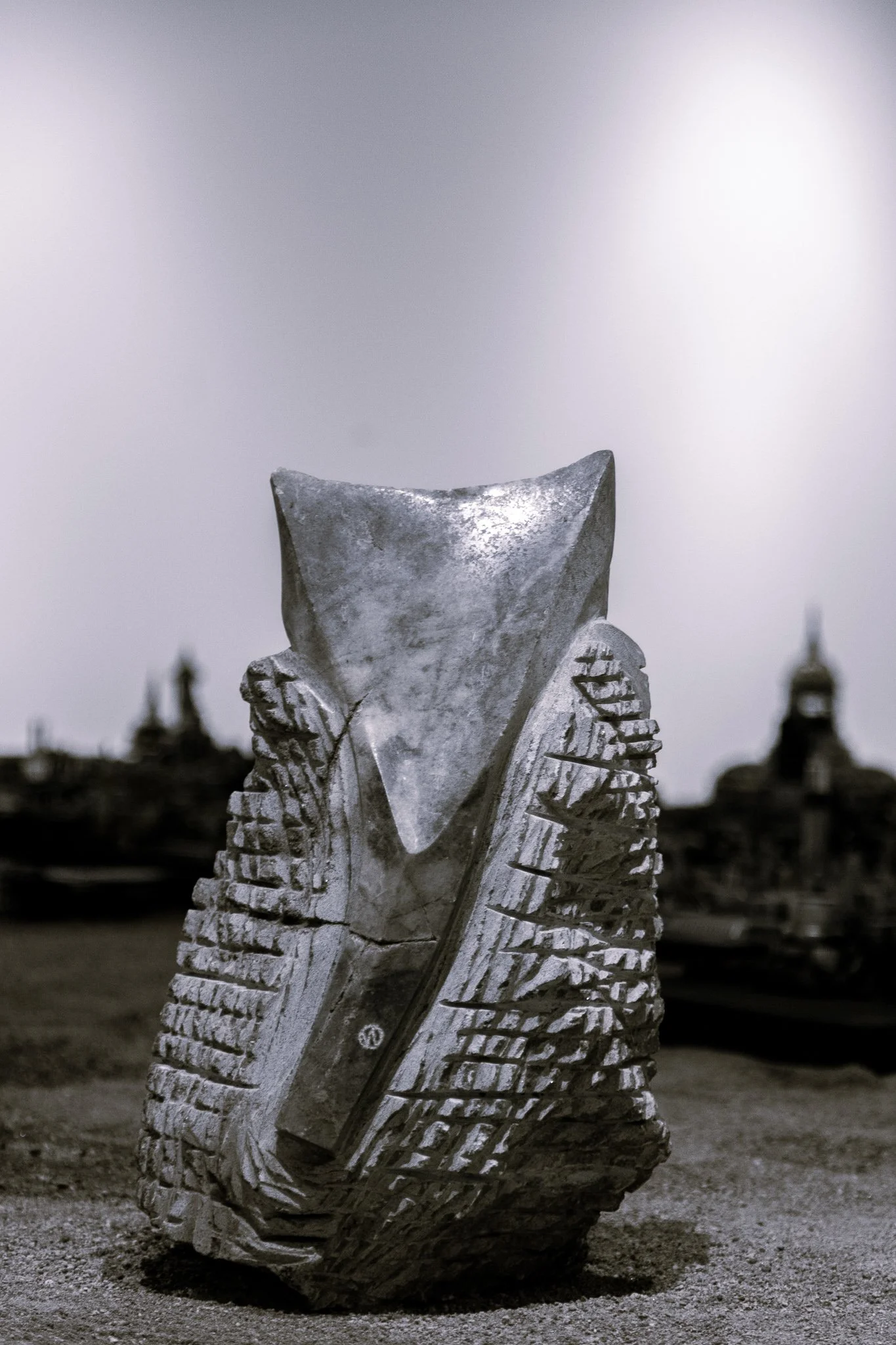
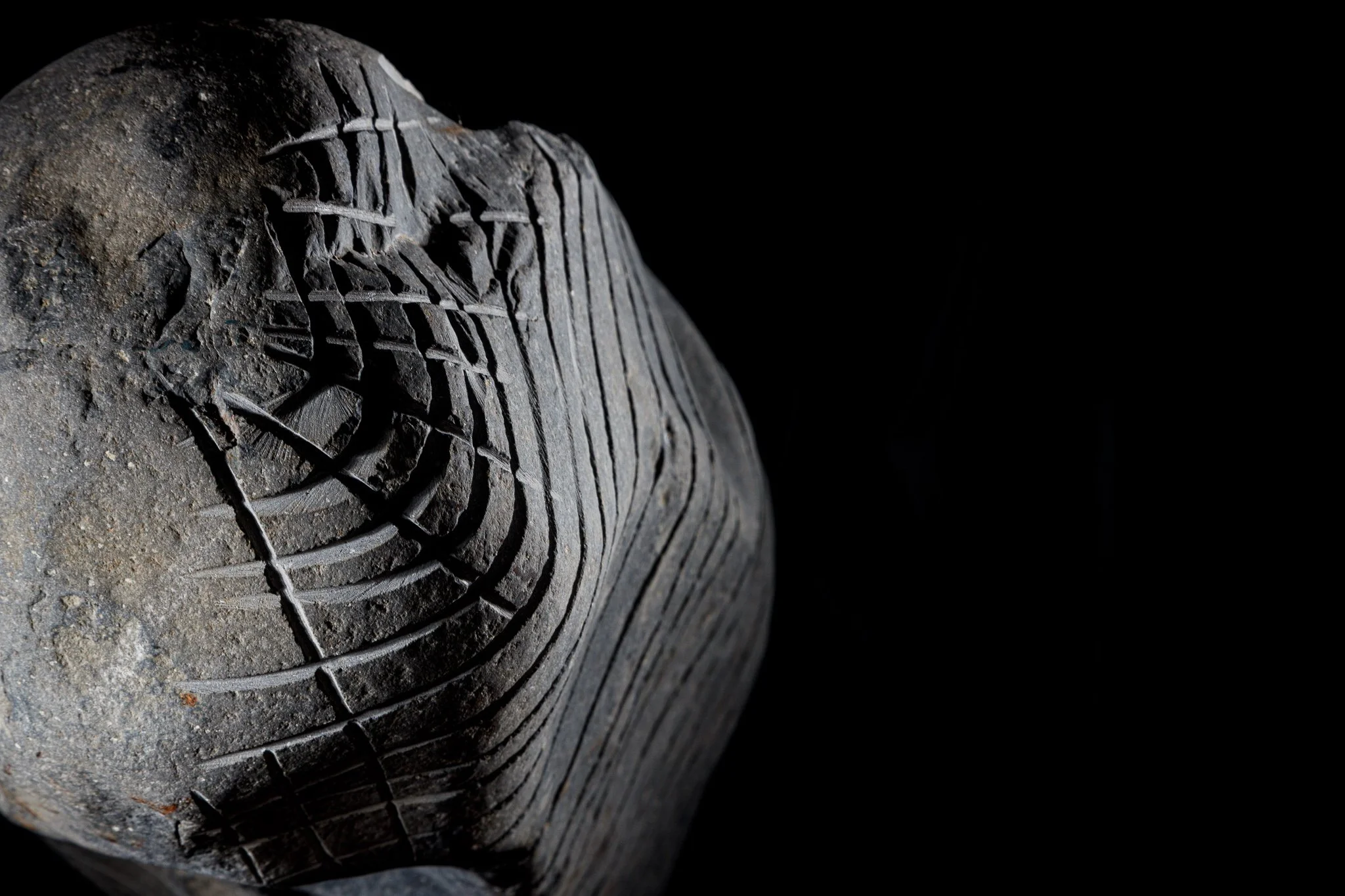
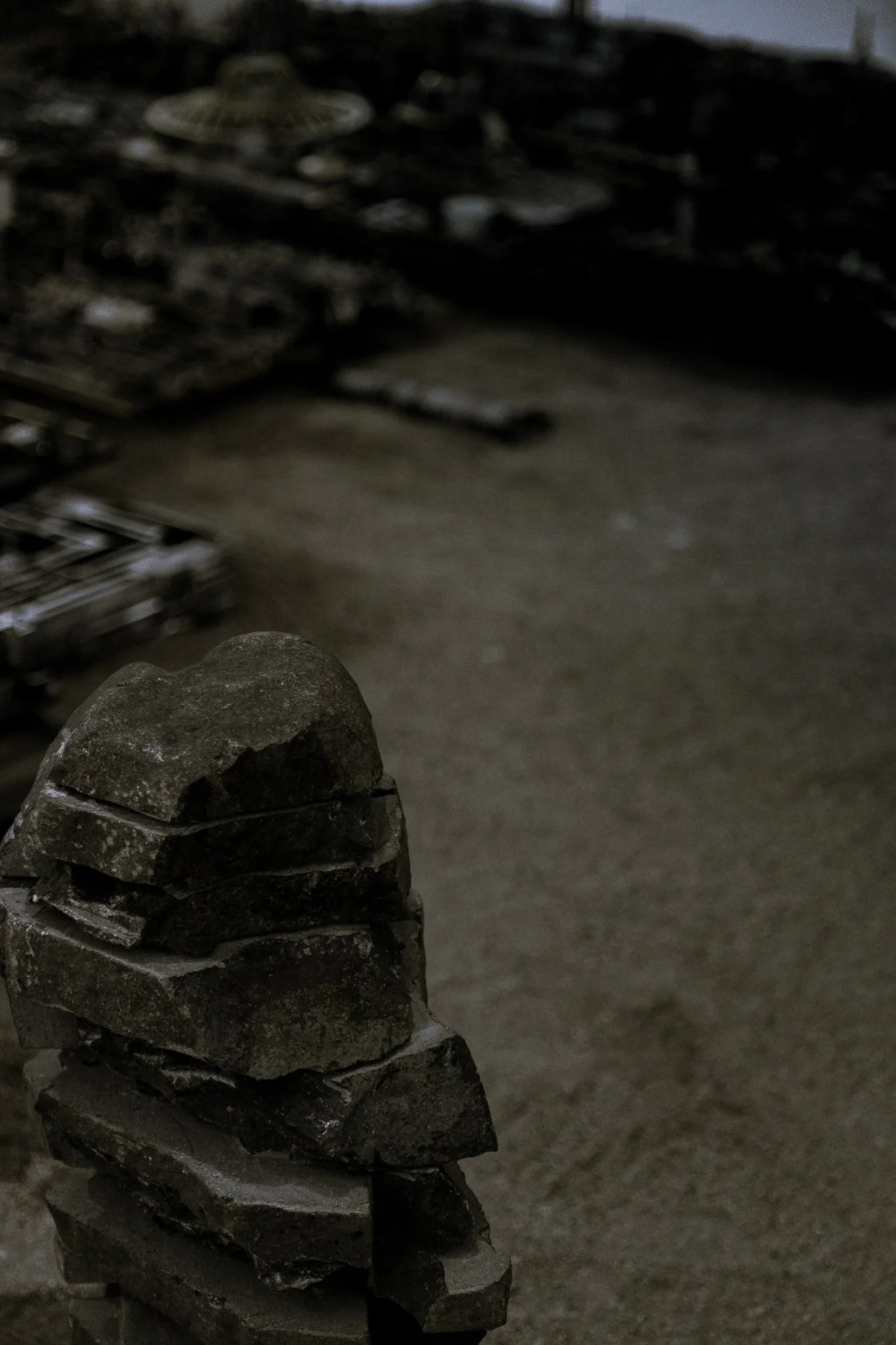
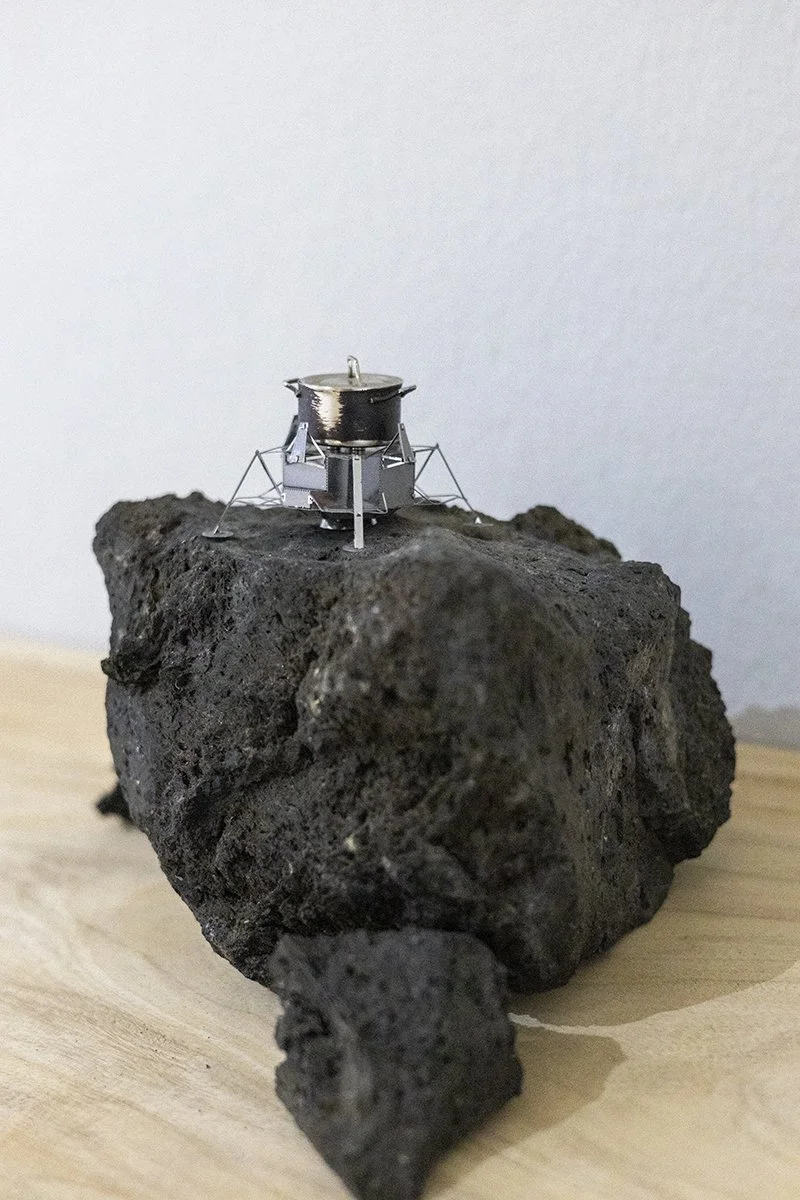
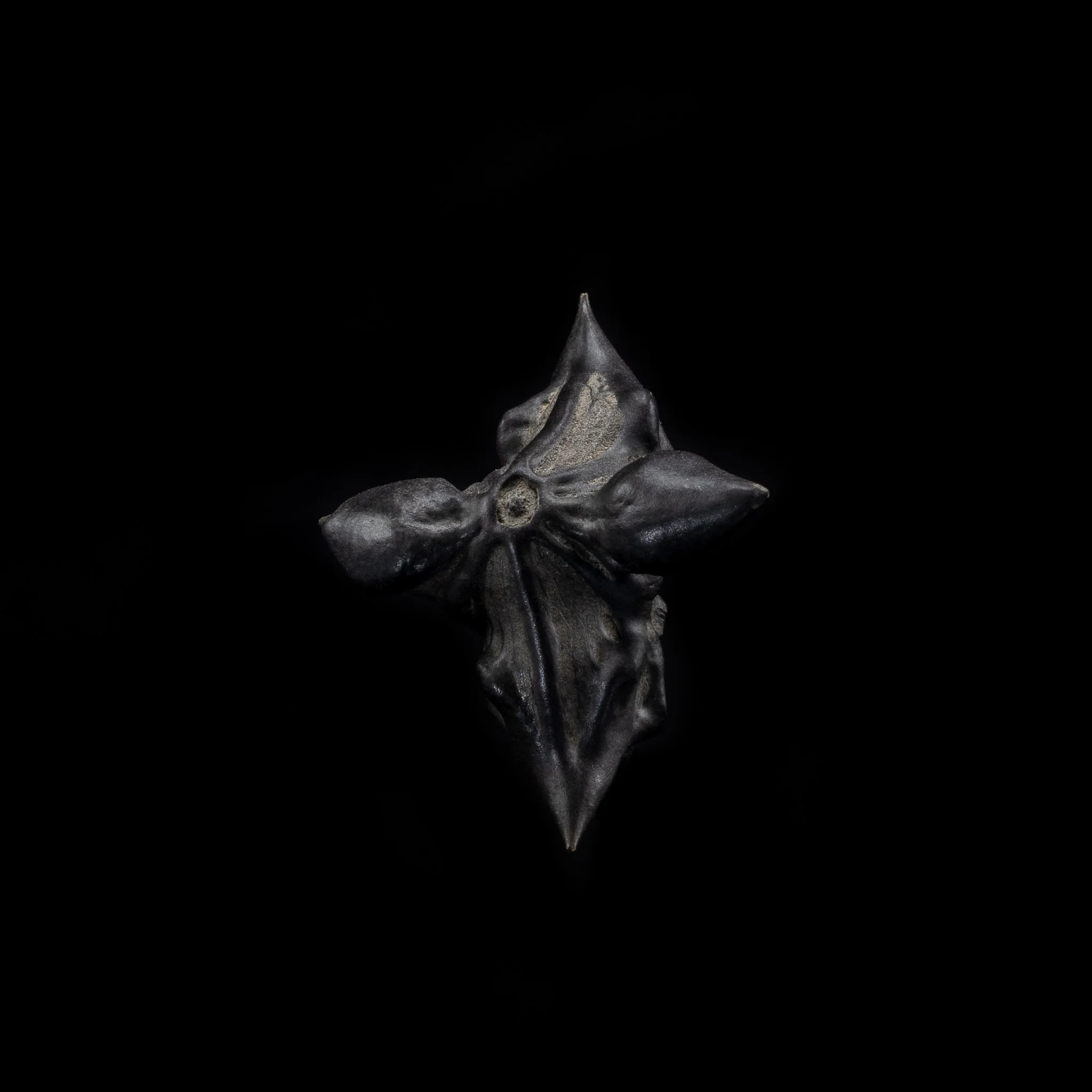
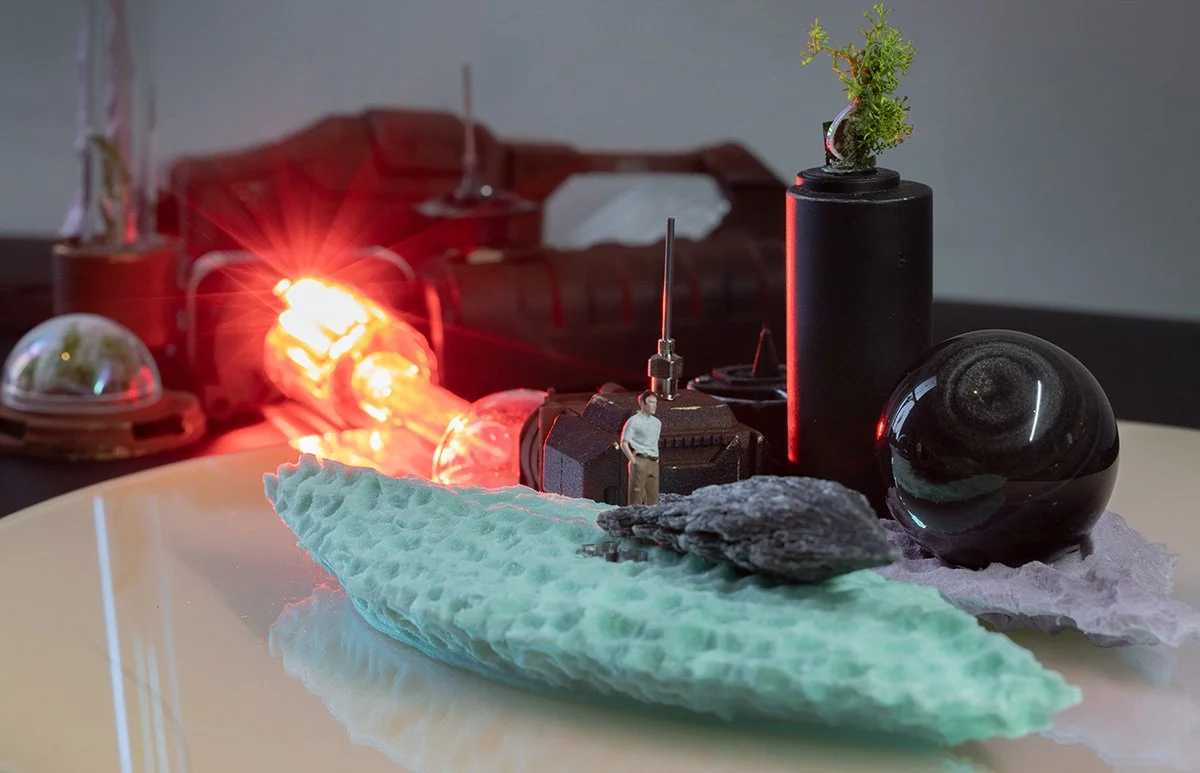
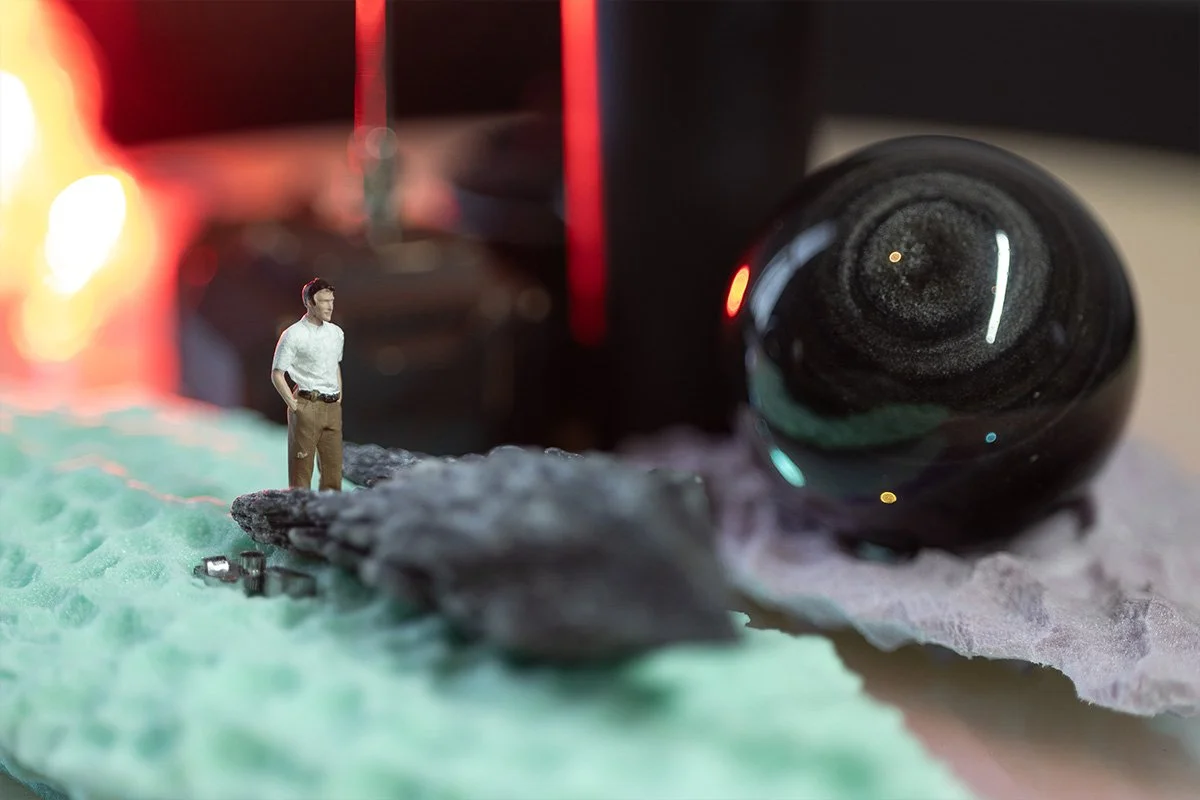
The project juxtaposes these contemporary devices with some of humankind's earliest technologies. Stone appears as a reference to the first tools that extended human capabilities and contributed to the process we now understand as technological development. At the same time, we incorporate references to El Salvador’s precolonial Indigenous past through forms and fragments associated with the material traditions of Nahua-speaking cultures.
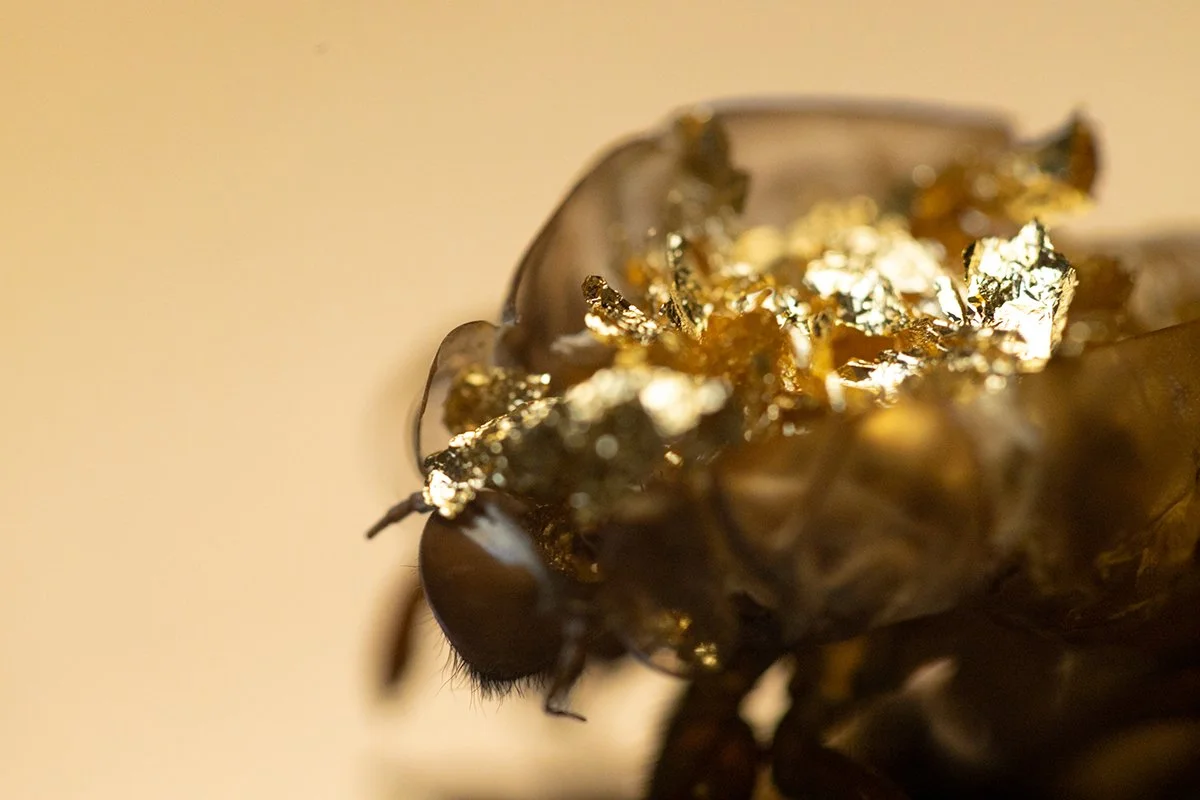
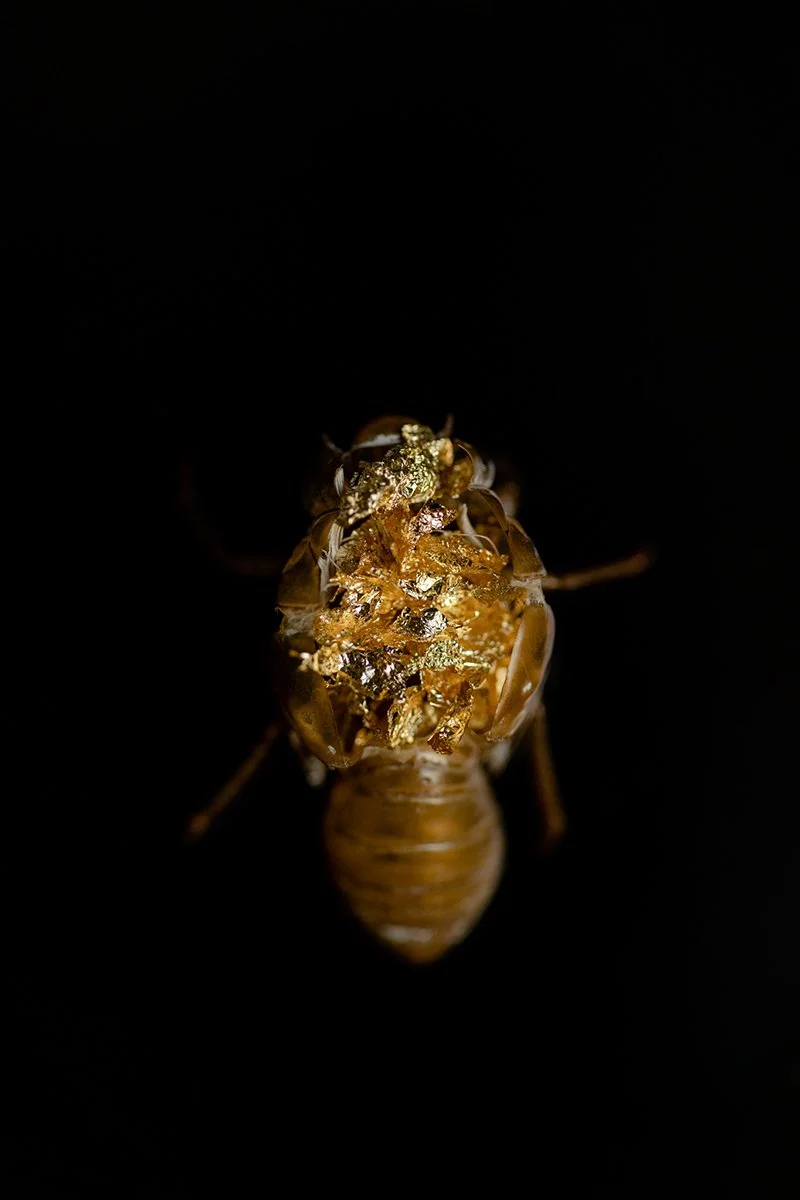
The installation proposes an experience composed of microworlds that evoke the individual and collective realities constructed during periods of isolation. Within them, technological objects, archaeological references, imagined landscapes, and speculative forms of life converge.
Finally, Staying Human reflects on the need to preserve the natural ecosystems that make our existence possible. In the face of technological acceleration and contemporary fantasies of expansion to other planets, the project returns to an elemental condition: our species developed through a prolonged process of adaptation to this planet. At the same time, today we attempt to transform our environment—and potentially other worlds—to adapt them to us.
The question running through the project is not only how we will survive the future, but what it will mean to remain human within it.