ICEd Boxes |
Las Hieleras
2018
Installation, architectural intervention, wall drawing, and video
Las Hieleras is a large-scale installation that examines migration from Central America to the United States through the conditions that cause displacement, the journey north, the crossing of the U.S.–Mexico border, and the detention systems migrants encounter upon arrival.
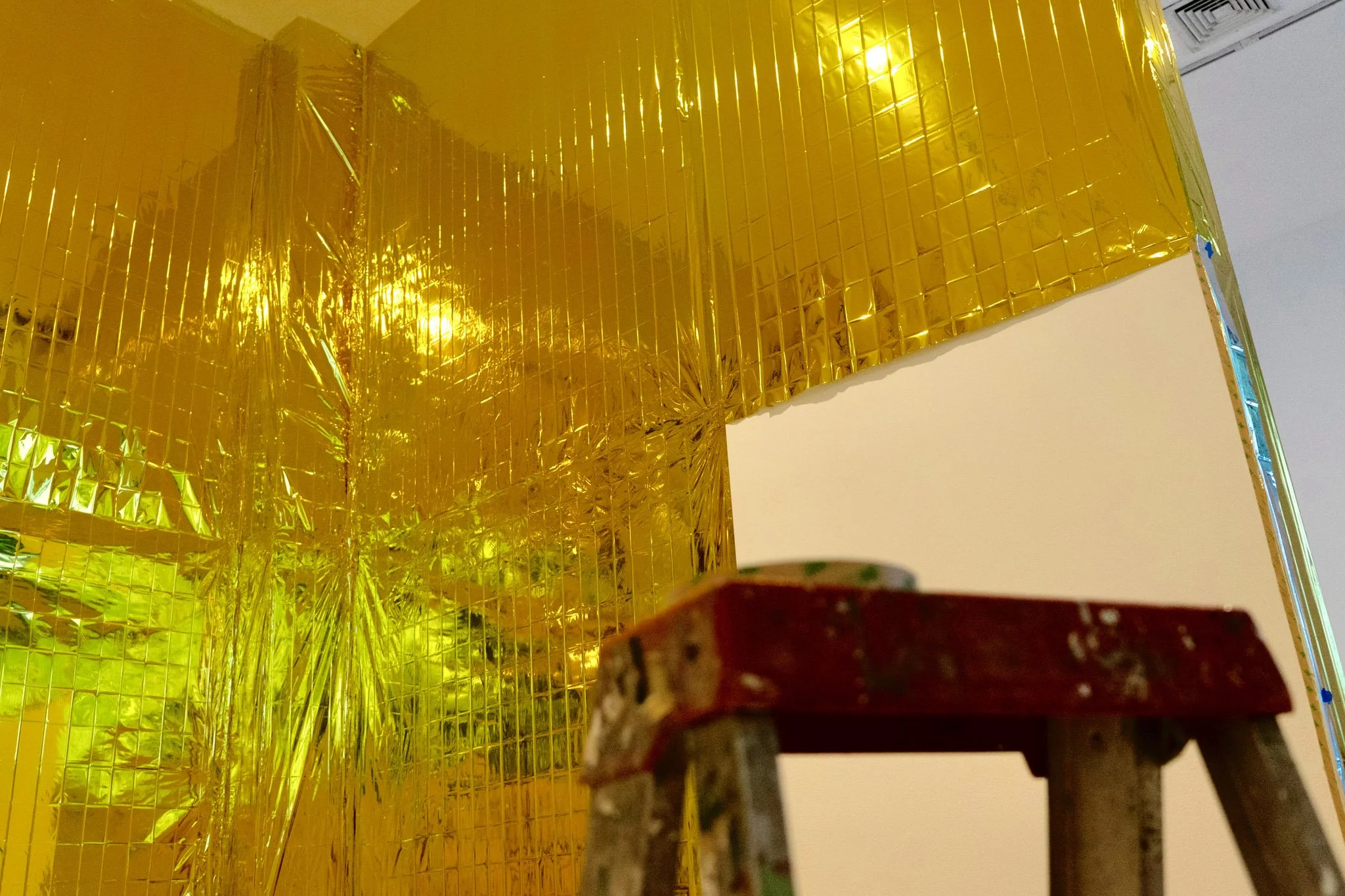
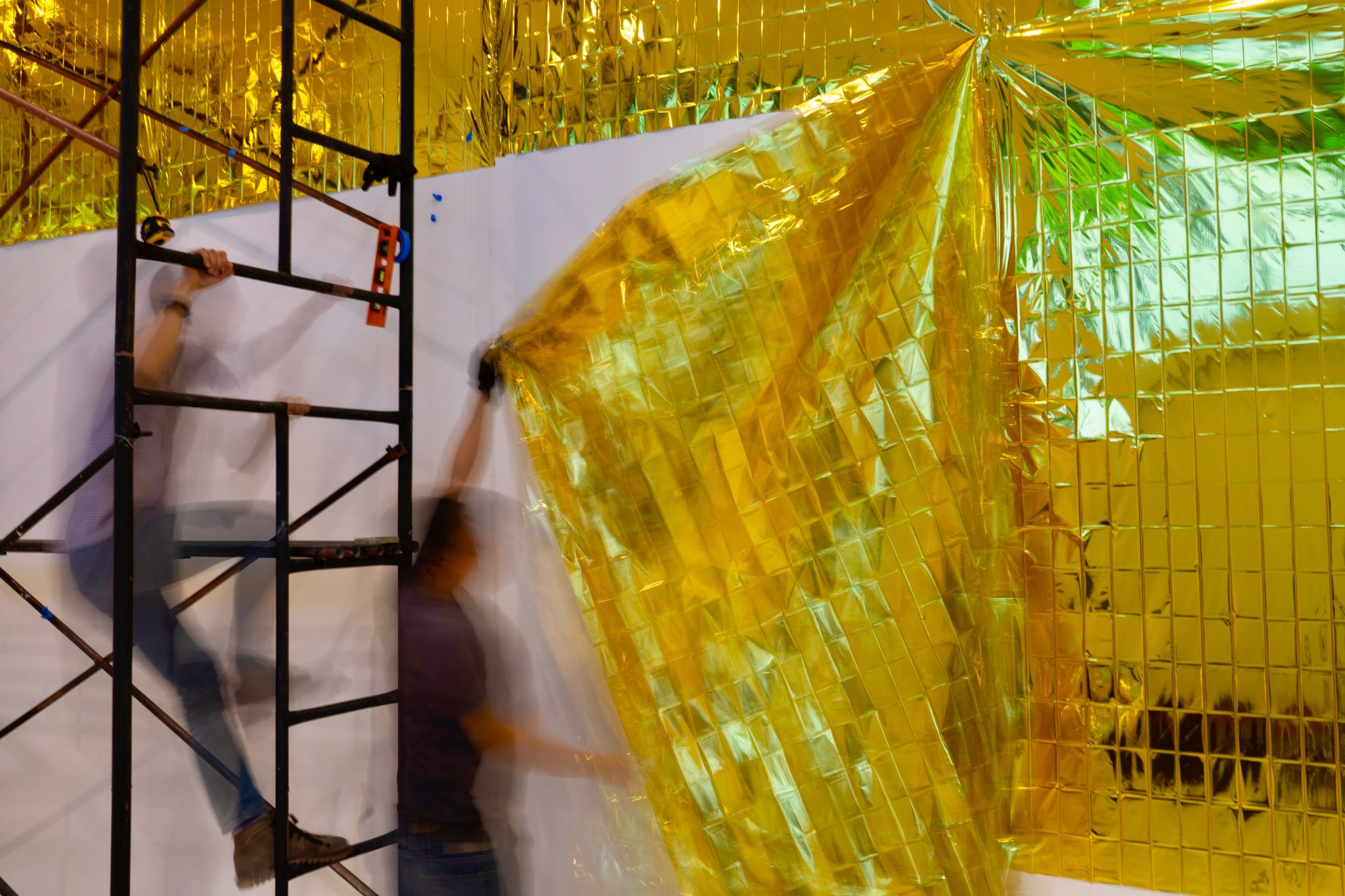
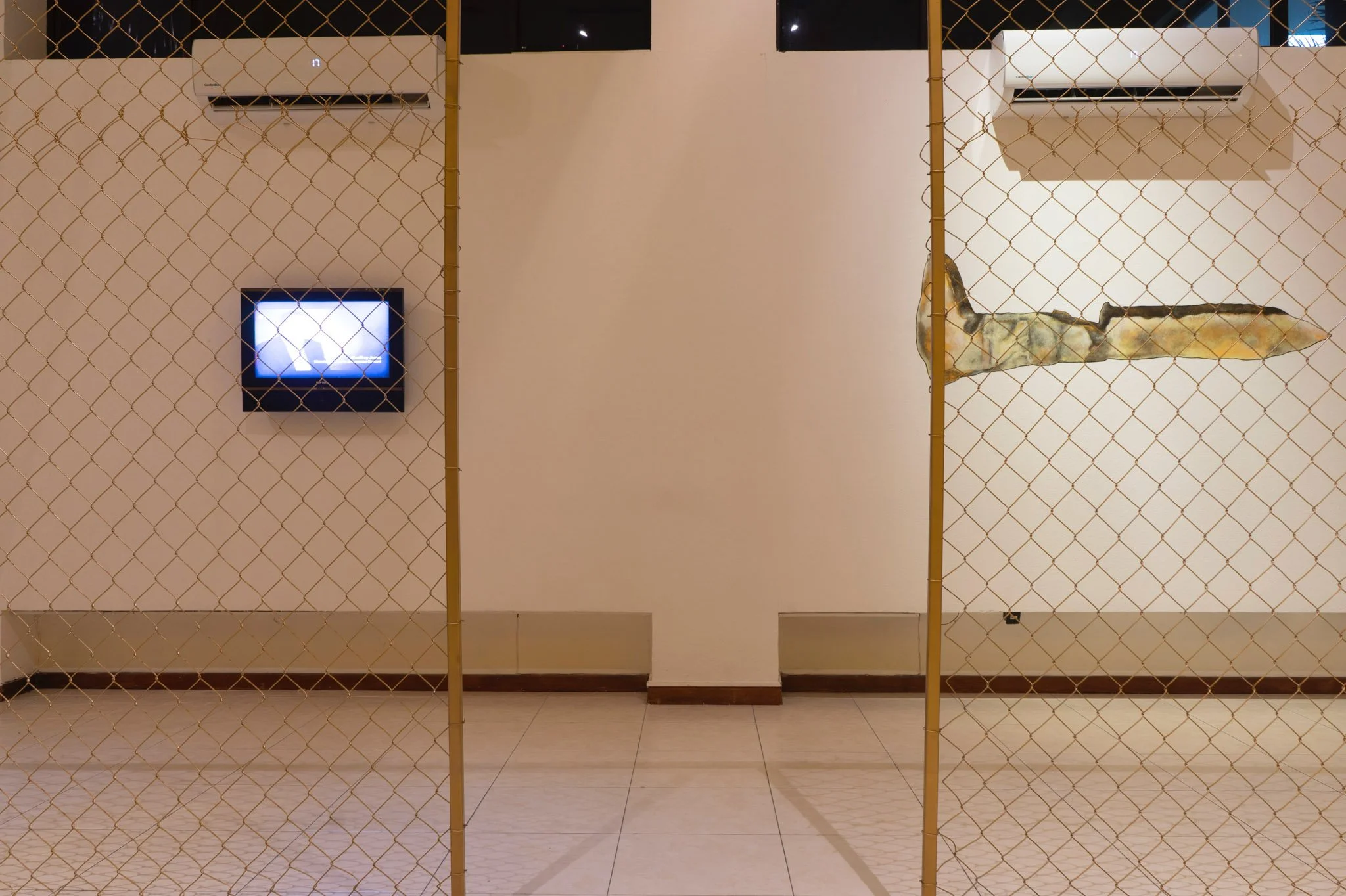
At the center of the installation was a refrigerated room based on detention spaces along the U.S. border commonly referred to by migrants as hieleras, or “iceboxes.” I used low temperature to make the visitor’s body part of the work. Inside, the cold produced physical discomfort, while intensely illuminated golden walls transformed a color associated with value and wealth into an oppressive, unwelcoming environment made out of thermal blankets. The warmth of another person’s body became one of the few sources of physical comfort.
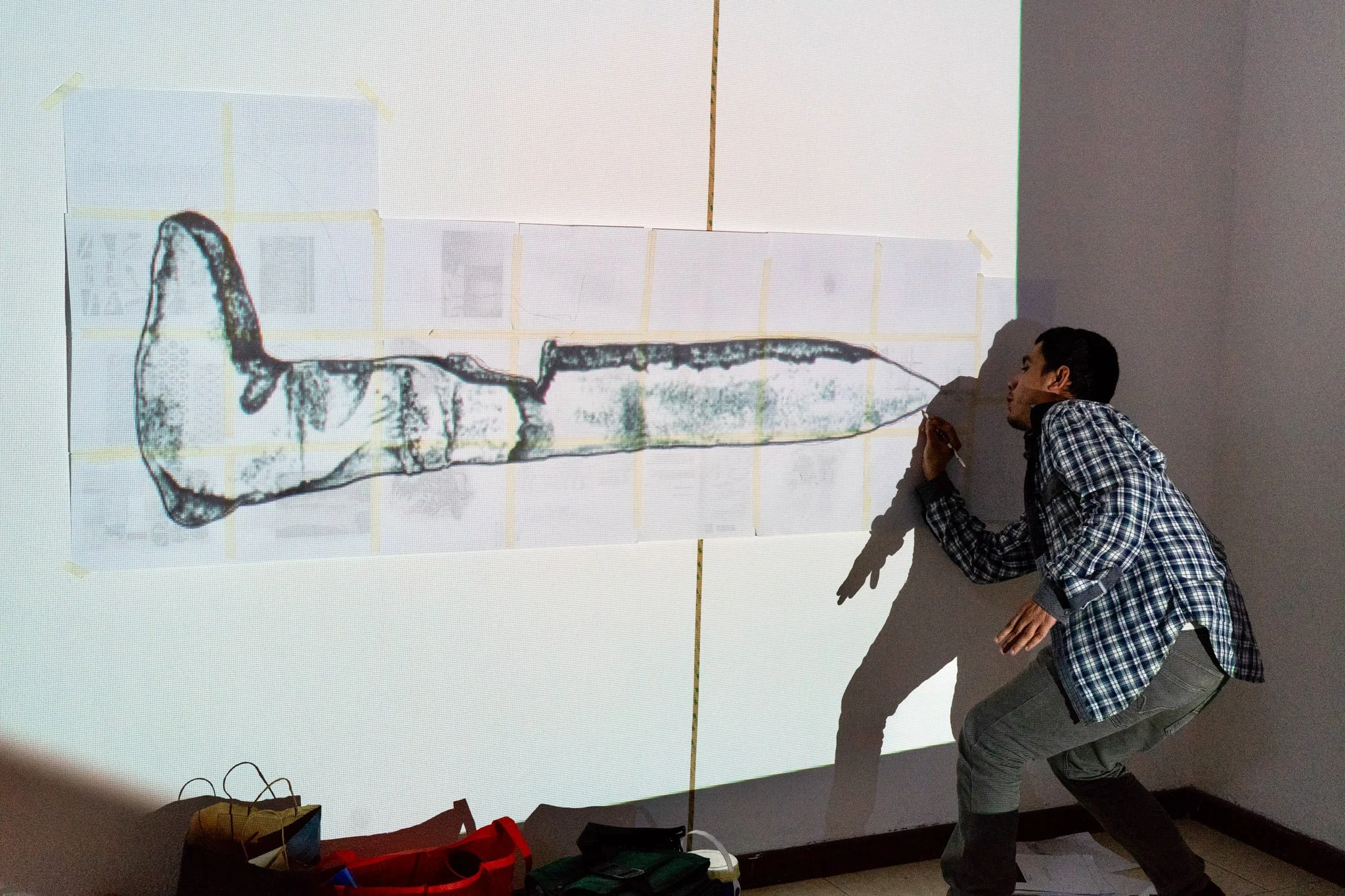
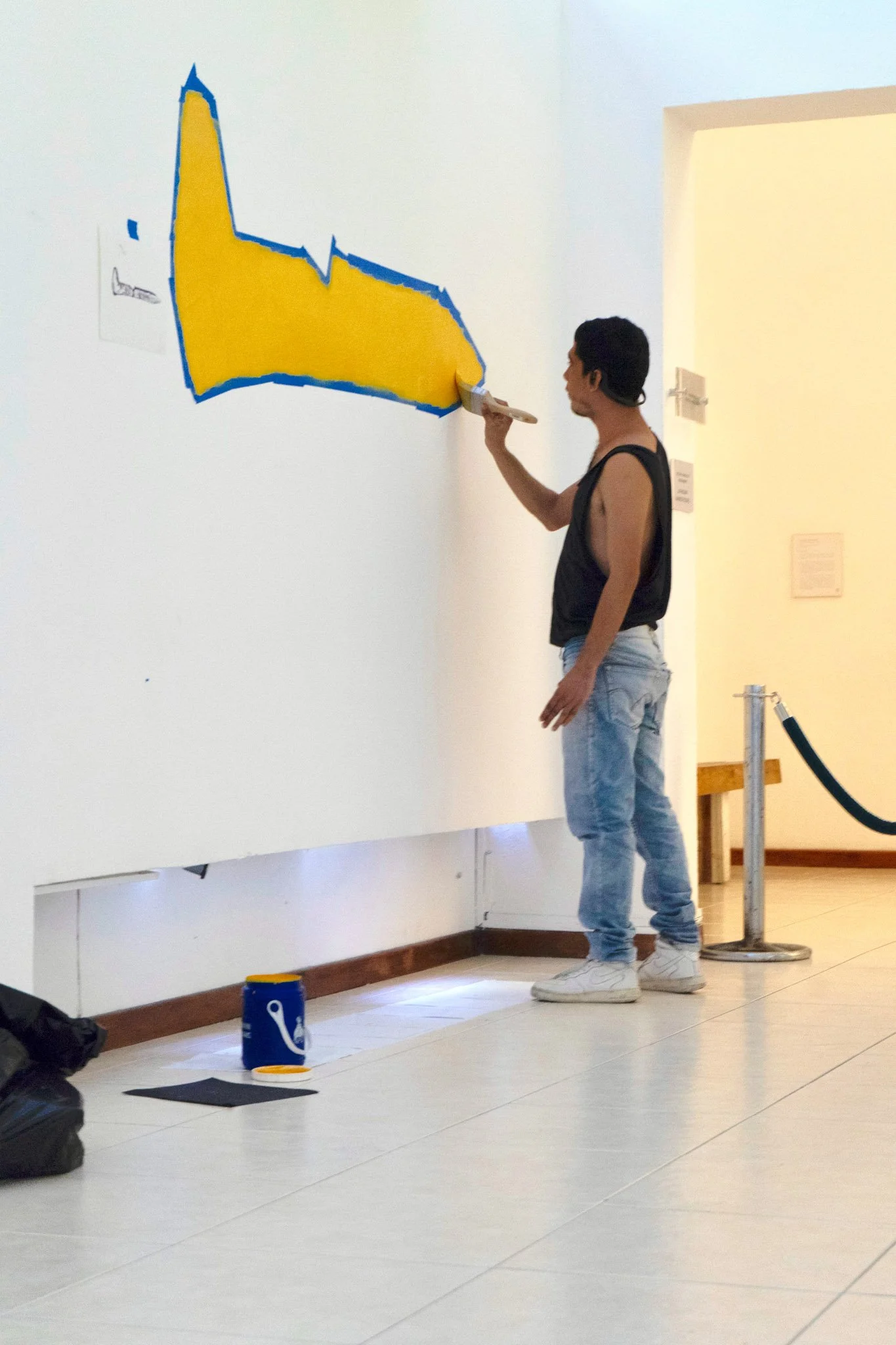
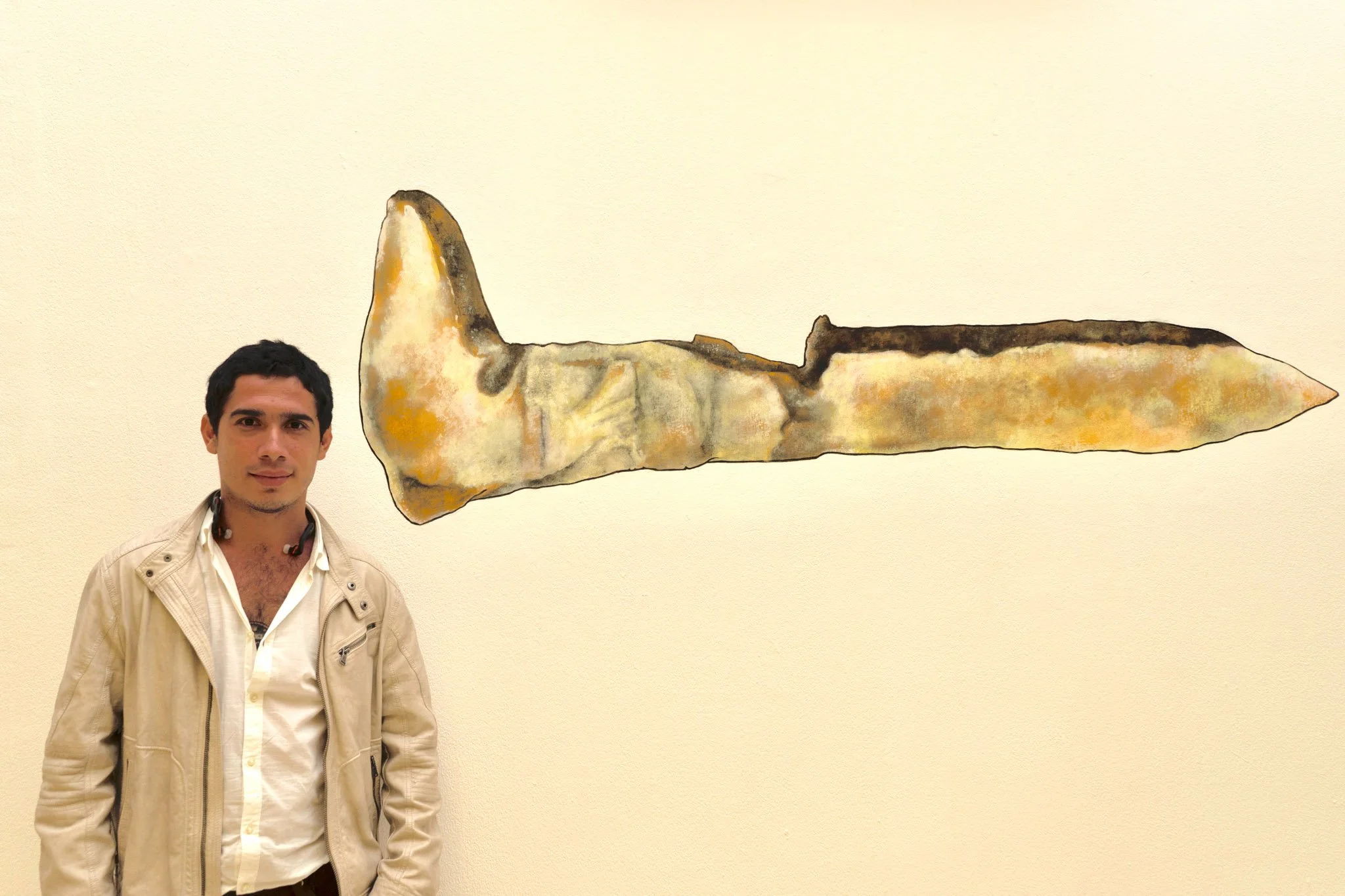
The exhibition included video drawings that showed the borders and landscapes immigrants try to enter the United States. At the same time, documentary material examined the historical causes of migration, such as the wars and political violence in Central America. I also collected a large wall drawing of a railroad spike on one of my visits to the border, from the railway linked to La Bestia ('The Beast'), the freight train network migrants use when traveling north through Mexico. By enlarging this ordinary object, I turned it into a physical sign of movement, danger, and displacement.
The text Hatred of the Poor, written by the Salvadoran author Miguel Huezo Mixco, was composed specifically for the exhibition; when included in the installation, it views the migrant as an 'alien' – that is, as a foreigner or 'other' – and suggests that hostility towards migrants is linked not only to racism and xenophobia but also to contempt for poverty.
Taken as a whole, the cold room, the border drawings, the documentary material, the railroad spike, and Huezo Mixco's text regarded migration not as a single event at the border but as a continuous process: the forces which cause displacement, the risks involved in moving, and the systems which decide which people may cross, stay, or be detained.
Las Hieleras was shown as a solo exhibition at the Museo de Arte de El Salvador (MARTE) in 2018, with support from a grant from the Harpo Foundation, and was later exhibited in New York as part of the NYLAAT residency program on Governors Island in 2024. Smaller versions were presented in At the Borders, a solo exhibition at Lokkus Contemporary in Medellín in 2017, which Jorge Lopera reviewed in ArtNexus, and in Material with Meaning, an exhibition curated by Gail Nathan at the Bronx River Art Center in 2019.
Installation collaborators: Vladimir Esquivel, Alexander Esquivel, Mauricio Kabistán. Mario Membreño and Danny Ruiz; hosted by Museo Marte under the direction of Roberto Galicia and Rafael Alas.

HATRED OF THE POOR
Miguel Huezo Mixco (writer)
In English, “Alien” refers to migrants. “Alien” comes from Latin and means “other.” In Spanish, it is used in compound words such as alienígena (“alien” or “extraterrestrial”) and alienación (“alienation”). In English, it can refer to an extraterrestrial, an immigrant, a foreigner, or an outsider. Border Patrol reports read like a bureaucratic version of the “good guys” struggling against an alien invasion—a theme that has inspired countless films.
It is often said that racism and xenophobia lie behind anti-immigrant sentiment and policies. I believe, however, that we are witnessing a resurgence of cultural fundamentalism that conceives of nationality as a cultural heritage that excludes those who are different.
For those who think and act this way, what makes migrants contemptible and dangerous, more than their race, is their condition as “outsiders.” Above all, their poverty. Adam Smith, in his book The Theory of Moral Sentiments, argues that the corruption of a society’s character consists in admiring the rich and despising the poor.
The insensitivity of Salvadoran society toward its “poor relatives,” toward those who have had no choice but to flee from here as if fleeing the plague, facing all kinds of risks and dangers, is one of the worst signs of this country’s moral corruption. El Salvador cares little about migrants because it cares little about people experiencing poverty.