
Displacement Line map production team:
Alex Reyes, me, Esau Cantarelly
Over the many years of developing and disseminating this project, I have eventually received the support of two colleagues: Alex Reyes, a Salvadoran graphic designer, and Esau Cantarelly, an artisan. Due to the volume of work involved—which I am unable to undertake entirely on my own—I have hired them to assist in bringing this project to completion.
I hope this project can serve as an archive of the situation we have experienced in El Salvador in relation to migration and its structural causes.
My sincere thanks to Alex and Esau for their support and contribution to this project.
Displacement Line / Línea de desplazamiento, 2007 to present
Modified U.S. quarter-dollar coins. Installation.
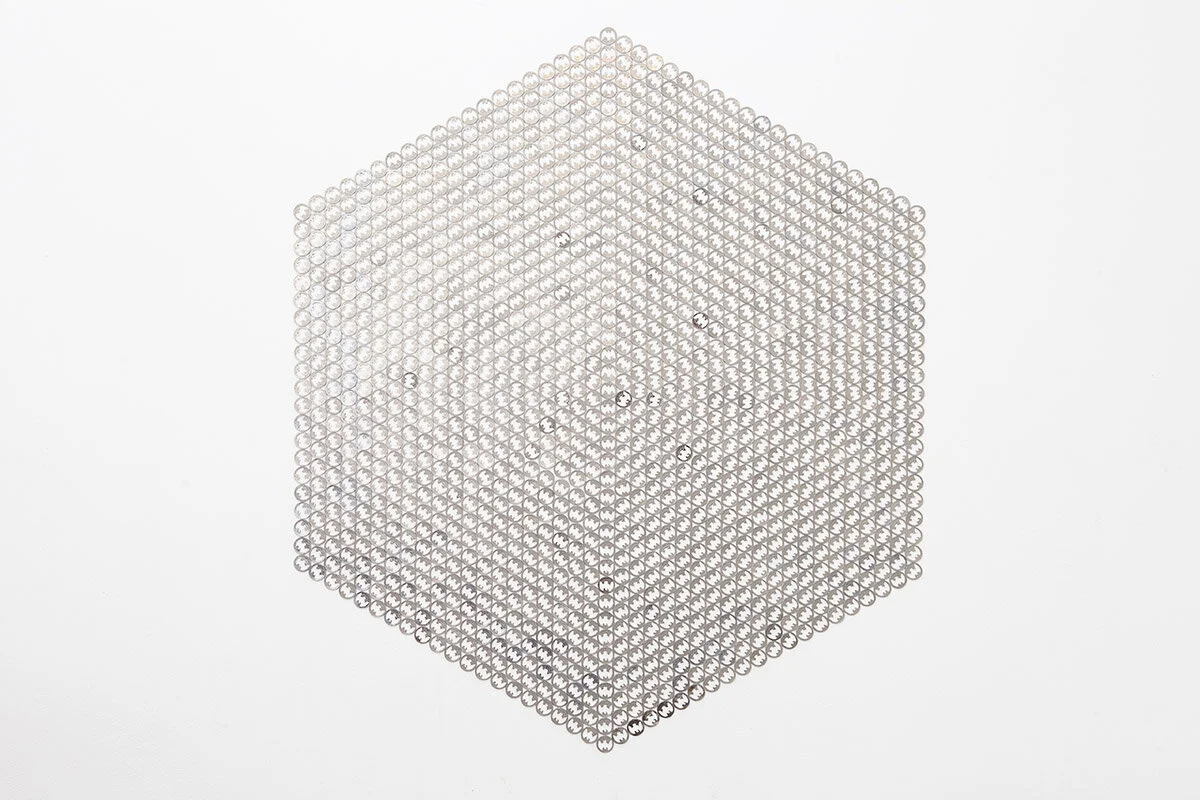
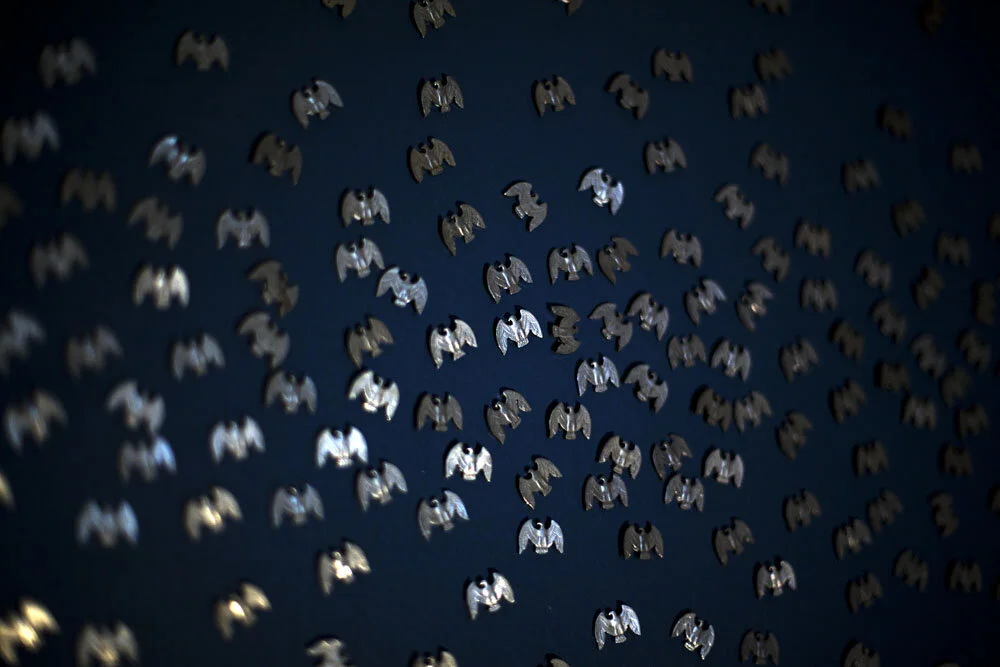
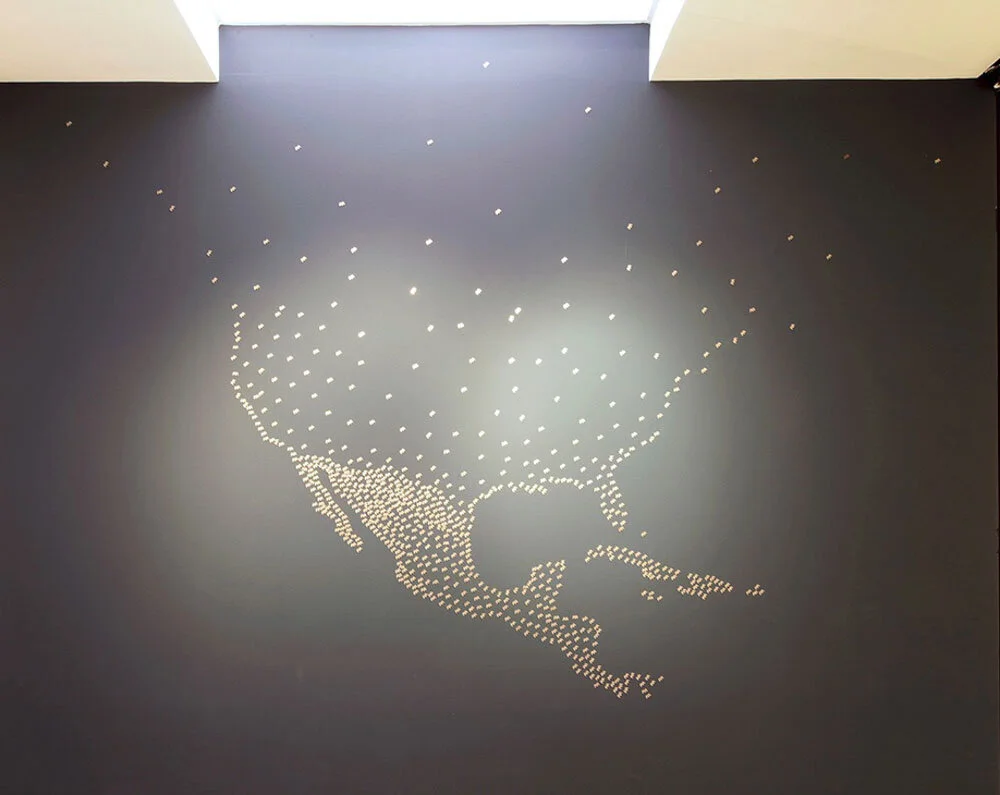
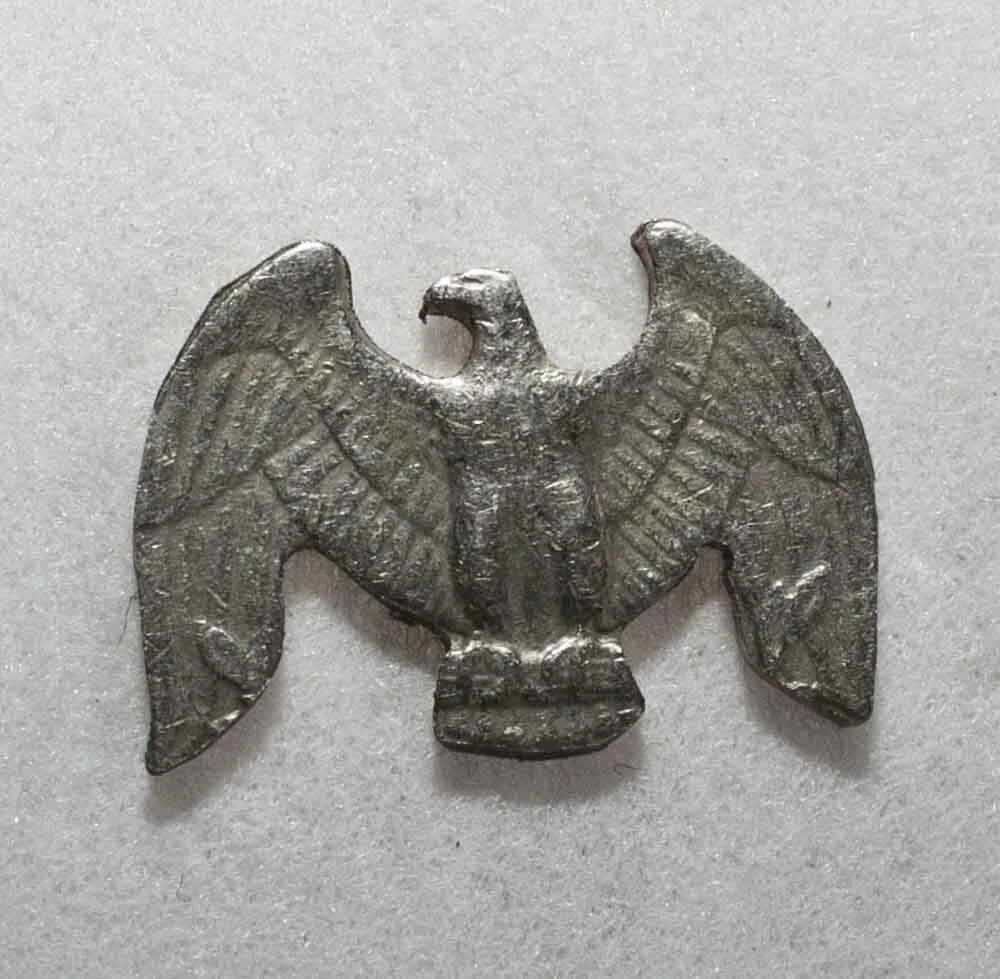
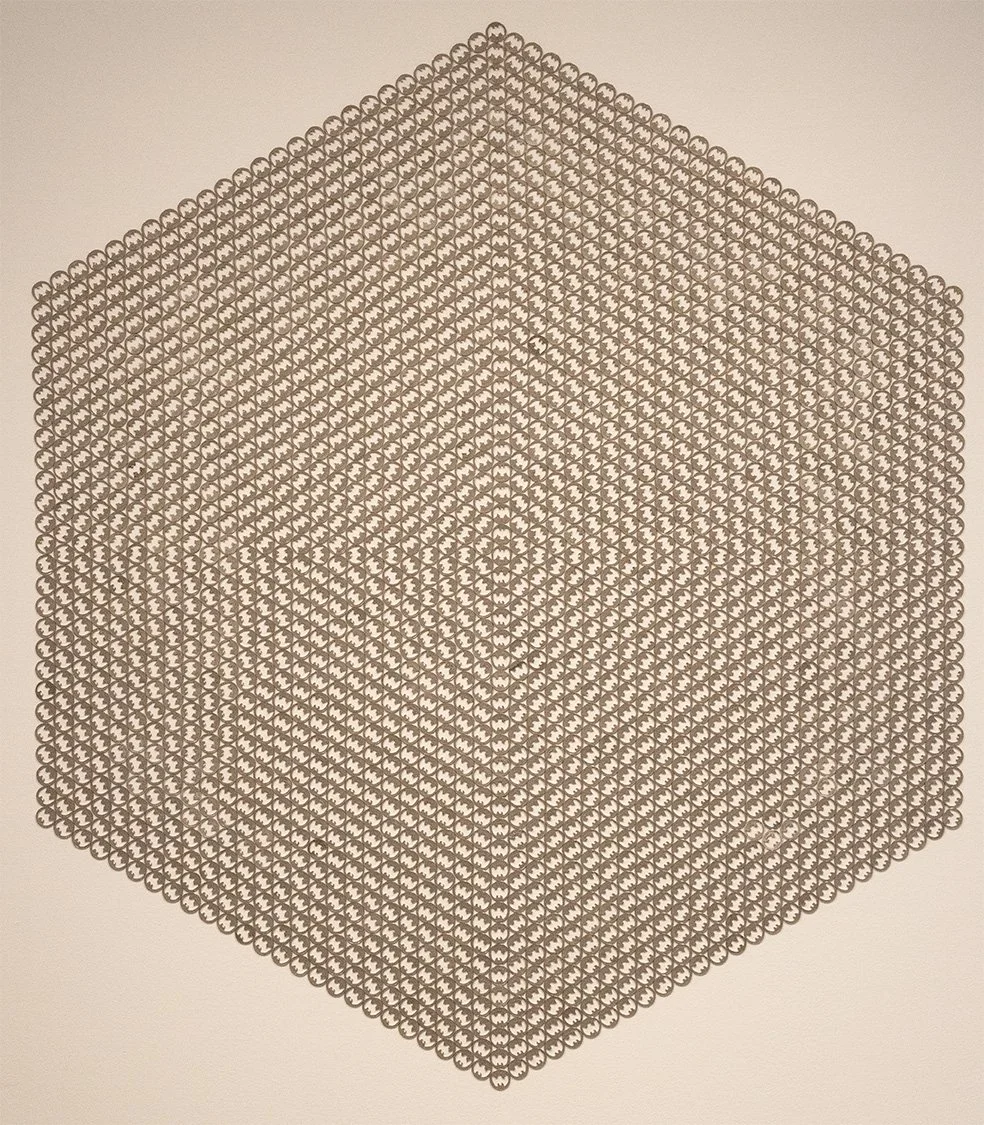
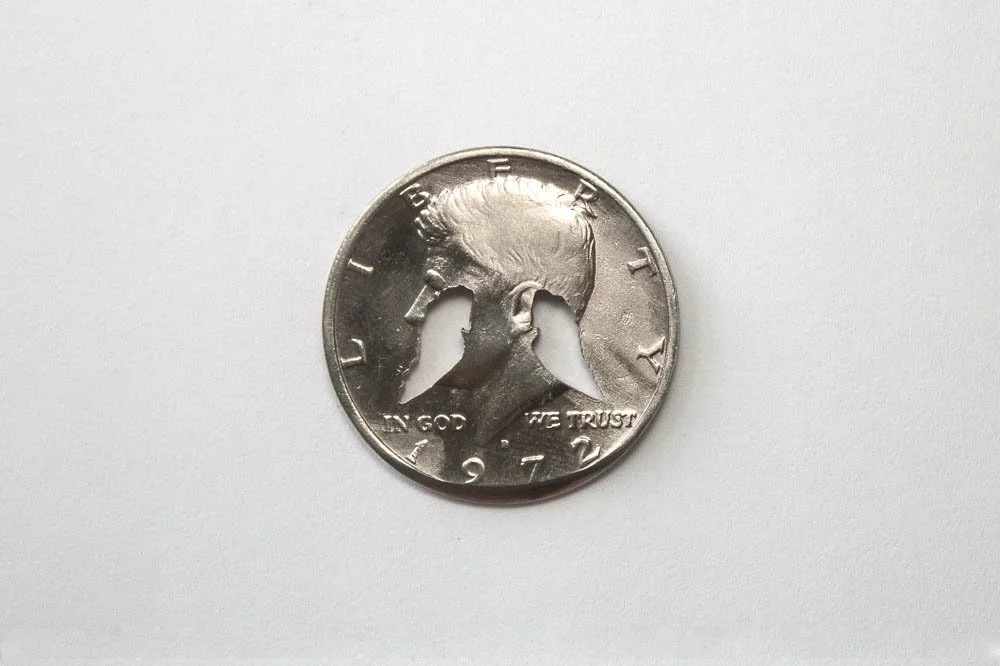
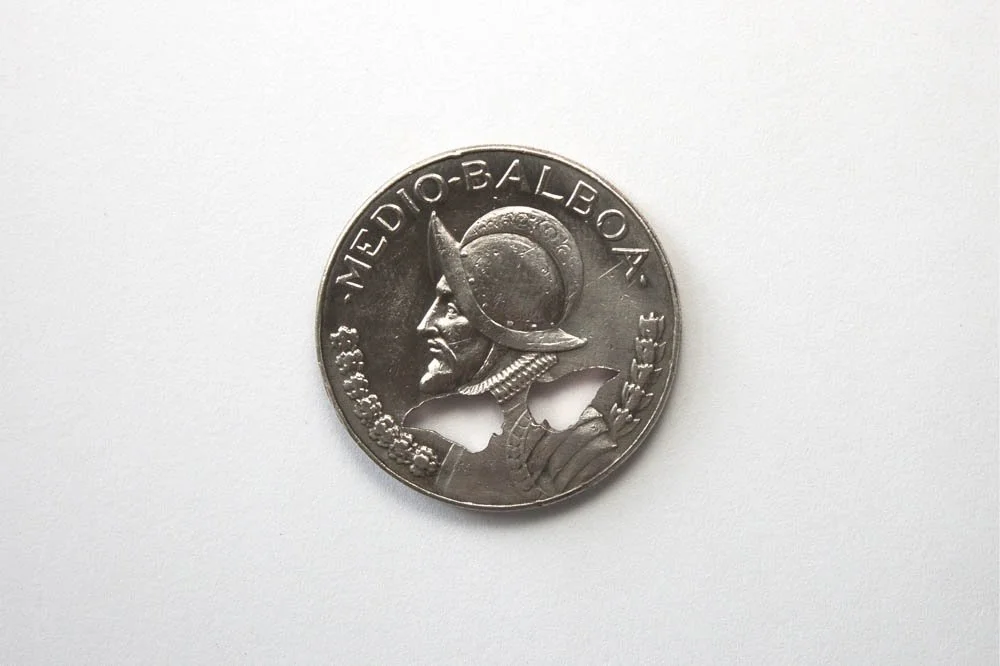
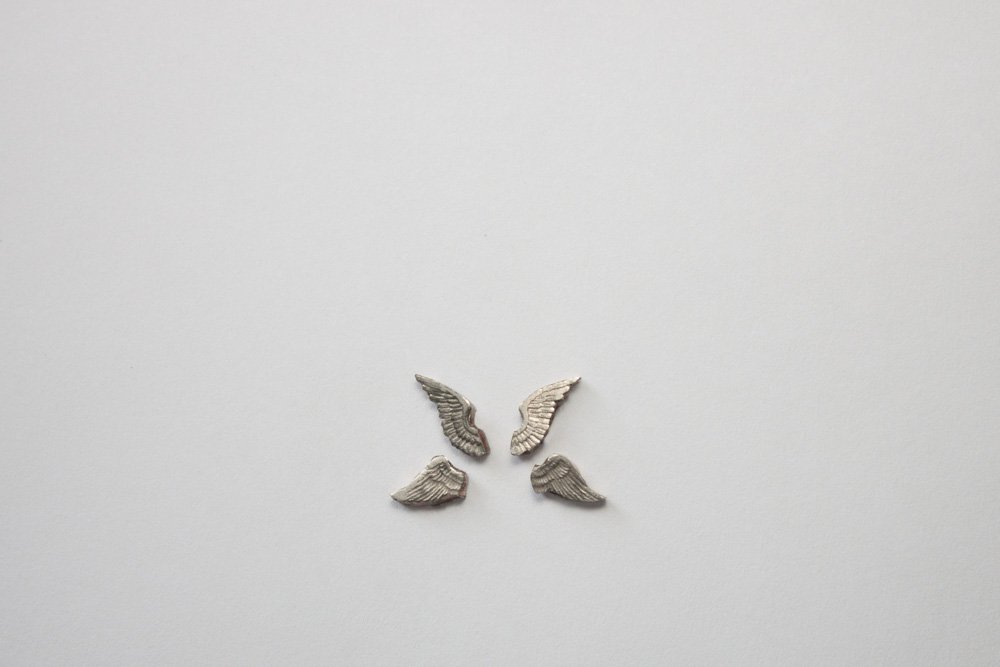
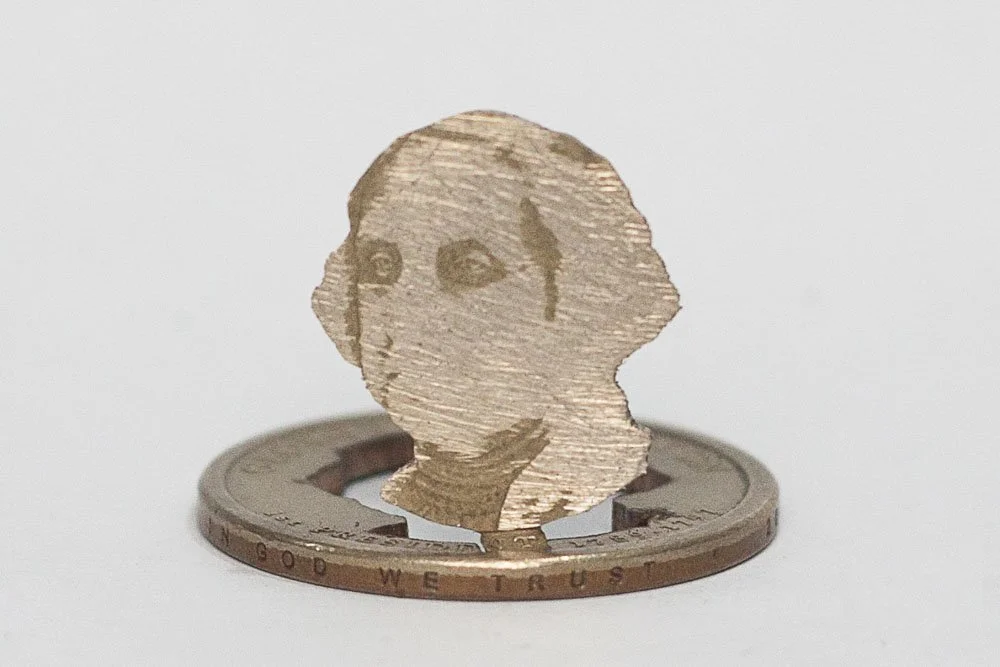
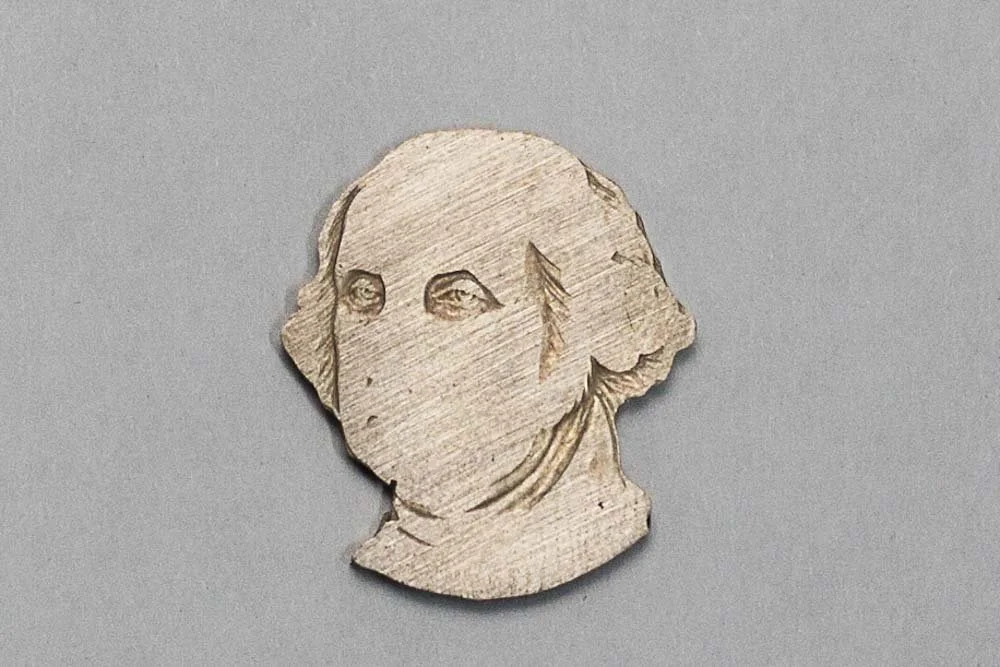
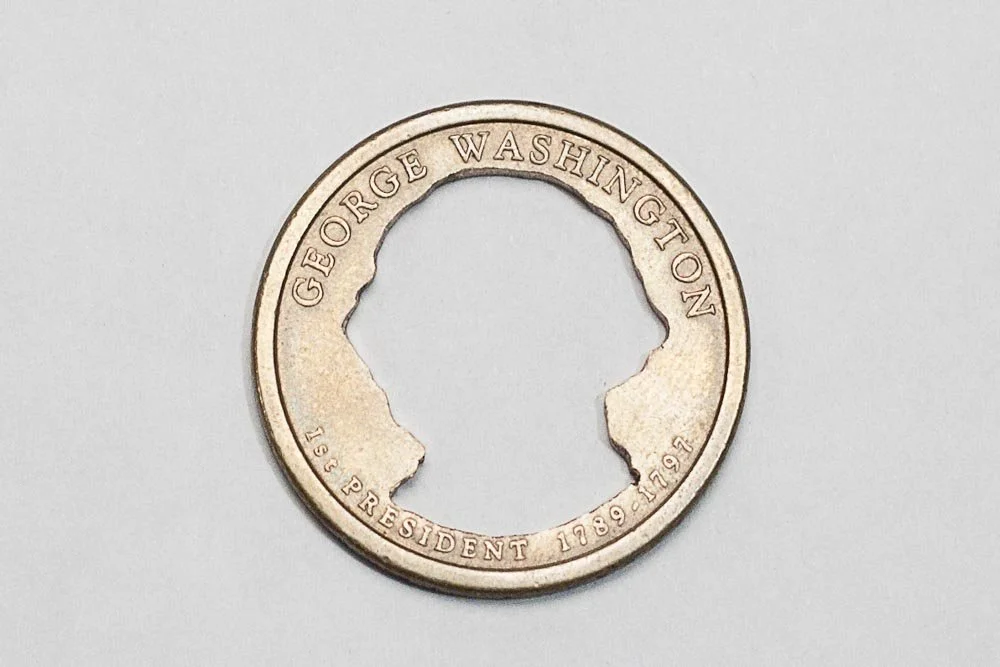
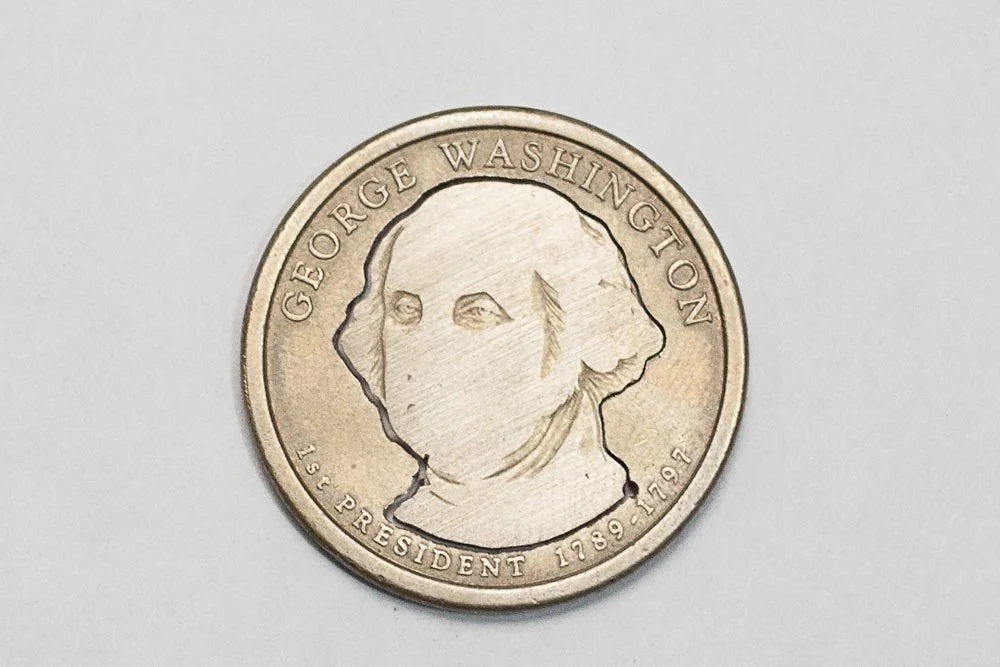
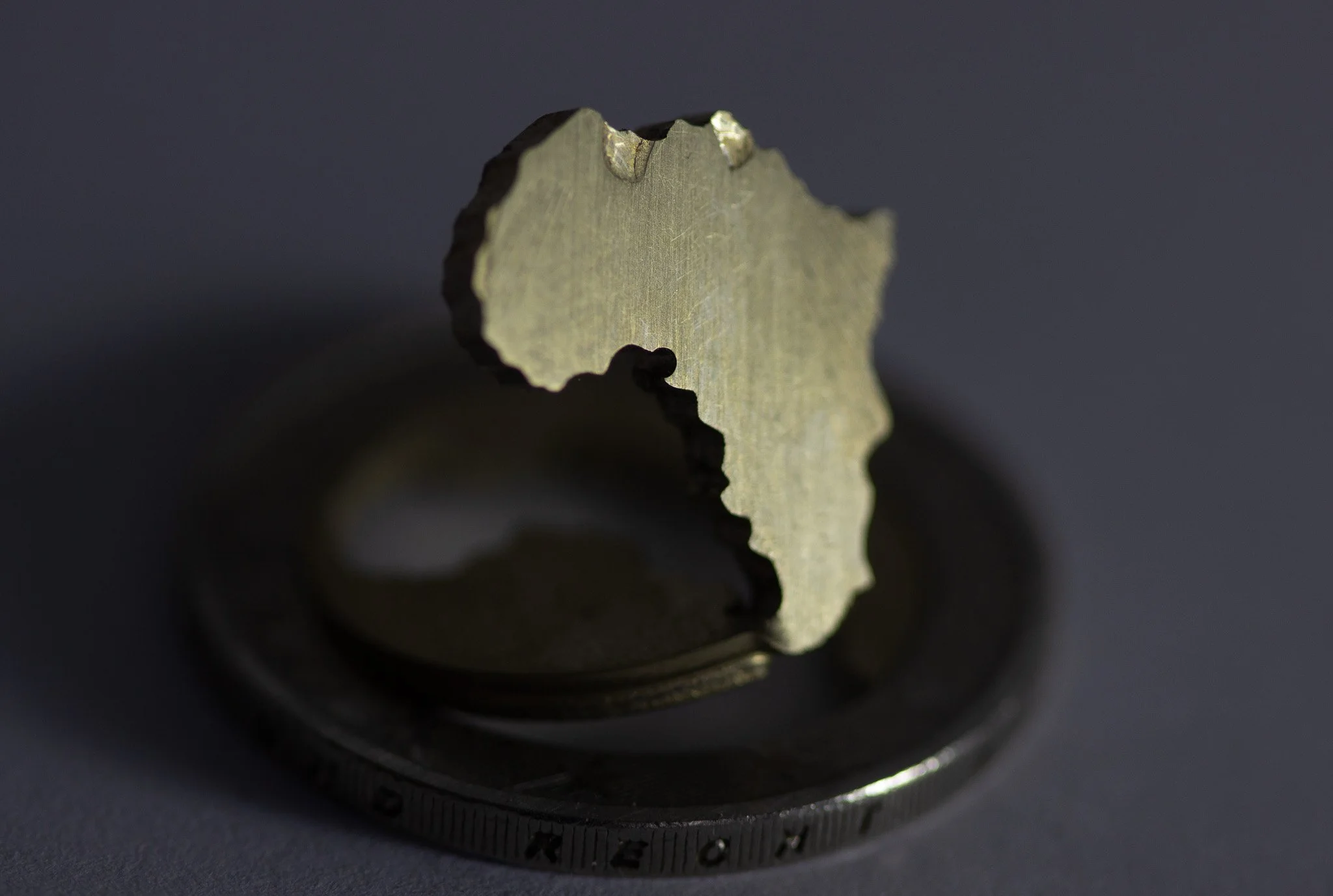
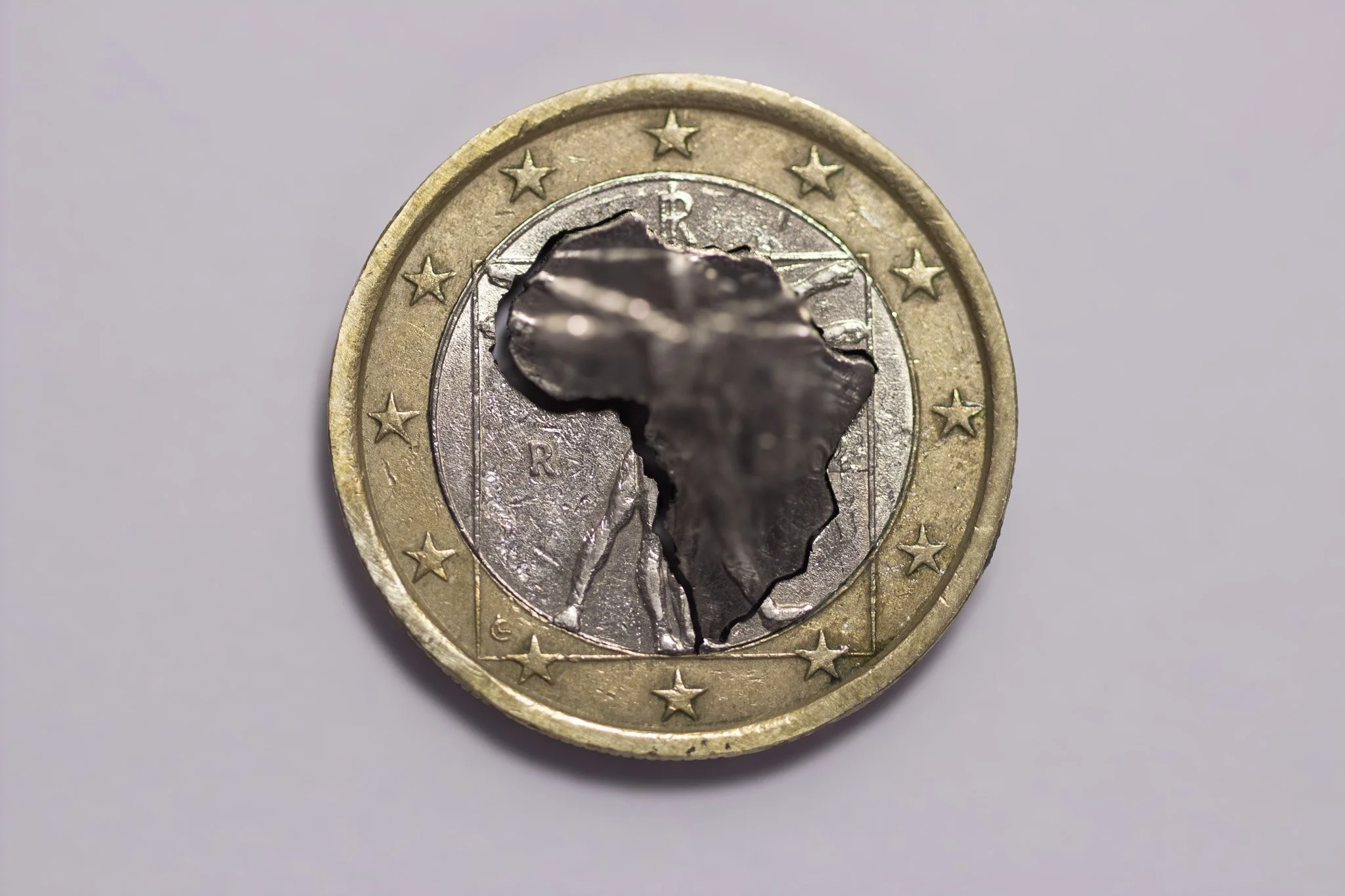
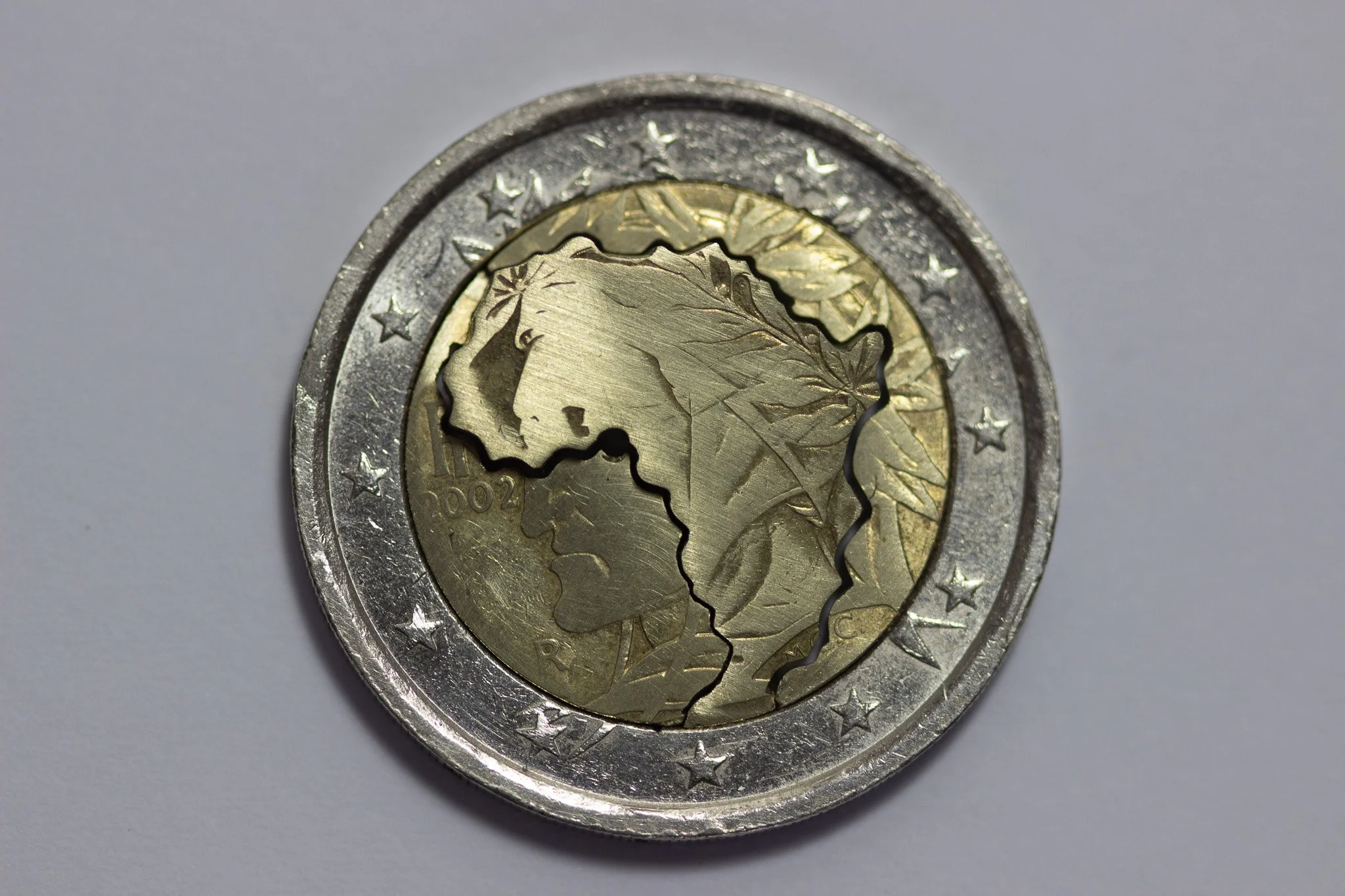
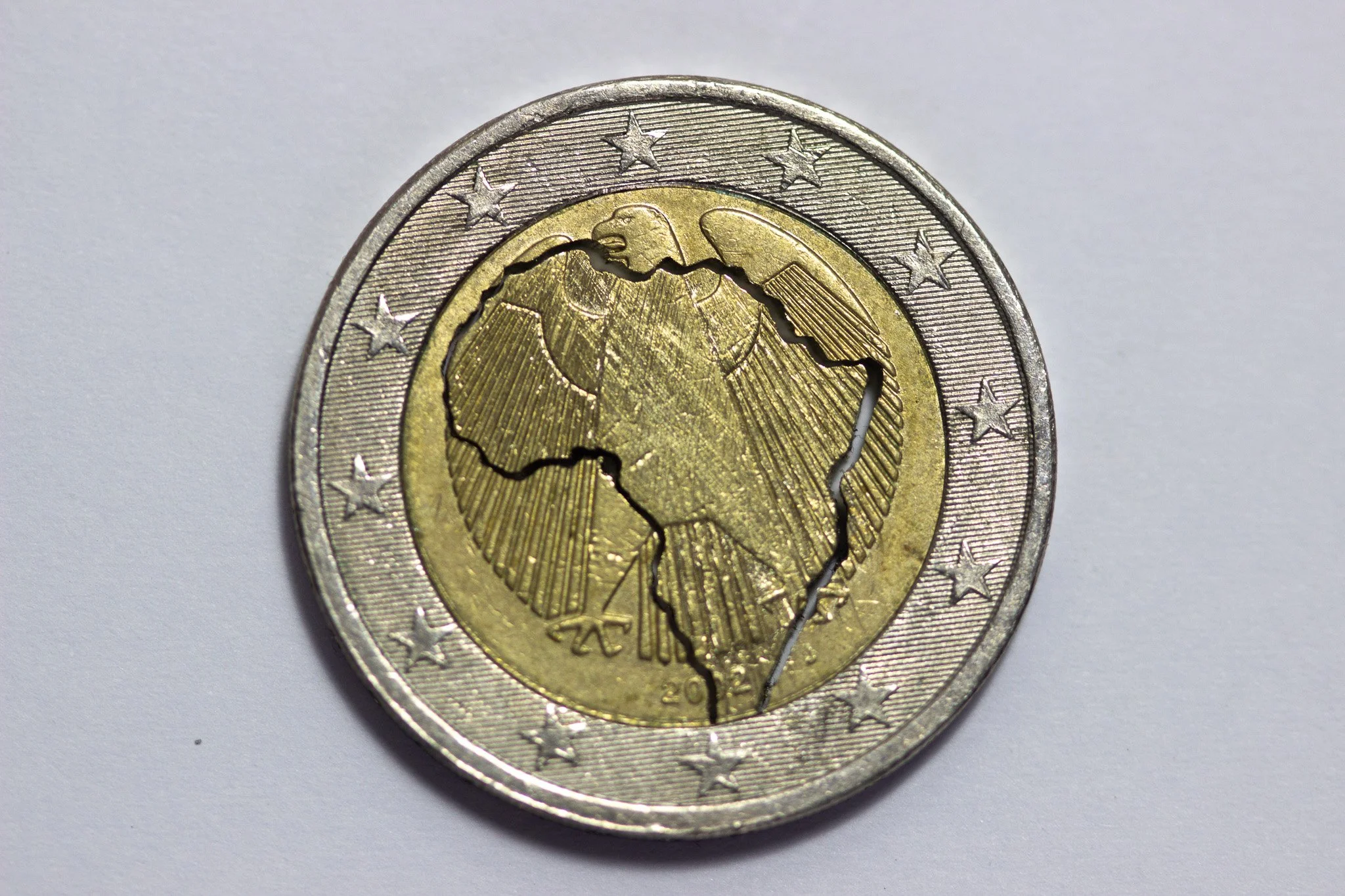
Displacement Line is a continuous body of work in which I manually remove the eagle from U.S. quarter-dollar coins or alter the history they represent, turning an ordinary item used as a means of exchange into a displaced national symbol. The project arose in connection with El Salvador's dollarization, a situation in which the U.S. quarter—there known as the cora—became an everyday part of economic life. When I cut the coin, I disrupt its function as a means of transaction and divide its symbolic image from the system that confers value upon it.
I see this process as drawing by removal. The act of cutting produces two interdependent forms: the extracted eagle and the space left behind. When these fragments serve as maps, routes, territories, and so on, they link currency to broader issues such as migration, economic dependency, national identity, and displacement. The effort of cutting each coin by hand is essential to the work, since it combines conceptual meaning, craftsmanship, repetition, and the physical alteration of money.
The series has also been shown internationally, for example at the biennials in Havana, Cuba; Cuenca, Ecuador; and Pontevedra, Spain. It has been linked with the Wilfredo Lam Center in Havana and appeared in ATLÁNTICA No. 5.
Writing selected: Clara Astiasarán, “Gide’s Parable. Mauricio Esquivel: Another Counterfeit Purse,” San José, 2009.
Other:
https://nylaat.org/portfolio-item/pace-university-art-gallery/

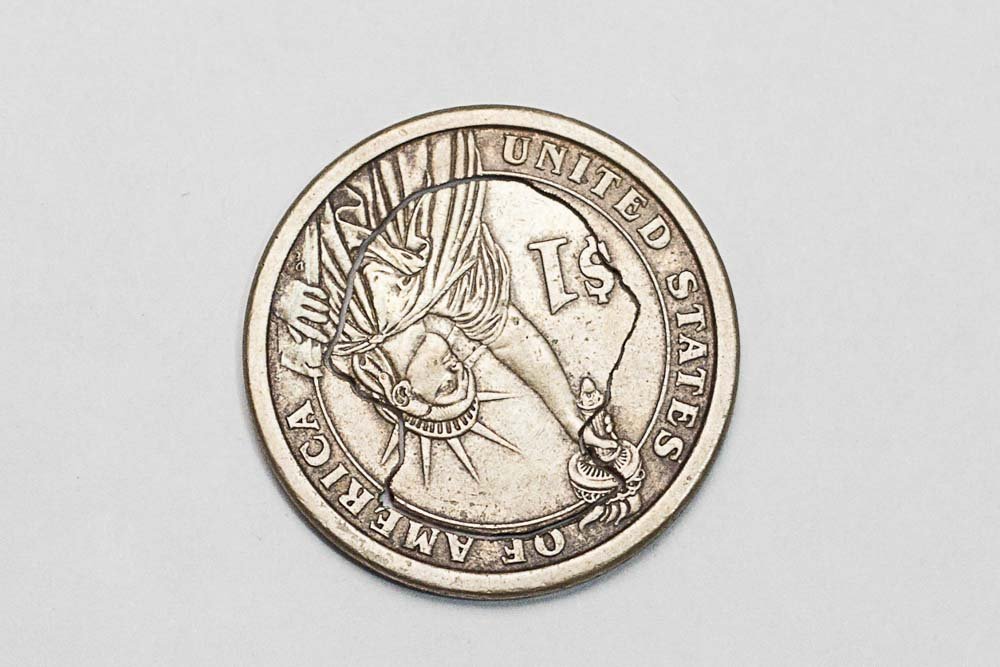
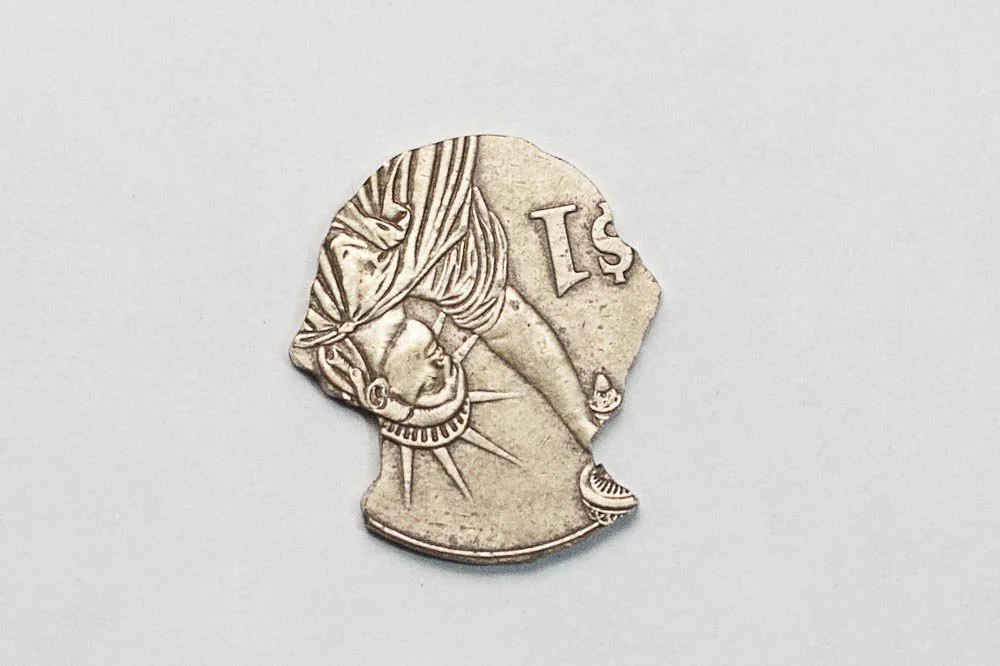
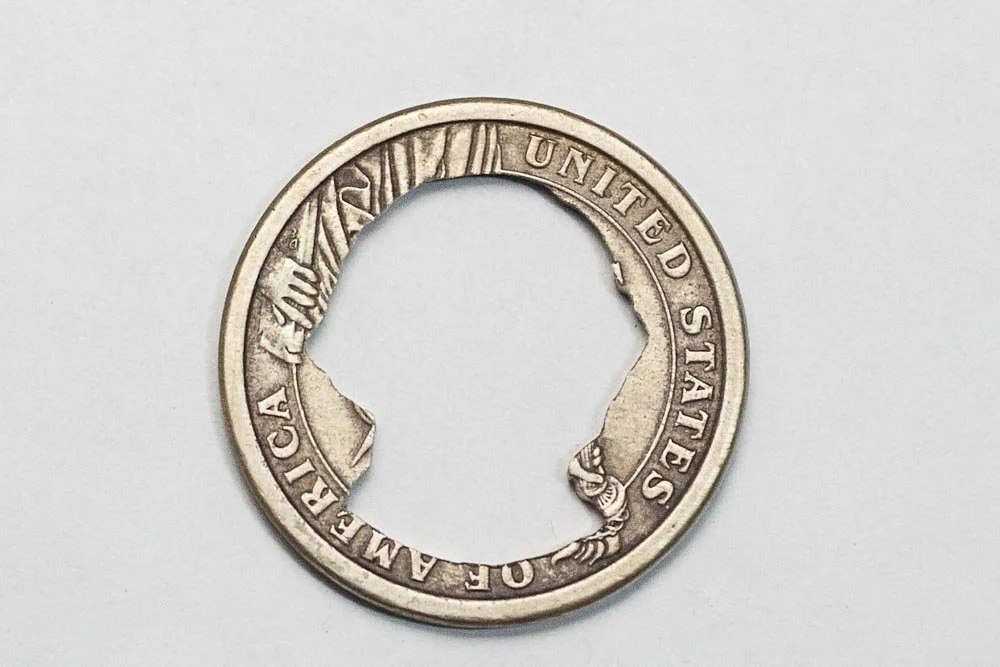
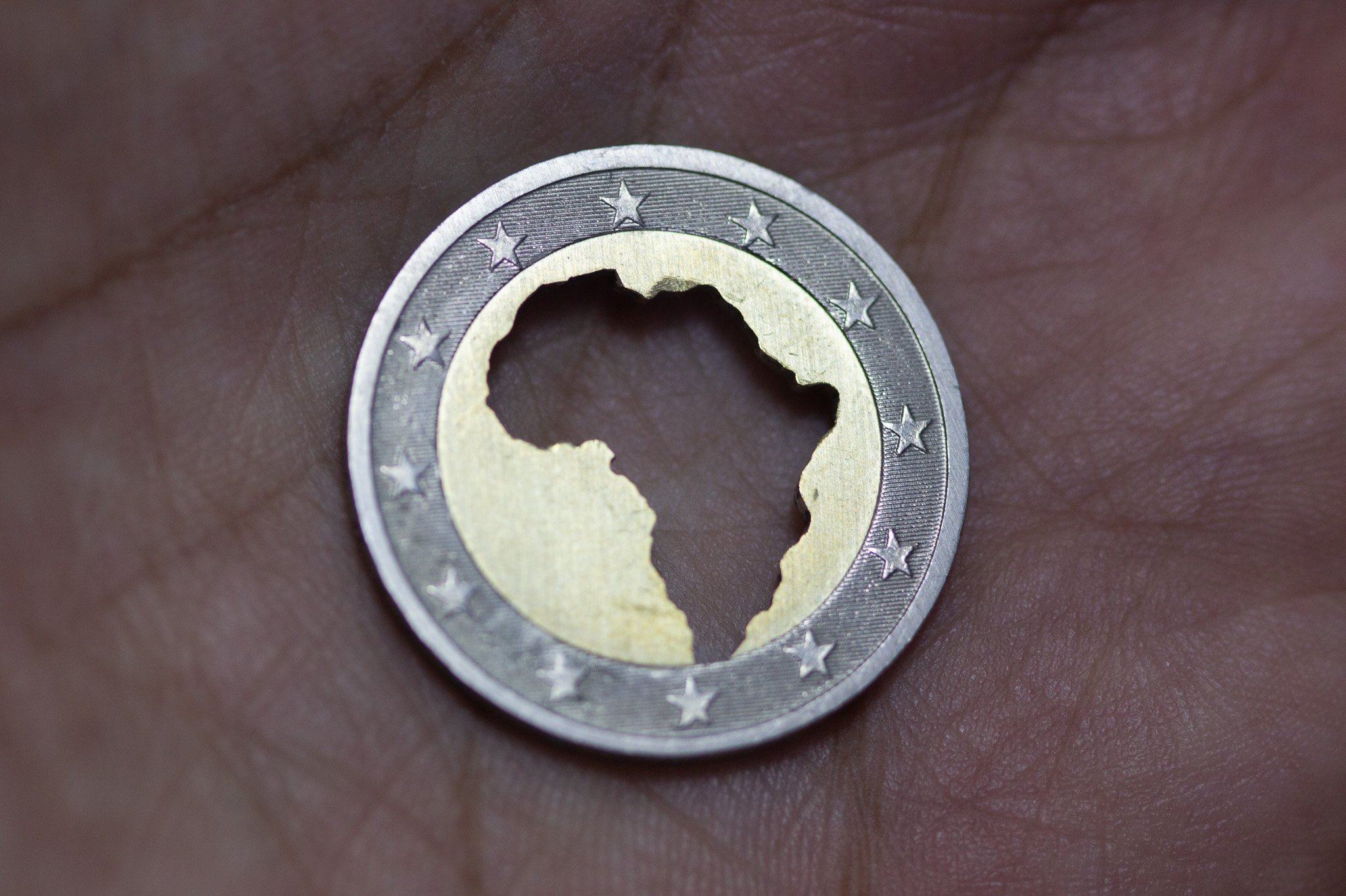
Process
Abya Yala: Structural Origins
PACE UNIVERSITY ART GALLERY (41 Park Row, New York, NY 10038)
September 23rd to October 29th, 2022
Opening Reception: September 23rd, 5 – 7 PM
Artists’ Talk: TBD
Conference/Gallery Tour: TBD
ARTISTS:
Allegra Pacheco (Chile)
Ana De Orbegoso (Peru)
Armando Mariño (Cuba)
Beradahill Marcelis “Bera Bauza” (Venezuela)
José Castrellón (Panama)
José Chi Dzul (Mexico)
Karen Macher Nesta (Peru)
Márcia Falcão (Brazil)
Mariela Martin (Argentina)
Mauricio Esquivel (El Salvador)
Melissa Misla (New York)
Mildor Chevalier (Haiti)
Sabina Puppo (Uruguay)
Sandra Monterroso (Guatemala)
Santiago Junior Ayala Cruz (Bolivia)
Sharon Pérez (Bolivia)
Soraya Abu Naba’a (Dominican Republic)
Process
Gide’s Parable. Mauricio Esquivel: Another Counterfeit Purse
“What is beauty?
A convention, a currency that
circulates at a particular time and in a particular place.”
— Henrik Ibsen
Just a few months ago, a review of the most recent Central American art compelled me to consider that in the region we were—we are—witnessing a kind of consolidation of object-based work, evident in the work of some of our most internationally recognized artists: Priscilla Monge, Darío Escobar, Adán Vallecillo, among others. This development responds to a displacement of sculpture's formal imperatives toward a territory where conceptualization carries much greater significance. Today, the formal resource is the last decision made in relation to the work of art. Nevertheless, although this premise is constant in the work of many artists, they sometimes find in the “concrete object” a motivation: a research resource in and of itself.
This is one of the principal characteristics of much of the work of Mauricio Esquivel (El Salvador, 1983), who has transformed “the coin” not only into the physical material of his work, but also into its most ironic symbolic “capital.” Esquivel was part of Colective Artificio (2005), a group of emerging artists in El Salvador who complement their system of academic art studies with an alternative program involving curators, artists, clinics, and work reviews. This dynamic has allowed them to position themselves as one of the most interesting experiences of its kind in Central America.
Although he has ventured into other formal areas, his series Líneas de Desplazamiento (Lines of Displacement), developed from the U.S. twenty-five-cent coin, has allowed him to shape a certain kind of formal certainty. Although this certainty begins with a concrete object already shaped by culture, it does not limit his ability to comment on other “formal” structures of art. Thus, beyond the “object-based” dynamic, the works in Mauricio Esquivel’s series also assert themselves through drawing as conceptual rhetoric.
María Zambrano once observed that drawing belongs to the rarest category of things:
“To that which scarcely has presence: if sound, it borders on silence; if words, on muteness; a presence so pure that it borders on absence; a mode of being at the edge of non-being.”¹
No phrase better describes the piercing, cutting work Esquivel performs on the coins. It is a kind of drawing that is also a cut—not only physical, but within the very reproduction of memory. We understand that “his drawing” on the coin also situates a complex structure of differentiated problems, a form through which to illustrate events or the possibility of making a concrete image of them present once again.
We can therefore recognize the equivalence the artist establishes between drawing and thinking, both being processes that give form to a contentious reality: that of his country and the phenomenon of dollarization within it, which has cultivated poverty and violence as its principal attractions.
The artist cuts out the eagle from twenty-five-cent coins, the famous cora (a mestizo version of the English word quarter), an indispensable element in economic transactions and everyday life in El Salvador. In doing so, he intensifies the positive-negative relationship—the contained area of the drawing and the empty area—in two images that, once severed from one another, acquire other forms of symbolic capital. With these pieces, rather than installations or “sculptures,” he redesigns a kind of macro-drawing, insofar as one is contained within the other.
In the remarkable essay Las lecciones del dibujo (The Lessons of Drawing),² Juan José Molina discusses “the act of drawing” as an act that represents ourselves in the very action of representing, clarifying the paths of our consciousness. Drawing is fundamentally about defining the territory from which we establish references.
Representation is therefore a controlled and difficult act of evocations and silences established through signs we can decipher because they preexist in historical memory. For this reason, within this “act of representation,” it is vital that the artist distance himself from one of the most common practices of contemporary art: outsourcing.
Esquivel recovers craftsmanship because his proposal is not confined exclusively to the work's content; rather, “form” and “craft” themselves become content. For Mauricio Esquivel, practicing the craft means dealing with the “hard line” of art—that is, positioning the virtuosity of manual work alongside the temporality of the “work of art” itself.
If the cutting Esquivel subjects his coins to were carried out through a mechanism of easy reproduction, his work would immediately abandon the weight of a practice simultaneously associated with exclusivity and poverty: the relationship between mastery and misery.
Selling money for much more money is perhaps the playful variable that diminishes some of the drama in Mauricio Esquivel’s work; Money for Nothing, as Dire Straits would say. This is why his work contains a conceptual wink toward Pop in the explicit nature of “the scam.”
Yet it is easy to forget this detail when Esquivel installs his coins as a map, a route, a territory, or simply a piggy bank—as the small boxes in the installations somehow recall. His work conveys a sadness, because metaphors of power associated with money dissolve into those of the colonialist drama implied by dependence on foreign symbols and external structures of sustainability.
But his pieces also incorporate the legitimacy of beauty, as Ibsen would say, in a manner that is also distinctly Kantian: beauty understood in its dimension of time and place; a beauty in constant displacement, if you will pardon the redundancy.
The visual poetry of Mauricio Esquivel’s work dismisses the simplistic resource of money; money is so overrated...
As in André Gide’s novel, its protagonist sets the trap as a mode of dialogue with structures of power and as a means of survival. Mauricio Esquivel’s pieces, once they discard their form, are nothing more than the contents of a counterfeit purse.³
These structures—capable of being dismantled, transported, designed for “displacement”—are nothing more than formal tools of disillusionment.
Money that is not even money.
Money that is its metaphor.
And nothing can be more inconsolably false than the metaphor of an illusion.
Clara Astiasarán
San José, Summer 2009
References
¹ Zambrano, María. Hacia un saber sobre el alma. Madrid: Alianza Editorial, 1987, p. 82.
² Molina, Juan José. Las lecciones de dibujo. Madrid: Cátedra, 1990.
³ Gide, André. Los monederos falsos. Spain: Seix Barral, 1980.